You have not yet added any article to your bookmarks!
Join 10k+ people to get notified about new posts, news and tips.
Do not worry we don't spam!
Post by : Rohit Dhiman
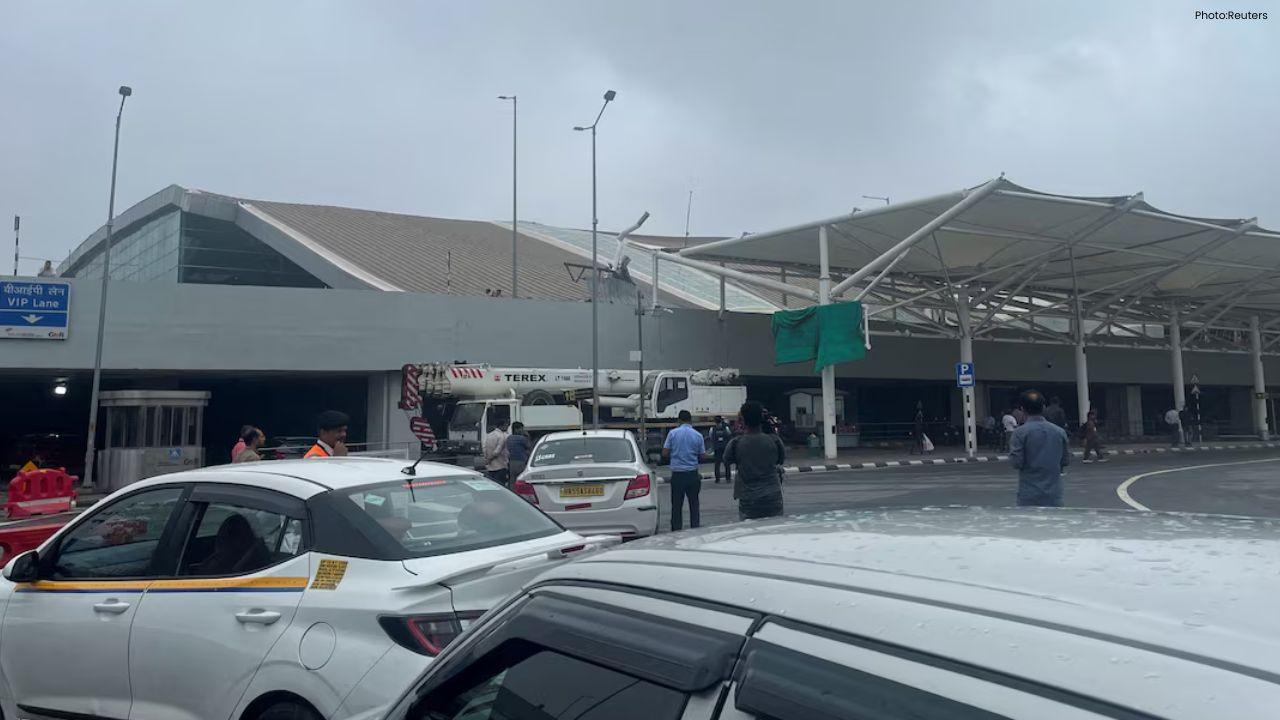
Continuous rainfall across the Delhi-NCR region has triggered severe waterlogging in several parts of the national capital, creating major difficulties for commuters and residents. The intense downpour has resulted in large amounts of rainwater accumulating on roads, streets and low-lying areas. Several visuals circulating on social media appear to show the extent of the waterlogging, with people struggling to move through flooded roads. Among the locations drawing attention is Indira Gandhi International Airport, where rainwater was reportedly seen entering parts of the airport premises. Videos shared online show passengers and other people walking through water that has accumulated around the area. The situation has raised concerns about drainage capacity and the ability of major infrastructure to cope with prolonged periods of heavy rainfall.
The latest Delhi waterlogging has affected road movement across multiple areas. Vehicles have faced difficulty passing through waterlogged stretches, while pedestrians have also been forced to navigate flooded streets. Social media footage shows children playing and splashing through water on some roads, with water reportedly reaching significant levels in certain locations. While such visuals have attracted widespread attention online, the broader situation has also highlighted the difficulties faced by residents during periods of intense rainfall. Traffic movement can become particularly challenging when roads remain submerged for extended periods. Waterlogging can also slow emergency services and disrupt access to residential areas, offices, markets and transport hubs.
The latest Delhi heavy rain has once again put the city's drainage infrastructure under pressure. Delhi receives substantial rainfall during the monsoon season, but intense rainfall over a short period can overwhelm drainage systems. When rainwater cannot be cleared quickly, it accumulates on roads and enters low-lying areas. The problem can become more serious when drains are blocked or when water levels in surrounding drainage channels remain high. For residents, prolonged waterlogging can lead to traffic delays, difficulty reaching workplaces and schools, and disruption to normal daily activities.
The reported flooding at Indira Gandhi International Airport has attracted particular attention because the airport is one of the country's busiest aviation hubs. Any significant accumulation of water around airport facilities can create difficulties for passengers, vehicles and airport operations. Travellers may also face delays while attempting to reach terminals if surrounding roads become heavily waterlogged. Videos circulating online have added to public concern, although individual social media visuals may not represent conditions across the entire airport complex. The incident has nevertheless renewed discussions about urban drainage, rainwater management and preparedness for extreme rainfall events.
The effects of the rainfall have not been limited to central Delhi. Several parts of the wider Delhi-NCR region have also experienced water accumulation and difficult road conditions. The National Capital Region includes densely populated urban areas where large amounts of concrete and paved surfaces leave less space for rainwater to naturally enter the ground. As a result, heavy rainfall can quickly produce surface flooding when drainage systems are unable to remove water at the same pace. Experts and civic authorities frequently stress the importance of maintaining drains, improving stormwater infrastructure and protecting natural water channels to reduce the impact of urban flooding.
A number of videos and photographs shared across social media platforms have drawn attention to the extent of the Delhi flooding. Some visuals show people walking through ankle-deep water, while other clips show children moving through much deeper water on flooded roads. Such footage can provide an immediate picture of conditions on the ground, but the severity of waterlogging can vary considerably from one locality to another. Residents are generally advised to exercise caution around flooded roads, particularly where the depth of water is difficult to judge or where electrical infrastructure may be affected.
The latest rainfall episode has once again highlighted the recurring problem of urban flooding in Delhi. Rapid urban development, limited open spaces and changing rainfall patterns can increase pressure on existing drainage networks. When exceptionally heavy rain falls within a short period, even established infrastructure can struggle to cope. Long-term solutions may require better stormwater drainage, regular cleaning of drains, improved water-storage capacity and stronger planning for extreme weather events. The situation also demonstrates why residents and authorities need to remain prepared during periods of intense rainfall, particularly when weather conditions change rapidly.
Read Also: Wildfires Spread Near Indonesia's New Capital, Prompting Calls for Action
Delhi is experiencing waterlogging because heavy and continuous rainfall has resulted in large amounts of rainwater accumulating faster than drainage systems can remove it.
Videos circulating on social media reportedly show rainwater entering parts of Indira Gandhi International Airport and people moving through accumulated water. Conditions can vary across different areas of the airport.
Several parts of Delhi and the wider Delhi-NCR region have experienced waterlogging following persistent rainfall.
Heavy rainfall can overwhelm drainage systems, particularly in densely built-up areas with limited open ground for water absorption.
Severe waterlogging can disrupt traffic, affect pedestrians, delay travel and create difficulties for residents, businesses and emergency services.
The rainfall-related flooding is affecting parts of Delhi-NCR, India's densely populated National Capital Region. The situation has drawn attention to the challenges faced by major urban centres during periods of intense monsoon rainfall. The reported waterlogging around Indira Gandhi International Airport has further highlighted the importance of effective drainage systems and flood preparedness at critical transport infrastructure.








MotoGP Qatar GP to Proceed Despite Regional Tensions and Safety Fears
MotoGP Qatar GP is scheduled for November 6-8 despite regional tensions, as Alex Marquez questions s

Fiji Appeals to Mark Nawaqanitawase’s Pride Ahead of Rugby World Cup
Fiji hopes Mark Nawaqanitawase will choose his ancestral homeland over Australia as the 2027 Rugby W

OpenAI and Poland’s NASK Team Up to Improve AI Safety
OpenAI and Poland’s NASK will research AI safety, security risks and stronger safeguards as concerns

Asian Football Confederation Backs Infantino for FIFA Re-Election
The Asian Football Confederation has backed Gianni Infantino for FIFA re-election, despite earlier o

Tesla Shares Fall 5% as Spending Cuts Raise AI Concerns
Tesla shares drop 5% after cutting its 2026 spending forecast to $20 billion, raising questions abou

Spotify Forecasts Higher Fourth-Quarter Profit on AI Investments
Spotify forecasts fourth-quarter operating income above estimates as AI-powered playlists and person