
You have not yet added any article to your bookmarks!
Join 10k+ people to get notified about new posts, news and tips.
Do not worry we don't spam!
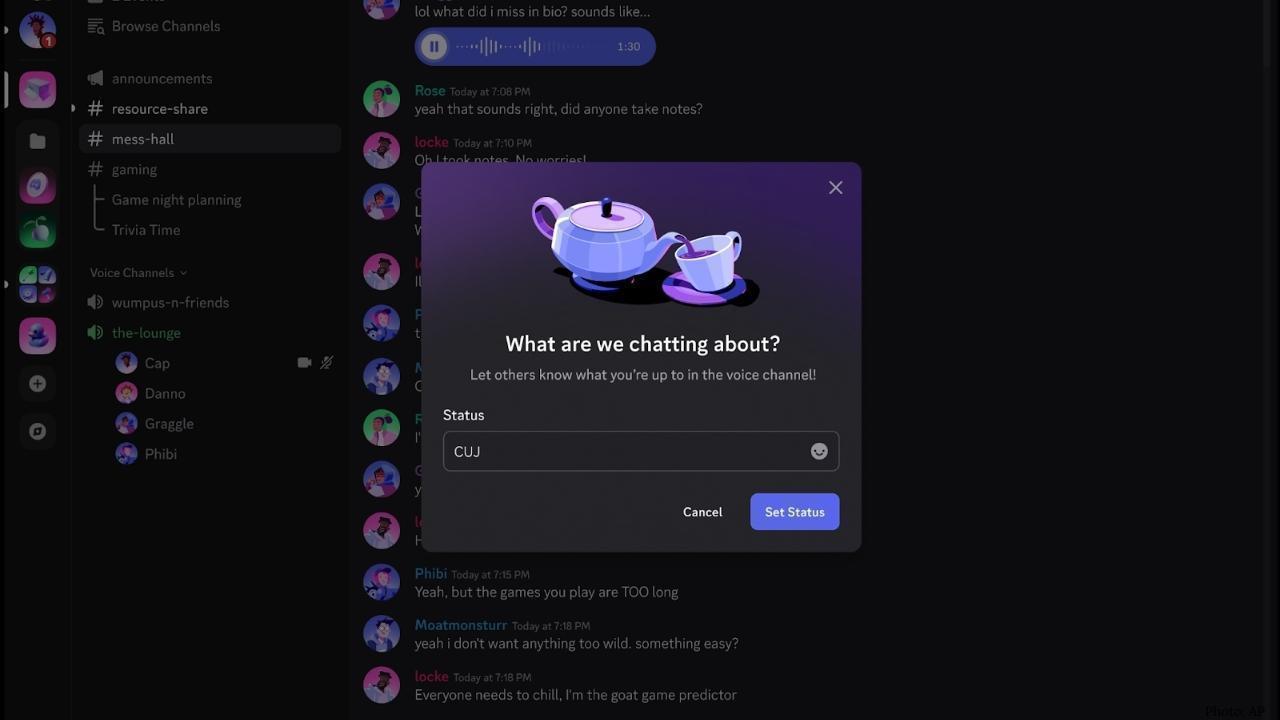
Post by : Anis Farhan
In early March 2026, social communication service Discord is set to begin enforcing a global mandatory age-verification system — a policy change that positions the app alongside a broader wave of online platforms tightening age controls. Once implemented, accounts that cannot be automatically confirmed as adult will be defaulted to a “teen-appropriate experience” with plenty of restrictions, including limited access to age-restricted servers and voice channels, content filtering, and reduced direct messaging privileges. Users who want full access must now complete age verification.
The roll-out comes at a sensitive time for Discord’s user base, as the platform is still navigating the fallout from a data breach last October, in which images of government IDs collected through a third-party age verification partner were exposed. Critics argue that pushing forward with mandatory age checks now is especially troubling and raises serious privacy and surveillance concerns.
The Electronic Frontier Foundation (EFF) — a leading digital rights advocacy organisation — has condemned the move, publishing a detailed analysis on why it believes such age verification mandates endanger user privacy, promote surveillance norms and erode online anonymity.
This article explores the mechanics of Discord’s new system, the privacy risks highlighted by rights advocates, the user backlash and broader implications for online platforms as age gating becomes more commonplace.
Discord plans to roll out a layered age verification approach. The first line of verification is an AI-powered age inference model that estimates age based on non-private account signals — such as account age, device information, and usage patterns. If this model confidently classifies a user as an adult, no further action is required for that individual.
However, users whom the model cannot confidently classify — as well as those estimated to be under 18 — will be placed into a “teen-appropriate experience” by default. This mode significantly limits their account capabilities: they won’t be able to join age-restricted servers, participate in large “stage” channels, or modify certain settings until their age is verified.
To regain full access, Discord will require age verification using one of several methods:
Facial age estimation using a video selfie, where AI evaluates a person’s age from a short clip. Discord says that the video processing happens on the device and is not sent to its systems.
Government-issued ID upload through a verification partner, where the document is examined for age confirmation and then deleted.
These methods are designed to confirm whether a user is 18 years or older, but they also prompt privacy fears — especially since they involve highly sensitive personal data.
Concerns around Discord’s approach are compounded by a data breach in October 2025, when sensitive data — including images of government IDs submitted during an earlier age verification pilot — were leaked from a third-party vendor used by Discord in some regions. The exposure of ID photos raised alarm about how securely such personal information is handled, and whether it can be trusted even when companies claim to delete it after use.
Privacy advocates argue that requiring IDs and facial scans — even when the data is processed locally or deleted — creates additional attack surfaces. A breach of any vendor or storage partner could result in widespread exposure of extremely sensitive personal information.
The Electronic Frontier Foundation (EFF) has long criticised age verification mandates as a surveillance risk rather than a genuine safety improvement. According to EFF’s analysis, mandatory age verification — whether on Discord or other platforms — can lead to:
Explicit personal data collection and processing, increasing the risk of misuse or exposure.
Censorship and exclusion by gating content behind data submission walls.
Erosion of anonymity and privacy standards, particularly when algorithms and third parties are involved in identity checks.
EFF emphasises that online safety and child protection should not automatically justify broad surveillance-oriented systems, and warns that further normalising age checks could have long-term consequences for how personal data is used and protected across the internet.
News of the mandatory age verification announcement unleashed swift reactions across social platforms, forums, and Discord communities. Many users express discomfort with the idea of providing sensitive personal data such as facial scans or government ID images to a corporate platform. Some have vowed to cancel subscriptions or even leave Discord entirely should the policy go into effect.
Search trends for alternative communication platforms skyrocketed after the announcement, with users looking for privacy-focused or decentralized messaging apps — indicating that a portion of Discord’s user base may migrate away due to these policies.
Where some see the age checks as a step toward safer online spaces for minors, critics see them as a troubling move toward data collection and surveillance creep. This dichotomy underscores a broader debate in tech policy circles over how best to balance child safety with individual privacy rights — and whether forced verification mechanisms like these are a disproportionate solution.
Discord’s age verification rollout isn’t an isolated case. Many online platforms — including social media and content services — are increasingly adopting or being pushed toward age checks, often because of new regulations or heightened scrutiny around child safety and lawful access.
However, rights advocates argue that mandatory age verification laws and tech platform policies alike can introduce privacy risks that outweigh potential benefits, particularly when they rely on sensitive identity data. This has fuelled resistance and calls for less invasive safeguards that do not hinge on revealing personal information.
Most existing users will initially be placed into teen-default mode until age is estimated or verified.
Users confirmed as adults through Discord’s age inference or verification methods will retain full access.
Age-restricted content and features will remain inaccessible until verification is complete.
Discord asserts that facial age selfies are processed locally (not sent to servers), and that government IDs are deleted shortly after verification — but this has not fully placated privacy advocates wary of potential breaches or misuse.
Opposition from rights groups, users, and privacy advocates suggests that legal and regulatory scrutiny may intensify, particularly if similar age verification requirements become widespread. The conversation around online age gating is likely to continue evolving as platforms balance safety with fundamental rights.
Disclaimer: This article is based on current reporting and analysis of developing policy changes. The details of platform policies and legal frameworks may evolve with additional updates or stakeholder responses.










PM Modi Pays Tribute to Mahatma Gandhi, Urges People to Support Khadi
PM Modi pays tribute to Mahatma Gandhi on Gandhi Jayanti and urges citizens to support Khadi and the

Amazon Seeks to Offload $8 Billion in Nvidia Chips to Investors
Amazon plans to move $8 billion in Nvidia chips to investors, using a new financing model to strengt

Samsung Raises Galaxy S26 Prices as Memory Chip Costs Rise
Samsung raises Galaxy S26 prices in South Korea as rising memory chip costs put pressure on smartpho

Lewis Hamilton Calls Singapore Grand Prix One of F1's Toughest Races
Lewis Hamilton discusses the demanding Singapore Grand Prix and brings Plus44 and Almave to Singapor

Denmark's Pandora Opens World's Largest Jewellery Factory in Vietnam
Pandora opens its largest jewellery factory in Vietnam, expanding global production, strengthening s

Gautam Gambhir Questions Batting-Friendly Pitches After India's Record ODI Chase
Gautam Gambhir questions batting-friendly ODI pitches after India’s record chase, calling for a bett

