
You have not yet added any article to your bookmarks!
Join 10k+ people to get notified about new posts, news and tips.
Do not worry we don't spam!
Post by : Saif Rahman
The ongoing tensions in the Strait of Hormuz have drawn global scrutiny towards another vital passage—the Strait of Malacca. With disruptions affecting one of the most significant oil routes globally, experts are now redirecting their focus to this critical pathway that facilitates substantial trade and energy flows.
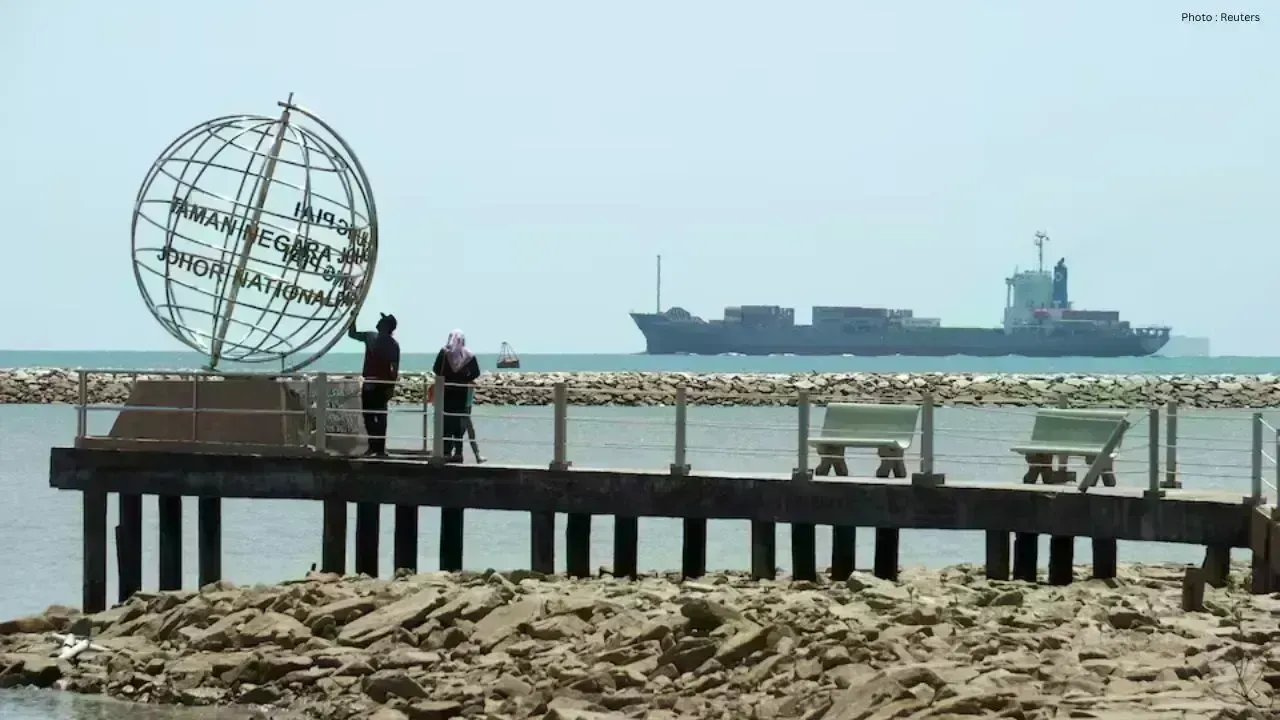
The Strait of Malacca stands as the busiest maritime corridor worldwide, linking the Indian and Pacific Oceans. Annually, it accommodates thousands of vessels, with a significant portion of global trade, particularly oil and essential goods, traversing its narrow expanse. Given its pivotal role, any interruptions here can reverberate across multiple nations.
The current crisis in Hormuz underscores the world's reliance on such confined maritime access points. When issues arise at one key chokepoint, shipping firms often have no choice but to depend heavily on alternatives, thereby stressing routes like the Malacca Strait, which can lead to increased congestion and navigational hazards.
A crucial consideration is the strait’s constricted width. In certain areas, the channel is especially narrow, complicating safe passage for larger vessels. As vessel traffic escalates, the likelihood of accidents, delays, or obstructions also surges. Even minor incidents in such a heavily trafficked zone can have significant implications for global supply chains.
Security remains a pressing concern. The Strait of Malacca has historically faced piracy issues. Although regional states have bolstered safety measures, threats still linger. In times of heightened geopolitical tension, these risks may increase, jeopardizing the safe passage of maritime traffic.
Several major economies, including China, Japan, and South Korea, are heavily reliant on this route for oil and other commodities, solidifying its role in their economic resilience. Any disruption could trigger supply shortfalls and escalate costs.
Countries neighboring the strait, such as Indonesia, Malaysia, and Singapore, collaborate to maintain its safety and accessibility. Their joint efforts are essential to ensure uninterrupted global trade operations. Enhanced coordination and vigilant oversight are necessary to manage the surging traffic and inherent risks.
This renewed focus on the Malacca Strait highlights a broader concern in global commerce. A few narrow waterways facilitate an immense volume of trade and energy. These critical chokepoints may be small in scale but wield significant influence over the global economy. The repercussions of issues at one route can swiftly ripple through international markets.
The developments in Hormuz have served as a wake-up call regarding these vulnerabilities, prompting a reassessment of strategies, tightening security measures, and exploring alternative routes to mitigate dependence on singular passages.
The escalating importance of the Malacca Strait illustrates the intricate connections within global trade. Safeguarding such corridors is pivotal for ensuring steady supplies, stable pricing, and seamless economic operations globally.










PM Modi Pays Tribute to Mahatma Gandhi, Urges People to Support Khadi
PM Modi pays tribute to Mahatma Gandhi on Gandhi Jayanti and urges citizens to support Khadi and the

Amazon Seeks to Offload $8 Billion in Nvidia Chips to Investors
Amazon plans to move $8 billion in Nvidia chips to investors, using a new financing model to strengt

Samsung Raises Galaxy S26 Prices as Memory Chip Costs Rise
Samsung raises Galaxy S26 prices in South Korea as rising memory chip costs put pressure on smartpho

Lewis Hamilton Calls Singapore Grand Prix One of F1's Toughest Races
Lewis Hamilton discusses the demanding Singapore Grand Prix and brings Plus44 and Almave to Singapor

Denmark's Pandora Opens World's Largest Jewellery Factory in Vietnam
Pandora opens its largest jewellery factory in Vietnam, expanding global production, strengthening s

Gautam Gambhir Questions Batting-Friendly Pitches After India's Record ODI Chase
Gautam Gambhir questions batting-friendly ODI pitches after India’s record chase, calling for a bett

