You have not yet added any article to your bookmarks!
Join 10k+ people to get notified about new posts, news and tips.
Do not worry we don't spam!
Post by : Rohit Dhiman
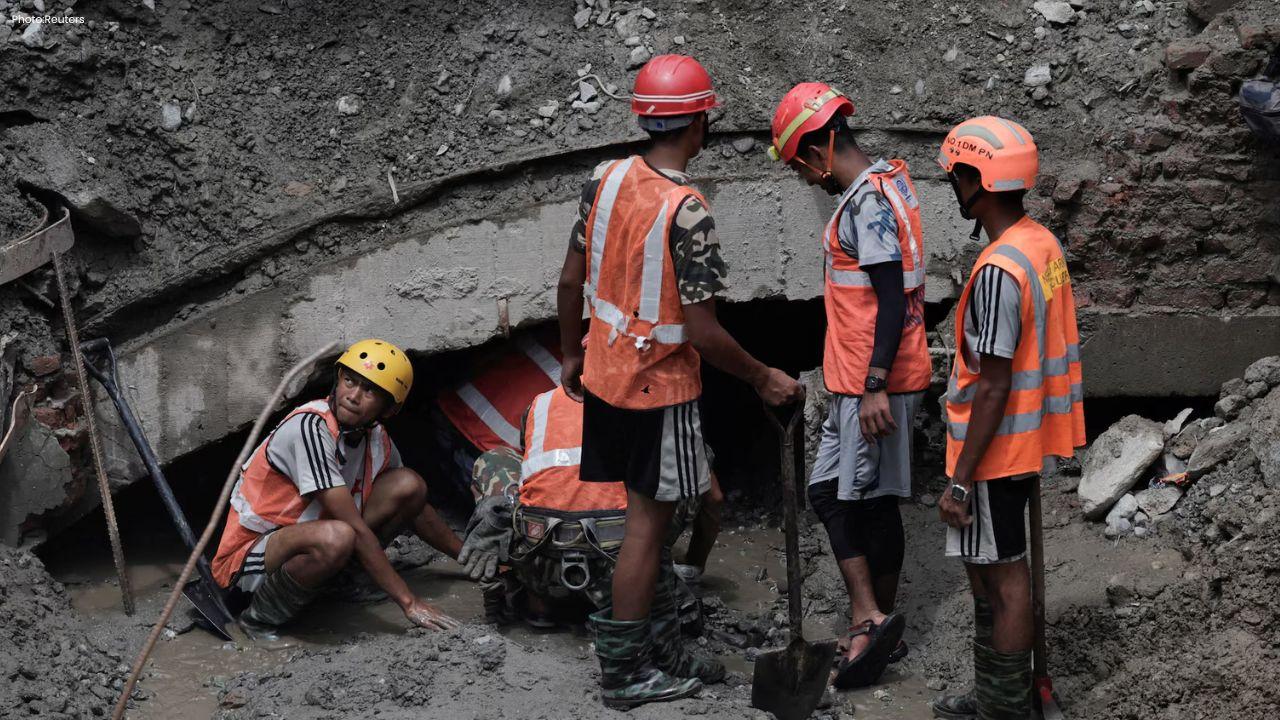
Rescue teams in Nepal have recovered four bodies from a flooded underground tunnel nearly three weeks after devastating flash floods swept through parts of the country. The recovery took place during an ongoing operation at the Chilime hydropower project in Rasuwa district, where workers are believed to have been trapped after floodwaters and debris entered the project area. The search has been extremely difficult because large quantities of mud, rocks and other debris have blocked access to sections of the tunnel. Damaged infrastructure has also slowed the movement of rescue teams and heavy equipment. The August 26 disaster caused widespread destruction across several areas, damaging roads, hydropower facilities and other infrastructure. Thousands of people remain unaccounted for as authorities continue recovery operations.
The latest recovery has renewed attention on the families still waiting for information about missing relatives. Families have been urging authorities to speed up search operations, particularly at hydropower facilities where workers may have been trapped underground. Some relatives have organized demonstrations and called for clearer information from authorities. For many families, confirming the fate of missing relatives is important not only emotionally but also for legal procedures, death certificates and religious rites. In Kathmandu, photographs of missing people have been displayed at Tribhuvan University Teaching Hospital as relatives continue looking for information about loved ones.
The Nepal flood rescue operation has faced major engineering and logistical challenges. At the Chilime project, rescuers have had to clear a long route through rocks and debris before they could reach the tunnel. Heavy equipment was transported to the area to help remove obstructions and create access for rescue personnel. Water inside the tunnel has added another complication. Rescue teams have encountered sections where rising water made it impossible for machinery to continue moving forward. Authorities have been forced to combine manual search efforts with heavy equipment while carefully assessing the stability of the damaged structure. The operation has also required coordination among multiple agencies, including security forces and organizations involved in Nepal's power infrastructure.
The Chilime hydropower project is among several energy facilities affected by the devastating floods. According to reports, 13 hydropower plants were damaged in the disaster, while workers at some facilities were swept away or trapped by floodwater and debris. The destruction has created a dual challenge for Nepal. Rescue teams must first locate workers who remain missing, while authorities and energy agencies also face the task of assessing damage to critical infrastructure. Hydropower is an important part of Nepal's energy system, making damage to power projects a significant concern beyond the immediate rescue effort. The flooding also damaged transportation routes, making it more difficult to move machinery, supplies and rescue personnel into some affected areas.
The Nepal flash floods were triggered on August 26 and caused extensive destruction across mountain communities and river corridors. The disaster resulted in a large number of deaths and missing people. Nepal's disaster management authorities have continued updating figures as search teams recover bodies and identify victims. A Reuters report published on September 16 said around 5,200 people remained unaccounted for at that stage, while at least 1,399 deaths had been recorded. Authorities had collected DNA samples from unidentified bodies and relatives of missing people as part of identification efforts. The figures demonstrate the scale of the recovery operation and the difficulty of identifying victims after a disaster involving mud, rocks, damaged buildings and destroyed transport links.
Despite the scale of the destruction, rescue teams have also managed to find survivors in some of the damaged hydropower facilities. Two Nepali workers were rescued alive from a tunnel on September 4, while a Chinese worker was pulled out alive from another location the following day. Those rescues have encouraged teams to continue searching underground areas where people may have survived inside protected spaces. Earlier reports said specialists believed some tunnel sections could contain air pockets or enclosed spaces, meaning there was still a possibility of survivors being found after several days. However, each rescue operation has to be carried out carefully because unstable structures, water, mud and debris can pose serious risks to both trapped workers and rescuers.
The geography of the affected region has made the hydropower tunnel rescue particularly challenging. Mountainous terrain, damaged roads and large deposits of debris have restricted access to several locations. Narrow routes and unstable ground can also make it difficult to transport large machinery to the sites. Rescue authorities have used helicopters and specialized equipment to support operations in areas where conventional road access has been damaged. At Chilime, rescuers had to clear a route extending for more than a kilometre to reach the tunnel area. Once inside, they encountered water that further restricted the use of heavy machinery.
Read Also: Families of Missing Malaysians Seek Access to Nepal Operations Centre
The Nepal disaster recovery effort now extends far beyond the immediate search for survivors. Authorities are dealing with damaged hydropower facilities, destroyed roads, missing people, unidentified bodies and the need to restore essential infrastructure. The government has estimated reconstruction costs at roughly $4.78 billion, reflecting the scale of the damage caused by the disaster. For families of missing workers, however, the immediate priority remains locating their loved ones and receiving reliable information about their fate. Rescue teams continue to work through difficult conditions as they search tunnels, river corridors and other locations affected by the floods.
The recovery of four bodies from the tunnel represents another stage in the continuing search at the Chilime hydropower project. Rescuers are still assessing other sections of the facility and surrounding areas where additional victims could be located. The operation is being conducted cautiously because the tunnel remains affected by water, mud and structural damage. As teams clear more debris and gain access to previously unreachable sections, authorities hope to establish a clearer picture of how many workers were trapped and what happened inside the facility during the floods. For families still waiting for answers, the operation remains a race against time as rescue teams continue working in one of the disaster's most difficult locations.






iPhone 18 Pro and Pro Max Go on Sale in India
iPhone 18 Pro and Pro Max sales begin in India with new camera, A20 Pro chip, AI features and strong

India, Pakistan Summon Diplomats After Naval Vessels Collide
India and Pakistan summon each other's diplomats after naval vessels collide in the Arabian Sea, wit
Indonesia Rescuers Plan to Turn Capsized Ship Upright as 129 Remain Missing
Indonesian rescuers plan to turn the capsized Virgo Transport 8 upright as strong currents hamper th

Avinash Sable Overcomes Hurdle Fear Ahead of Asian Games Title Defence
Avinash Sable returns after injury as he targets the Asian Games title, with Asian Games 2026 and In

Grab to Expand Autonomous Vehicle Fleet from 10 to 50 in Singapore
Grab will expand its autonomous vehicle fleet from 10 to 50 in Singapore, with new AV services plann

Judge Refuses to Record RM1.7mil Road Accident Settlement
Malaysia High Court says court approval is needed before a RM1.7 million road accident settlement in