
You have not yet added any article to your bookmarks!
Join 10k+ people to get notified about new posts, news and tips.
Do not worry we don't spam!
Post by : Shweta
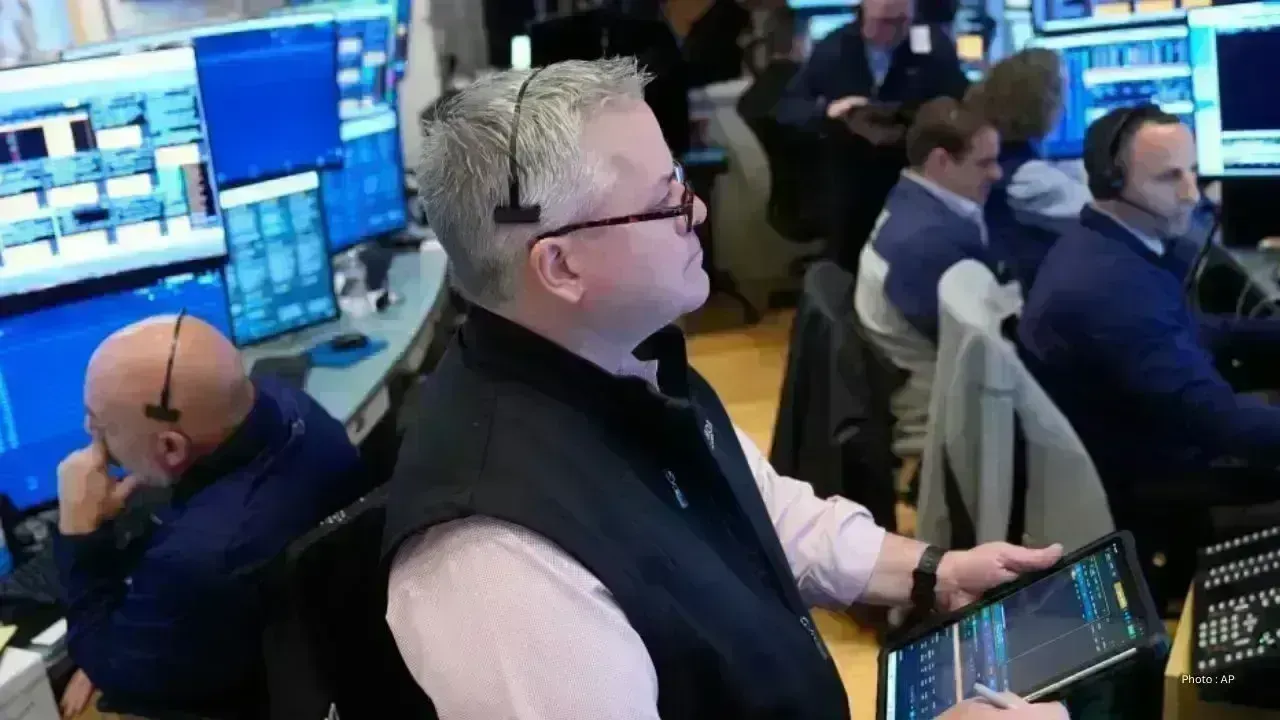
Financial markets in North America experienced a significant upswing after Iran announced the reopening of the Strait of Hormuz for commercial oil traffic. This led to a notable decline in oil prices alongside a robust rally in stock indices throughout the United States and Canada.
Major U.S. stock indexes displayed impressive gains, with the S&P 500 increasing by 1.2 percent, achieving a record high and marking its third straight week of gains. The Dow Jones Industrial Average surged as much as 1,100 points before concluding up 868 points, while the Nasdaq Composite advanced by 1.5 percent.
In Canada, the S&P/TSX Composite Index also experienced notable growth, closing up 294 points. This positive trend reflects heightened investor confidence, as worries over potential oil supply interruptions start to diminish.
Following the announcement, oil prices experienced a significant drop. U.S. crude fell approximately 9.4 percent, landing at $82.59 per barrel, whereas Brent crude decreased by 9.1 percent to $90.38 per barrel. Such a decline in oil prices is anticipated to lessen costs for fuel, transport, and goods, thereby potentially alleviating global inflationary pressures.
The Strait of Hormuz, a crucial oil passage located between Iran and Oman, is responsible for nearly 20 percent of the global oil supply. Its reopening follows weeks of heightened tensions related to regional conflicts, bringing renewed hopes for stability, although some uncertainty remains.
Market analysts expressed optimism regarding this development but cautioned that a full recovery of shipping activity could be slow. Concerns about safety and insurance may impede the return to normal maritime traffic through the strait, despite its official reopening.
The drop in oil prices additionally uplifted shares of fuel-dependent companies. Airlines and cruise lines marked significant gains as reduced fuel expenses enhance their profitability. Meanwhile, robust earnings reports from key corporations have further bolstered the stock markets.
Nevertheless, analysts remain wary, noting that the markets are still sensitive to changes in the region. Past instances of easing tensions have quickly reversed, leading to increased volatility in both the stock and oil markets.
In summary, the reopening of the Strait of Hormuz has delivered a breath of fresh air to global markets, yet investors are continuing to monitor the situation for any emerging risks or alterations.










PM Modi Pays Tribute to Mahatma Gandhi, Urges People to Support Khadi
PM Modi pays tribute to Mahatma Gandhi on Gandhi Jayanti and urges citizens to support Khadi and the

Amazon Seeks to Offload $8 Billion in Nvidia Chips to Investors
Amazon plans to move $8 billion in Nvidia chips to investors, using a new financing model to strengt

Samsung Raises Galaxy S26 Prices as Memory Chip Costs Rise
Samsung raises Galaxy S26 prices in South Korea as rising memory chip costs put pressure on smartpho

Lewis Hamilton Calls Singapore Grand Prix One of F1's Toughest Races
Lewis Hamilton discusses the demanding Singapore Grand Prix and brings Plus44 and Almave to Singapor

Denmark's Pandora Opens World's Largest Jewellery Factory in Vietnam
Pandora opens its largest jewellery factory in Vietnam, expanding global production, strengthening s

Gautam Gambhir Questions Batting-Friendly Pitches After India's Record ODI Chase
Gautam Gambhir questions batting-friendly ODI pitches after India’s record chase, calling for a bett

