You have not yet added any article to your bookmarks!
Join 10k+ people to get notified about new posts, news and tips.
Do not worry we don't spam!
Post by : Rohit Dhiman
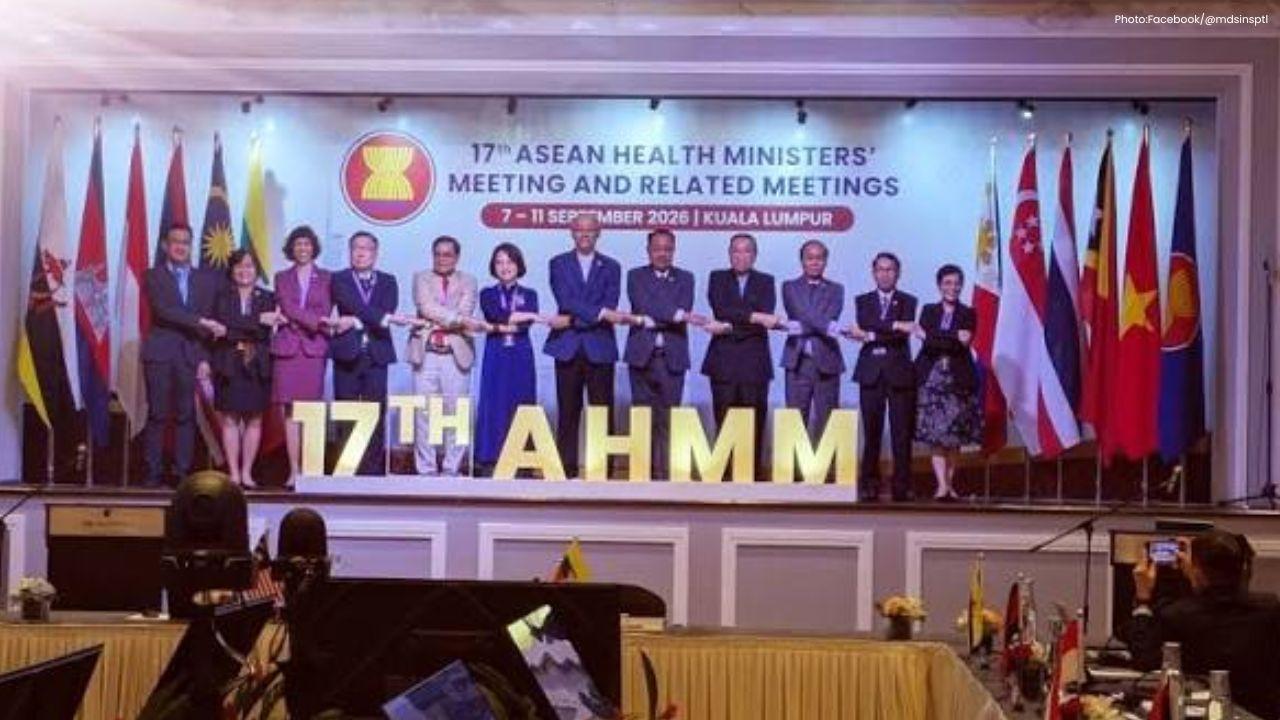
ASEAN health ministers have agreed on a broad five-year strategy aimed at improving healthcare cooperation and preparing Southeast Asian countries for future health emergencies. The agreement was reached during the 17th ASEAN Health Ministers’ Meeting in Kuala Lumpur, which concluded after five days of discussions. A major outcome was the launch of the ASEAN Strategic Health Agenda 2026-2030. The new framework focuses on four major areas: encouraging healthier lifestyles, improving responses to health emergencies and emerging threats, strengthening healthcare systems and access to treatment, and improving food safety. The strategy is intended to provide a common direction for ASEAN member states, although individual countries will take responsibility for different projects based on their resources, expertise and national priorities.
Malaysia is leading the ASEAN Emergency Operations Centre, which provides a platform for regional cooperation on infectious diseases and other public health threats. Through the centre, Malaysia hosts online sessions, brings together experts and supports consultations with other ASEAN countries. Health officials have indicated that many projects under the new agenda are expected to progress through 2030, with ASEAN health officials and ministers regularly reviewing implementation. The approach reflects a growing emphasis on ASEAN health cooperation, particularly after the lessons learned during the Covid-19 pandemic. The pandemic exposed weaknesses in supply chains, healthcare capacity and access to essential medical products. Regional officials now want Southeast Asian countries to be better prepared for similar emergencies.
One of the key developments discussed during the meeting was the proposed Centre for Public Health Emergencies and Emerging Diseases, or ACPHEED. The centre is intended to improve coordination between ASEAN countries when dealing with outbreaks and other major health emergencies.
Officials said ASEAN member states have moved closer to completing the agreement required to establish the centre. Once the agreement is finalised and signed, the centre can move towards operation. ACPHEED is expected to support regional coordination involving vaccines, treatments and diagnostic tools. Individual countries, however, will continue to maintain their own disease surveillance and monitoring systems. The planned centre could eventually become an important part of health emergency preparedness across Southeast Asia, particularly when an outbreak spreads across national borders.
The meeting also saw the launch of the ASEAN Action Plan for Lung Health. Malaysia shared its experience with AI-assisted chest X-ray screening, highlighting how technology can potentially support the early identification of lung-related diseases. Lung health and tobacco control remain important concerns for several ASEAN countries. The regional action plan is expected to support greater cooperation in addressing these challenges. Malaysia also presented its Rare Diseases Playbook during a side event. However, proposals presented through such initiatives cannot automatically become regional programmes. They require agreement among ASEAN member states before being adopted as collective priorities.
While the regional agreement establishes broad priorities, experts say the real challenge for Malaysia will be implementing these commitments within its domestic healthcare system. Research associate Ilyana Mukhriz of the Khazanah Research Institute said Malaysia would need practical action and appropriate financial commitments to turn regional promises into measurable improvements.
By purchasing selected medicines and medical products collectively at the ASEAN level, governments could potentially improve access to essential treatments while reducing procurement costs. Such cooperation could also help lower expenses faced by governments and reduce some out-of-pocket healthcare costs for patients.
Read Also: Tiafoe Proud of Comeback Season Despite Shelton Semi-Final Loss
The Covid-19 pandemic also demonstrated the risks created by heavy dependence on international supply chains. During the health crisis, countries faced difficulties obtaining medicines, medical equipment and other essential supplies. Experts believe ASEAN countries should therefore consider developing stronger regional production capabilities. Creating production hubs within Southeast Asia could help reduce vulnerability to disruptions in global supply chains and provide member states with greater access to critical healthcare products during emergencies. This could become an important element of regional healthcare cooperation in the coming years.
Health experts have also called for closer cooperation in monitoring diseases that can cross national borders. Real-time information sharing, stronger data systems and common procedures could allow ASEAN countries to respond more quickly when an outbreak is detected. Regional standard operating procedures could also help governments coordinate their response instead of operating independently during a rapidly developing crisis. Experts have suggested that progress should be measured using practical indicators, including the cost of medicines, patient spending, availability of critical drugs in public healthcare facilities and the time required to procure advanced medical equipment.
The success of the ASEAN Strategic Health Agenda will ultimately depend on how effectively member states turn agreements into action. Regional plans can establish common goals, but individual governments must provide funding, infrastructure, trained personnel and effective monitoring systems. Malaysia's role will also remain important as it prepares to hand over its ASEAN health sector chairmanship. Experts say continuity will require clear frameworks, regular monitoring, evaluation and public reporting so that governments remain accountable for the commitments they make. The wider objective is to build a stronger and more coordinated ASEAN healthcare system capable of responding to both existing health challenges and new threats.







PM Modi Presents Putin Russian Translation of Thirukkural at BRICS Summit
PM Modi gifts Putin a Russian Thirukkural translation, highlighting India-Russia ties and the global

Tiafoe Proud of Comeback Season Despite Shelton Semi-Final Loss
Frances Tiafoe returns to the world top 10 after a strong US Open run, despite losing to Ben Shelton

Gauff Sees Progress Despite US Open Exit
Coco Gauff says her game is improving despite her US Open exit after a tough semifinal loss to Elena

Rybakina Avoids Pressure Ahead of US Open Final Against Sabalenka
Elena Rybakina prepares for the US Open final against Aryna Sabalenka without adding pressure as she

Najib Razak to Remain in Jail as Malaysia Pardons Board Defers Bid
Malaysia’s Najib Razak remains in prison after the Pardons Board deferred his latest pardon applicat
Singapore Haze Returns as Central Region Air Quality Turns Unhealthy
Singapore haze returns as central air quality worsens, with Singapore air quality entering the unhea