You have not yet added any article to your bookmarks!
Join 10k+ people to get notified about new posts, news and tips.
Do not worry we don't spam!
Post by : Anis Farhan
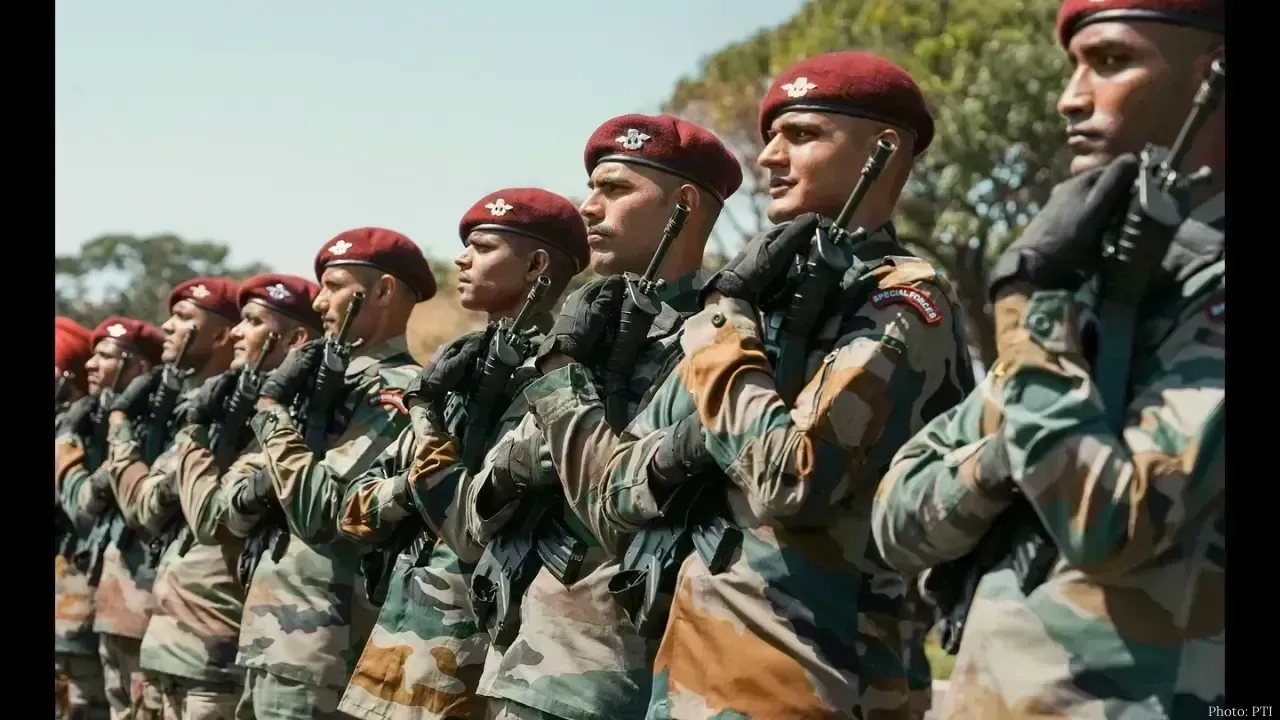
When India observes National Army Day on January 15 every year, public attention rightly converges on the valor, discipline, and sacrifice of the country’s soldiers. National Army Day commemorates the day in 1949 when Lieutenant General (later General) K.M. Cariappa took over as the first Indian Commander-in-Chief of the Indian Army, marking a pivotal moment in India’s military history.
For most citizens, the Indian Army represents the bulwark against external threats — safeguarding borders, deterring aggression, and engaging in wars when necessary. Indeed, these combat missions are essential. However, beyond these conventional perceptions, the Army contributes in multifaceted and deeply impactful ways that rarely make headlines. From humanitarian missions to nation-building efforts, the Indian Army serves as a force for good across a spectrum of roles that extend far beyond warfare.
As we honor the Army’s heroic legacy, it’s equally important to recognize these lesser-known duties that define the Army not just as a defender, but as a pillar of resilience, support, and development for India.
The First Responders in Times of Crisis
When natural disasters strike — be it floods in the Himalayan foothills, landslides in the Northeast, cyclones along the coasts, or earthquakes that shake the earth — the Indian Army is often the first organized force to respond. Their involvement is swift, disciplined, and lifesaving.
One of the most striking examples of this commitment is Operation Jal Rahat 2, which the Indian Army launched during the monsoon season of 2025. Heavy rains in states like Himachal Pradesh, Assam, and Nagaland caused flash floods and landslides, leaving thousands stranded. Army units rapidly deployed across multiple fronts, coordinating evacuations, providing emergency medical care, and distributing food and essential supplies. Through these efforts, they evacuated thousands, delivered clean drinking water, and prevented significant loss of life and infrastructure collapse.
These disaster relief operations require meticulous planning, rapid logistics, and the capacity to operate in challenging conditions. What stands out is the Army’s ability to integrate with civil authorities, ensuring that local administrations can focus on broader recovery while specialists handle rescue and medical support. Whether it’s airlifting stranded villagers or erecting temporary bridges in flood zones, the Army’s humanitarian assistance underscores its motto of “Service Before Self.”
Engineering Progress Across the Length and Breadth of India
India’s strategic geography, with its diverse terrain from deserts to mountains, demands robust infrastructure. The Indian Army plays a critical but often overlooked role in building and maintaining vital connectivity and civic amenities, especially in remote and border areas where commercial contractors struggle to operate.
The Corps of Engineers, an arm of the Indian Army, exemplifies this role. Their work extends far beyond military installations. These engineers design, construct, and maintain roads, bridges, and essential infrastructure that link isolated border villages with the heartland. This not only strengthens defense logistics but also spurs socio-economic development in previously inaccessible regions.
Projects like these often involve navigating rugged terrain, facing harsh weather, and working under time pressures — the same conditions that would challenge civilian engineers. Yet, Army engineers transform these challenges into opportunities for connectivity and growth. Their efforts help integrate far-flung regions into the national mainstream, fostering economic activity, healthcare access, and educational outreach.
Representing India on the International Stage
Beyond national borders, the Indian Army has a long history of participating in United Nations peacekeeping missions, where it helps maintain peace in conflict-affected regions around the world. While these missions command respect internationally, they receive relatively modest coverage in the domestic press.
Peacekeeping duties require a unique blend of military discipline and diplomatic sensitivity. Soldiers on such missions often operate under complex mandates that involve protecting civilians, supporting secure elections, and rebuilding war-torn societies. These roles call for negotiation skills, cultural awareness, and an unwavering commitment to humanitarian principles.
India’s reputation as a responsible global actor is strengthened through these contributions. By serving under the UN flag, Indian troops build trust with international partners and demonstrate that the Army’s role extends far beyond national defense — it encompasses global peace and stability.
Guarding Peace Within the Nation
While the Army’s border defense functions are widely known, its role in internal security is less understood by many civilians. In regions affected by insurgency or extremism, Army units undertake sustained operations to restore law and order and support civil governance.
The Rashtriya Rifles, a counter-insurgency force drawn from the Indian Army, is a key example of this commitment. Operating in sensitive areas, this specialized force engages directly in combat against insurgent groups while also winning the trust of local communities. Their presence aims to stabilize conflict zones, enabling everyday life to resume for citizens living in these regions.
These operations are multifaceted — involving intelligence gathering, infrastructure protection, joint missions with other security forces, and efforts to reduce violence without compromising human rights. Their success lies in balancing tactical precision with community engagement, demonstrating the Army’s adaptability and discipline.
Bridging Military and Civilian Spheres for National Cohesion
The Indian Army’s interaction with civilian institutions is constantly evolving. In recent years, the Army has undertaken initiatives aimed at strengthening civil–military cooperation and fostering skills among both soldiers and civilians.
Programs like Exercise Samanvay Shakti highlight this civil-military integration. Launched in 2025, this initiative brought together military units, local governments, police, disaster response agencies, healthcare teams, and other stakeholders in states like Assam and Manipur to build collaborative mechanisms for disaster management, public health, education, and infrastructure planning.
Similarly, partnerships with academic institutions — such as the Indian Army’s collaboration with Delhi Technological University — reflect a forward-looking approach to research and innovation in defense technology. By offering workshops, joint research projects, and skill development programs in fields like artificial intelligence, robotics, and cybersecurity, the Army is training its personnel for future challenges while contributing to national technological capacity.
These efforts illustrate that the Army is not just a defensive force but also an institution invested in national development, education, and innovation.
While the five roles discussed above are significant, they are part of an even broader tapestry of service.
During health crises, especially the COVID-19 pandemic, the Army’s medical corps established field hospitals, supported logistics for vaccine distribution, and assisted overwhelmed civil health systems. Their disciplined approach and rapid deployment capabilities proved invaluable.
Animals have historically played a vital role in military logistics and operations. The Army’s Remount & Veterinary Corps cares for horses, mules, camels, and military working dogs. Their contributions will be honored in public parades such as the 2026 Republic Day celebrations, which will showcase an animal contingent, highlighting this unique aspect of military life.
Army events that engage youth and students cultivate a culture of discipline, civic responsibility, and national pride. Exhibitions such as “Know Your Army,” which display indigenous defence technologies and mechanized weaponry, serve as platforms to educate and inspire citizens about the Army’s capability and role.
National Army Day is more than a ceremonial observance. It is a reminder that the Indian Army — while anchored in defense — carries the weight of diverse responsibilities that strengthen the nation in times of war, peace, crisis, and calm alike.
From disaster relief to peacekeeping abroad, from infrastructure development in remote hills to sophisticated research collaborations, the Army’s imprint is everywhere. Its commitment to Protect, Serve, and Inspire resonates deeply in every community it touches.
In recognizing these lesser-known roles, we not only broaden our understanding of what the Army does, but we also deepen our appreciation for the silent, sustained efforts of soldiers who uphold not just borders, but humanity itself.
This article is based on publicly available information and general knowledge about the Indian Army’s roles and contributions. The perspectives shared here aim to offer insight and appreciation, and do not reflect confidential military operations.










Danaher to Launch AI-Powered Autonomous Research Lab in 2027
Danaher plans an AI research lab for 2027, combining robotics and automation to speed up drug discov

Musk Welcomes German Support for Tesla Driver Assistance Tech as EU Approval Push Continues
Elon Musk welcomes Germany's backing for Tesla FSD as the company seeks EU approval amid speed, safe

Microsoft and Nvidia CEOs to Unveil AI Laptop at San Francisco Event
Microsoft and Nvidia showcase a new AI laptop with RTX Spark chips as they push powerful local AI co

Man to face charges over perfume thefts at Changi Airport
A 47-year-old man faces charges over perfume theft at Changi Airport after six items worth nearly S$

Google Signs 3.6-GW Power Deal With Constellation Energy in US
Google signs a 3.6-GW power deal with Constellation Energy, including nuclear power upgrades to supp

Harmanpreet Kaur Steps Down as India Captain Across All Formats
Harmanpreet Kaur steps down as India captain across all formats after a remarkable leadership journe