You have not yet added any article to your bookmarks!
Join 10k+ people to get notified about new posts, news and tips.
Do not worry we don't spam!
Post by : Badri Ariffin
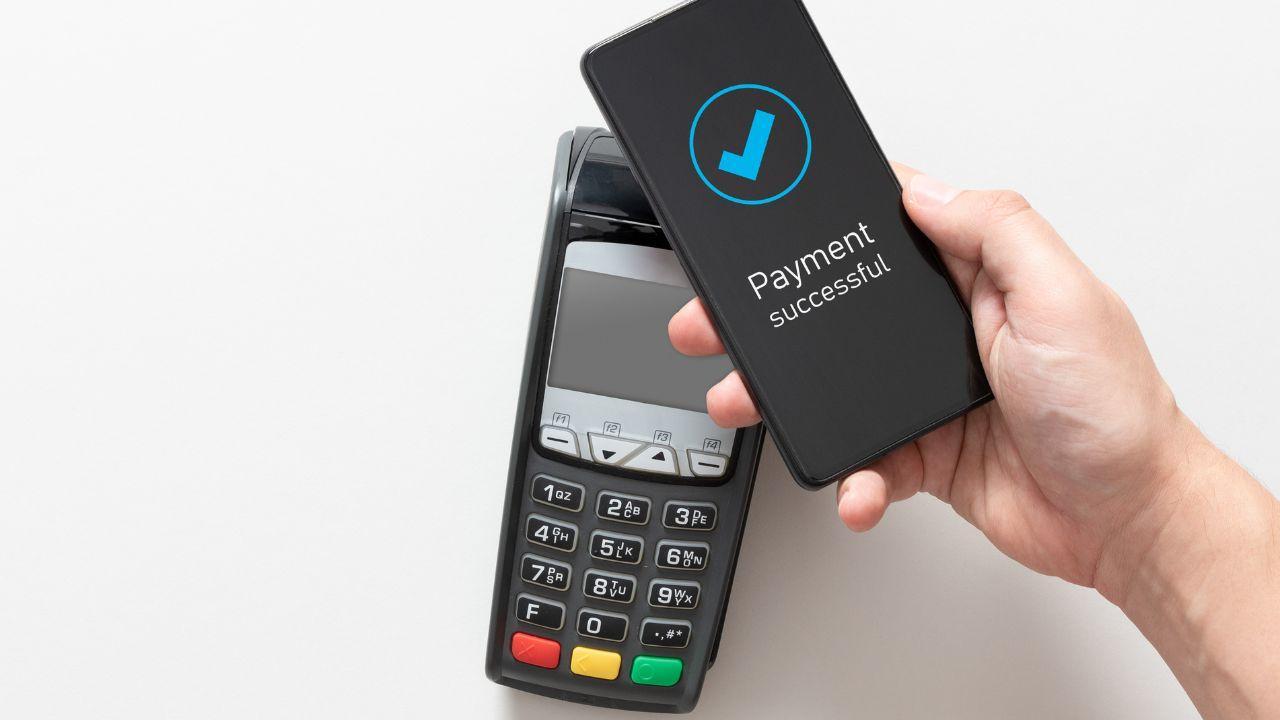
UPI payments above Rs 2,000 made to merchants will attract a Merchant Discount Rate (MDR) of 0.4 per cent from October 15, according to the National Payments Corporation of India (NPCI). The charge will be paid by merchants and not customers.
Under the revised framework, a merchant receiving Rs 10,000 through UPI will pay Rs 40 as MDR. The fee will apply only to person-to-merchant (P2M) transactions.
The MDR for eligible UPI P2M payments has been fixed at 0.4 per cent and capped at Rs 300 per transaction. This means the fee will not go above Rs 300, even when a merchant receives a UPI payment of Rs 75,000 or more.
An e-commerce platform, grocery store or other shopkeeper will be classified as a merchant under the P2M framework if it receives more than Rs 1 lakh per month from customers through UPI.
The Union Ministry of Finance has said banks have been advised to ensure that merchants do not transfer the MDR cost to customers.
Small merchants receiving up to Rs 1 lakh per month in their bank accounts through UPI QR codes will continue to pay zero MDR. They will remain covered under NPCI's Person-to-Person Merchant (P2PM) framework.
NPCI said the classification is intended to cover micro-businesses and informal businesses while allowing them to continue accepting digital payments without a merchant charge.
Merchants receiving more than Rs 1 lakh through UPI for three consecutive months will be shifted to the P2M category.
Read Also: North Korea Defends Nuclear Expansion, Citing US Military Buildup
Person-to-person (P2P) UPI transactions will also remain free regardless of the transaction amount. The Finance Ministry said there will be no monthly quotas, volume limits or tiered caps on free UPI transactions for individuals.
The daily transaction limits of Rs 1 lakh to Rs 5 lakh set by banks and NPCI are risk-management measures and are not commercial fee limits, the ministry said.
A separate flat fee of Rs 5 will apply to UPI payments received by businesses in certain industry categories.
These include rail ticket payments, fuel, agricultural inputs, credit card dues, telecom and utility bills, insurance premiums and tax payments.
The Finance Ministry said the flat-fee system is intended to prevent costs from increasing in public services, utility bill collections and sectors where profit margins are relatively low.
Payments in these industry categories account for 17 per cent of UPI P2M transactions by volume and 46 per cent by value.
NPCI and the Finance Ministry said transactions above Rs 2,000 account for only 4 per cent of all UPI payments made to merchants. The remaining 96 per cent have a transaction value of less than Rs 2,000.
However, payments above Rs 2,000 represent around two-thirds of the total value of UPI P2M transactions.
In 2025-26, UPI recorded more than 24,000 crore transactions with a combined value of Rs 314 lakh crore.
The revised charges will be reviewed every six months to one year. The MDR revenue will be shared among banks, payment apps and payment service providers.
The Reserve Bank of India has backed the introduction of MDR on large-value UPI merchant transactions, saying the move will support the long-term sustainability of India's digital payments ecosystem.
In a post on X, the RBI said a fair distribution of MDR among participants in the UPI ecosystem would support continued investment in technology, infrastructure and payment acceptance networks.
According to the central bank, such investments can help expand UPI acceptance, increase the customer base and support continued growth in transaction volumes.
NPCI said merchants generally absorb nominal digital processing costs because digital payments can contribute to higher business volumes, increased footfall, higher average transaction values and lower cash-handling risks.
The organisation said there should therefore be no reason for shopkeepers to increase retail prices to recover the MDR from customers.
The new revenue is also expected to support continued investment in technology, cybersecurity infrastructure, AI-based fraud detection and encryption upgrades.
NPCI said the MDR framework will provide funding for technological development and create room for new fintech startups and technology companies to enter the digital payments sector and compete with well-funded technology companies.
A lower MDR of 0.02 per cent has been prescribed for UPI payments involving mutual funds, securities and stock brokers.
NPCI said the lower rate is aimed at encouraging retail participation in formal financial markets.
SIP payments made through UPI will not attract even the 0.02 per cent charge. Recurring standing instructions will also remain outside this fee.
This includes automated payments such as monthly utility bills and OTT streaming subscriptions.
There has been no MDR on UPI transactions and RuPay debit card payments since January 2020. The move was introduced to encourage wider adoption of digital payments across India.
To support some of the costs associated with these payments, the government has been providing incentives for eligible low-value transactions made to small merchants under the scheme for promoting RuPay debit cards and low-value BHIM-UPI P2M transactions.
The incentive is capped at 0.15 per cent of the transaction value, while large merchants are not covered under the scheme.
The latest framework brings back MDR only for specified P2M transactions above Rs 2,000, while P2P payments continue to remain free.
The new MDR is a merchant-side charge. The Finance Ministry has said banks have been advised to prevent merchants from passing the cost on to customers.
The ministry has also said UPI app providers cannot impose platform fees or hidden charges on users.
The government described the revised MDR framework as a measure intended to make UPI financially sustainable, support further expansion in rural and semi-urban areas and maintain competitiveness while keeping most UPI payments free.
The revised charges will come into effect from October 15 and will be reviewed every six months to one year.





iPhone 18 Pro and Pro Max Go on Sale in India
iPhone 18 Pro and Pro Max sales begin in India with new camera, A20 Pro chip, AI features and strong

India, Pakistan Summon Diplomats After Naval Vessels Collide
India and Pakistan summon each other's diplomats after naval vessels collide in the Arabian Sea, wit

Indonesia Rescuers Plan to Turn Capsized Ship Upright as 129 Remain Missing
Indonesian rescuers plan to turn the capsized Virgo Transport 8 upright as strong currents hamper th
Avinash Sable Overcomes Hurdle Fear Ahead of Asian Games Title Defence
Avinash Sable returns after injury as he targets the Asian Games title, with Asian Games 2026 and In
Grab to Expand Autonomous Vehicle Fleet from 10 to 50 in Singapore
Grab will expand its autonomous vehicle fleet from 10 to 50 in Singapore, with new AV services plann

Judge Refuses to Record RM1.7mil Road Accident Settlement
Malaysia High Court says court approval is needed before a RM1.7 million road accident settlement in