
You have not yet added any article to your bookmarks!
Join 10k+ people to get notified about new posts, news and tips.
Do not worry we don't spam!
Post by : Saif Rahman
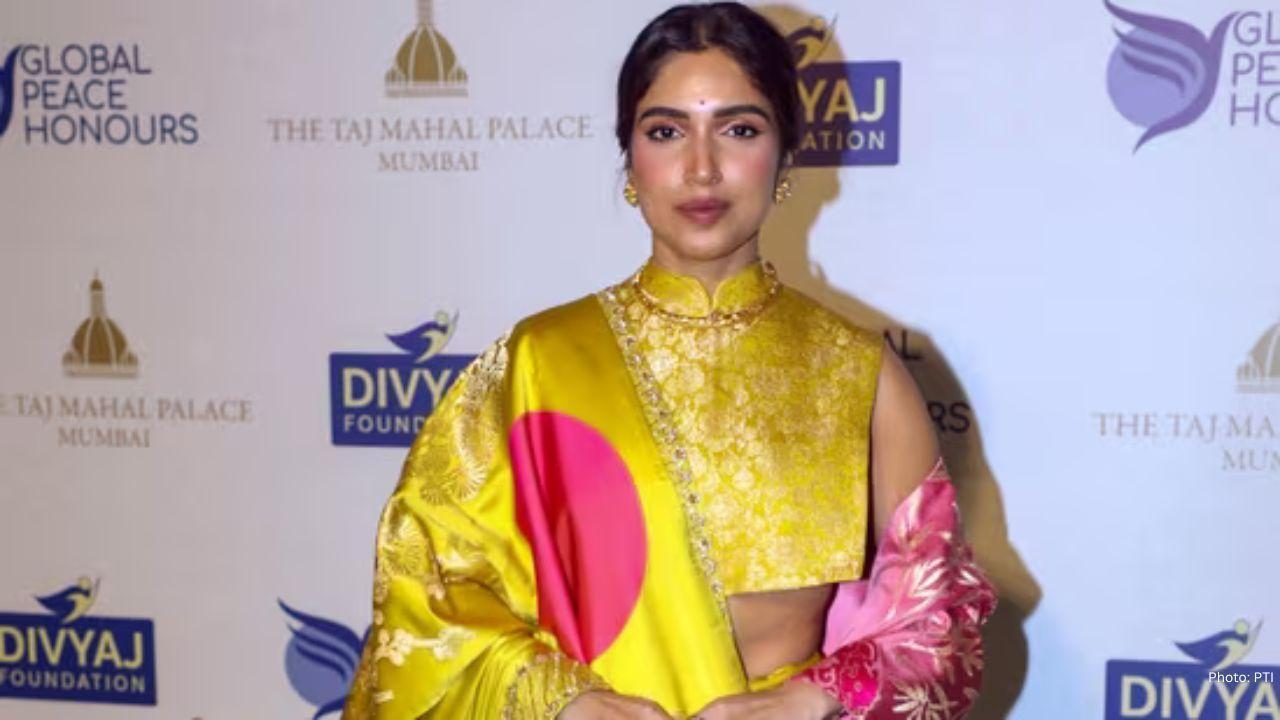
At the Global Peace Honours 2025, Bhumi Pednekar left a lasting impression with her stunning appearance in a bright yellow Mashroo silk saree from Ekaya Banaras. Her choice epitomized the beauty of Indian fashion, demonstrating how traditional attire can seamlessly merge with contemporary aesthetics.
The saree, adorned with vibrant yellow hues, perfectly complemented the striking red carpet. Its luxurious drape featured intricate gold motifs and a meticulously designed border that enhanced its majestic flair. Priced at ₹62,975, this Mashroo silk saree reflects the rich textile heritage and craftsmanship of the fabric. She combined it with a handwoven mustard yellow blouse costing ₹24,975 and a chic canary yellow silk shawl, valued at ₹14,975, adding depth to her ensemble.
Bhumi styled the saree traditionally, with the palla elegantly pleated at the front and the shawl gracefully draped over her shoulder. This approach balanced the saree's timeless appeal with the contemporary cut of the blouse. Completing her look, she wore a golden choker, delicate stud earrings, a subtle bindi, and opted for natural makeup, all of which contributed to her soft and sophisticated appearance. An antique folding fan served as a unique accessory, adding to her distinct style, while her neatly parted hair bespoke simplicity and grace. This ensemble underscored that Indian fashion can convey power without ostentation.
Her appearance also emphasized the significance of India's handloom heritage. In an era dominated by bold global fashion trends, she illustrated that traditional textiles retain their unparalleled elegance and depth. Bhumi's choice highlighted the notion that formidable fashion statements often stem from cultural roots.
Mashroo fabric has a storied past in India; its origins lie with Muslim communities who believed pure silk should not directly touch the skin. Skilled artisans ingeniously merged silk and cotton threads, creating a fabric that has the aesthetic of silk but the touch of cotton. The term “Mashroo” translates to “this is allowed,” a testament to its cultural significance while offering luxurious appeal.
Mandvi in Gujarat is hailed as the heart of Mashroo weaving, with both Hindus and Muslims contributing across generations. The fabric’s production involved the collaborative efforts of farming communities like the Ahir Patels, while the Rabari and Ahir women added intricate embroidery and mirror embellishments, enriching this craft. This tradition fostered community ties and celebrated shared artistic talents.
Bhumi Pednekar’s recent appearance serves as a testament to how celebrities can renew admiration for traditional fabrics, cultural identity, and Indian craftsmanship. Her understated elegance proved that one doesn’t need extravagant designs to stand out, reminding audiences of the rich narrative embedded in Indian fashion and its modern intersections with heritage.










PM Modi Pays Tribute to Mahatma Gandhi, Urges People to Support Khadi
PM Modi pays tribute to Mahatma Gandhi on Gandhi Jayanti and urges citizens to support Khadi and the

Amazon Seeks to Offload $8 Billion in Nvidia Chips to Investors
Amazon plans to move $8 billion in Nvidia chips to investors, using a new financing model to strengt

Samsung Raises Galaxy S26 Prices as Memory Chip Costs Rise
Samsung raises Galaxy S26 prices in South Korea as rising memory chip costs put pressure on smartpho

Lewis Hamilton Calls Singapore Grand Prix One of F1's Toughest Races
Lewis Hamilton discusses the demanding Singapore Grand Prix and brings Plus44 and Almave to Singapor

Denmark's Pandora Opens World's Largest Jewellery Factory in Vietnam
Pandora opens its largest jewellery factory in Vietnam, expanding global production, strengthening s

Gautam Gambhir Questions Batting-Friendly Pitches After India's Record ODI Chase
Gautam Gambhir questions batting-friendly ODI pitches after India’s record chase, calling for a bett

