
You have not yet added any article to your bookmarks!
Join 10k+ people to get notified about new posts, news and tips.
Do not worry we don't spam!
Post by : Shakul
The United States and Armenia have signed a major strategic partnership agreement in Yerevan just days before Armenia heads into an important parliamentary election. The agreement highlights Armenia’s growing cooperation with Western nations at a time of increasing tensions with Russia.
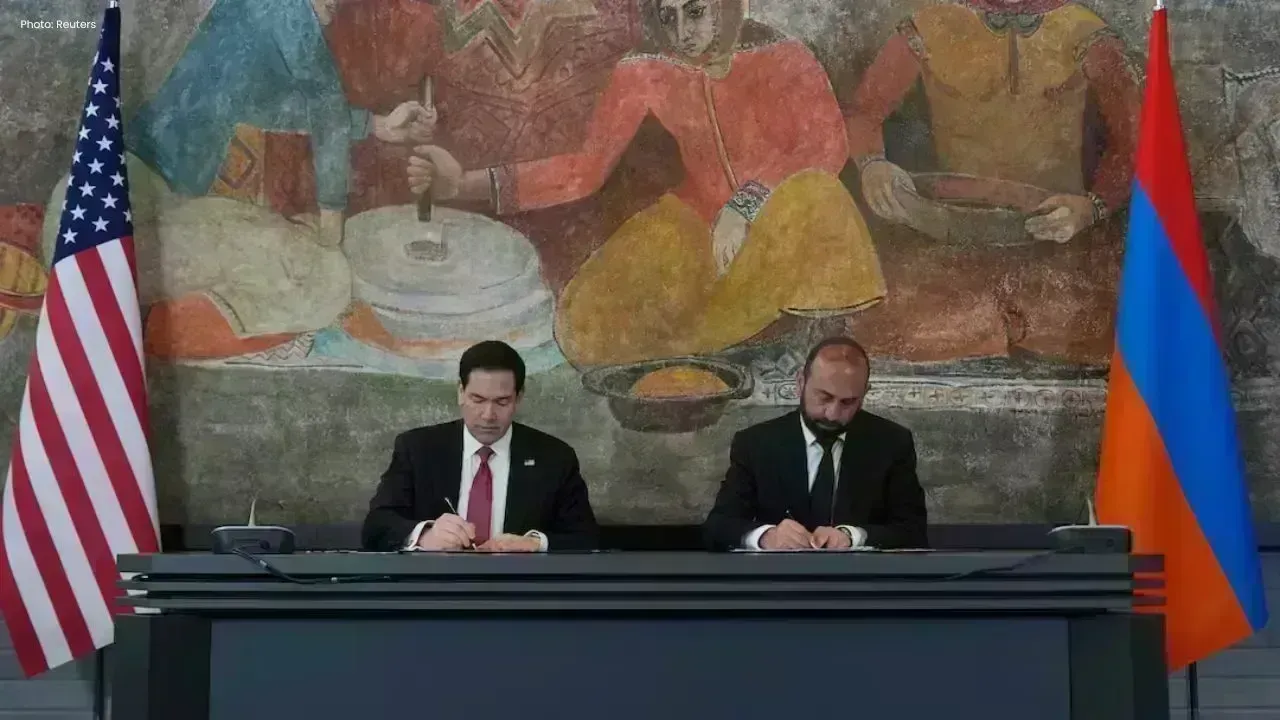
U.S. Secretary of State Marco Rubio and Armenian Foreign Minister Ararat Mirzoyan signed the agreement during a high-level ceremony in the Armenian capital on Tuesday. The deal includes cooperation in critical minerals, regional transport connectivity, and economic development.
The visit comes less than two weeks before Armenia’s parliamentary elections scheduled for June 7. Prime Minister Nikol Pashinyan’s ruling Civil Contract party is facing strong opposition from several political groups that support closer ties with Russia.
As part of the agreement, the United States and Armenia also signed a framework related to critical mineral resources. Both countries said they would work together to secure reliable access to important minerals used in modern industries and advanced technologies.
Another major part of the agreement involves support for a proposed 43-kilometer transit corridor across southern Armenia. The route would connect Azerbaijan directly with its Nakhchivan exclave and Turkey. The project has been named the “Trump Route for International Peace and Prosperity,” also known as TRIPP.
The proposed corridor is considered an important part of the broader peace process between Armenia and Azerbaijan after decades of conflict in the South Caucasus region. Although the two countries reached a peace understanding last year, a final formal peace treaty has still not been signed.
The new route is expected to improve trade links between Asia and Europe while reducing dependence on routes passing through Russia and Iran. Analysts believe the project could become strategically important for global trade and energy supply chains.
Armenia’s growing partnership with the West has created fresh tensions with Moscow. Russia has warned Armenia that closer alignment with Western countries could lead to economic consequences, including higher gas prices. Moscow recently restricted imports of Armenian flowers, mineral water, and brandy, signaling dissatisfaction with Yerevan’s foreign policy direction.
Despite these challenges, Armenian leaders continue to deepen relations with Western partners, including the European Union and the United States. Armenia recently hosted a major European Union summit, further strengthening its ties with Europe.
Political observers say the election outcome could shape Armenia’s geopolitical direction for years to come. The country now faces a difficult balance between maintaining traditional ties with Russia while expanding partnerships with Western nations and regional allies.










PM Modi Pays Tribute to Mahatma Gandhi, Urges People to Support Khadi
PM Modi pays tribute to Mahatma Gandhi on Gandhi Jayanti and urges citizens to support Khadi and the

Amazon Seeks to Offload $8 Billion in Nvidia Chips to Investors
Amazon plans to move $8 billion in Nvidia chips to investors, using a new financing model to strengt

Samsung Raises Galaxy S26 Prices as Memory Chip Costs Rise
Samsung raises Galaxy S26 prices in South Korea as rising memory chip costs put pressure on smartpho

Lewis Hamilton Calls Singapore Grand Prix One of F1's Toughest Races
Lewis Hamilton discusses the demanding Singapore Grand Prix and brings Plus44 and Almave to Singapor

Denmark's Pandora Opens World's Largest Jewellery Factory in Vietnam
Pandora opens its largest jewellery factory in Vietnam, expanding global production, strengthening s

Gautam Gambhir Questions Batting-Friendly Pitches After India's Record ODI Chase
Gautam Gambhir questions batting-friendly ODI pitches after India’s record chase, calling for a bett

