
You have not yet added any article to your bookmarks!
Join 10k+ people to get notified about new posts, news and tips.
Do not worry we don't spam!
Post by : Shweta
A military action by the United States aimed at an alleged drug-trafficking vessel in the eastern Pacific Ocean has resulted in one fatality and left two survivors stranded in the sea, as reported by US officials. This incident is part of an escalating military initiative targeting suspected narcotics trafficking organizations in Latin American waters.
On Tuesday, the US Southern Command, known as SOUTHCOM, executed the strike, overseeing military efforts in Central and South America, as well as the Caribbean. Officials indicated that the vessel was suspected of engaging in “narco-trafficking” and was associated with criminal groups operating along established drug-smuggling routes in the Pacific.
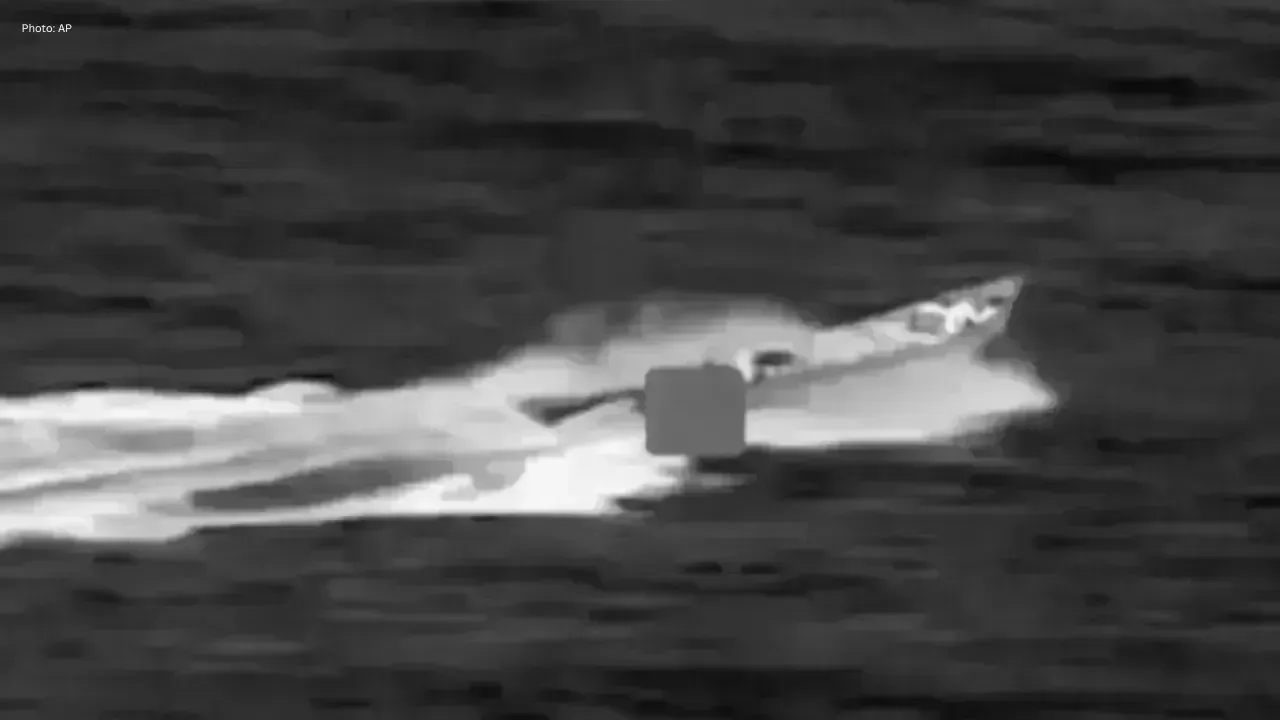
Footage shared on social media by SOUTHCOM depicted a speeding boat shortly before a significant explosion sent it sinking. The striking visuals have fueled discussions about the increasing use of military force in the context of anti-drug efforts. According to officials, one trafficker was killed in the strike, while two individuals were reported drifting in the aftermath.
In response, the US military coordinated with the Coast Guard to initiate a search-and-rescue operation for the survivors. However, authorities have not disclosed any details regarding the nationality or identities of those involved, and it's uncertain if they were successfully rescued. There were no injuries among American military forces during the operation.
This strike is part of a broader initiative named “Southern Spear,” which began under the Trump administration in September 2025, targeting suspected drug-trafficking networks in the Caribbean Sea and eastern Pacific Ocean. Reports indicate that this campaign has led to over 194 fatalities in numerous military actions against suspected drug smuggling crafts.
President Donald Trump has supported these operations, asserting that the United States is engaged in an “armed conflict” with dangerous Latin American drug cartels. Recently, the White House has authorized a more expansive counterterrorism approach focused on dismantling trafficking organizations linked to widespread drug distribution and overdose fatalities in the nation.
Yet, this military initiative faces mounting scrutiny from human rights activists, legal analysts, and various political figures. Critics contend that the US has failed to publicly provide definitive evidence that all targeted vessels were actively engaged in drug transport at the time of the strikes. Furthermore, there are escalating concerns surrounding civilian casualties and the legal grounds for employing lethal military action in international maritime zones.
The Pentagon's inspector general is reportedly reviewing whether military protocols were adhered to in targeting procedures, although this scrutiny won’t address the broader legality of the strikes themselves. In the meantime, US officials are continuing to assert the necessity of the campaign to halt the proliferation of international narcotics trafficking networks throughout the Western Hemisphere.










PM Modi Pays Tribute to Mahatma Gandhi, Urges People to Support Khadi
PM Modi pays tribute to Mahatma Gandhi on Gandhi Jayanti and urges citizens to support Khadi and the

Amazon Seeks to Offload $8 Billion in Nvidia Chips to Investors
Amazon plans to move $8 billion in Nvidia chips to investors, using a new financing model to strengt

Samsung Raises Galaxy S26 Prices as Memory Chip Costs Rise
Samsung raises Galaxy S26 prices in South Korea as rising memory chip costs put pressure on smartpho

Lewis Hamilton Calls Singapore Grand Prix One of F1's Toughest Races
Lewis Hamilton discusses the demanding Singapore Grand Prix and brings Plus44 and Almave to Singapor

Denmark's Pandora Opens World's Largest Jewellery Factory in Vietnam
Pandora opens its largest jewellery factory in Vietnam, expanding global production, strengthening s

Gautam Gambhir Questions Batting-Friendly Pitches After India's Record ODI Chase
Gautam Gambhir questions batting-friendly ODI pitches after India’s record chase, calling for a bett

