
You have not yet added any article to your bookmarks!
Join 10k+ people to get notified about new posts, news and tips.
Do not worry we don't spam!
Post by : Shweta
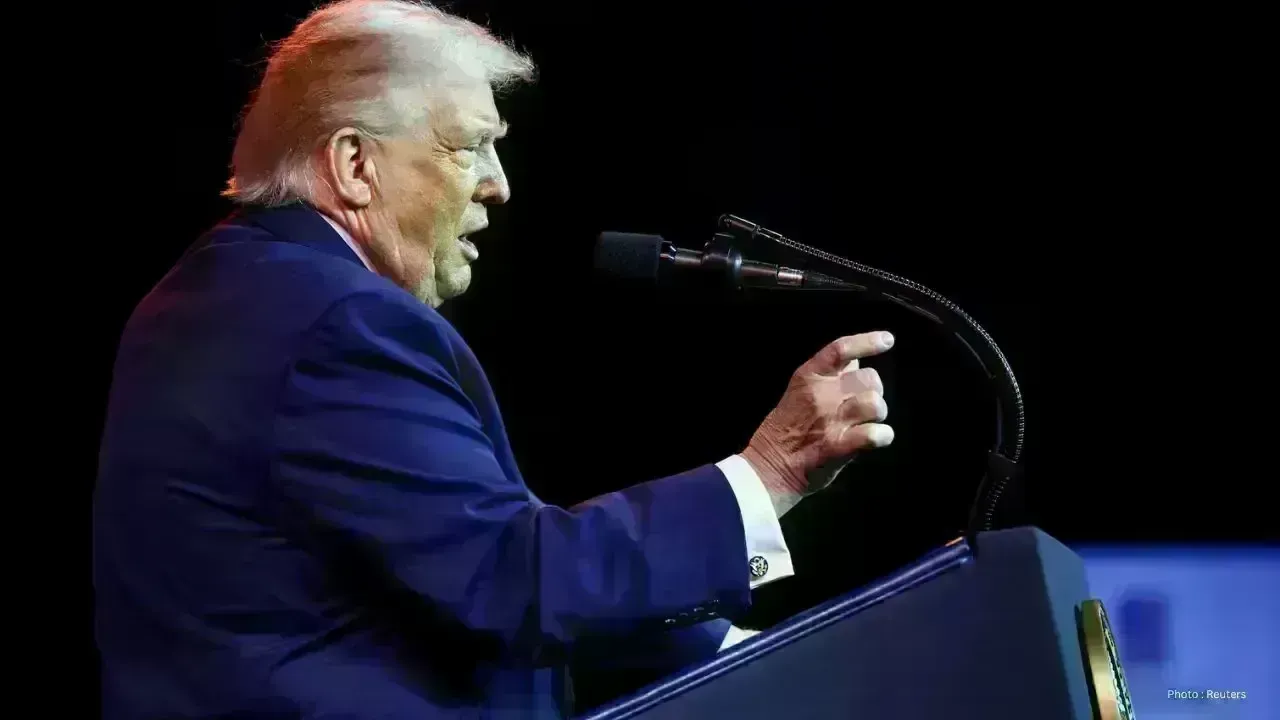
Donald J. Trump's recent proposal to raise the U.S. defense budget to $1.5 trillion has ignited a considerable political discussion. If sanctioned, this plan would represent the largest military expenditure in American history, even when accounting for inflation.
This proposal signifies a substantial rise from previous budgets, including those during Joe Biden's administration, where defense spending neared the $1 trillion mark. Analysts argue that the abrupt 50 percent spike in a single year prompts concerns regarding both its necessity and implementation.
A significant fraction of this proposed budget is anticipated to be allocated for arms procurement and military tech. Weapon expenditures might increase considerably, alongside enhanced funding for R&D, covering advanced systems, satellites, and AI tech. Nonetheless, experts caution that a large portion of the funding remains focused on traditional military assets such as warships and fighter jets.
Critics highlight tangible hurdles ahead. Reports indicate that the U.S. might currently lack the industrial capability and skilled workforce required to manufacture such massive amounts of military gear. The shipbuilding sector, in particular, faces challenges due to a shortage of specialized labor and supply chain constraints, potentially stalling or restricting the effective use of allocated finances.
Moreover, there are significant concerns regarding the financial ramifications of this plan. To facilitate greater defense funding, the proposal suggests cuts to essential domestic sectors like education, healthcare, and housing. This balancing act raises political risks, especially in an election year, where voters could react unfavorably to diminished social services.
Even some Republican lawmakers are starting to raise alarms about the escalating federal deficit. Despite proposed budget reductions, the substantial increase in defense spending could amplify fiscal pressures on the government.
The discussions around this proposal also touch upon military strategy. Analysts question whether the weapon types prioritized in the budget align with the realities of modern warfare, particularly given the evolution of combat technologies such as drones and cybersecurity. Concerns linger that high-cost equipment may not always yield the desired effectiveness compared to more economical alternatives witnessed in recent conflicts.
Proponents of the budget underscore the necessity for enhanced defense spending amid global uncertainties and escalating geopolitical tensions. Conversely, critics caution that absent clear justification and strategic planning, this proposal could engender both economic challenges and political friction.
Ultimately, Trump's proposed defense budget is poised to become a central issue in U.S. politics, illustrating deep divisions over national security, fiscal policies, and long-term strategic goals.










PM Modi Pays Tribute to Mahatma Gandhi, Urges People to Support Khadi
PM Modi pays tribute to Mahatma Gandhi on Gandhi Jayanti and urges citizens to support Khadi and the

Amazon Seeks to Offload $8 Billion in Nvidia Chips to Investors
Amazon plans to move $8 billion in Nvidia chips to investors, using a new financing model to strengt

Samsung Raises Galaxy S26 Prices as Memory Chip Costs Rise
Samsung raises Galaxy S26 prices in South Korea as rising memory chip costs put pressure on smartpho

Lewis Hamilton Calls Singapore Grand Prix One of F1's Toughest Races
Lewis Hamilton discusses the demanding Singapore Grand Prix and brings Plus44 and Almave to Singapor

Denmark's Pandora Opens World's Largest Jewellery Factory in Vietnam
Pandora opens its largest jewellery factory in Vietnam, expanding global production, strengthening s

Gautam Gambhir Questions Batting-Friendly Pitches After India's Record ODI Chase
Gautam Gambhir questions batting-friendly ODI pitches after India’s record chase, calling for a bett

