
You have not yet added any article to your bookmarks!
Join 10k+ people to get notified about new posts, news and tips.
Do not worry we don't spam!
Post by : Shweta
A controversial military boundary termed the “Yellow Line” has been introduced by Prime Minister Benjamin Netanyahu’s administration, leading to heightened concerns over potential ceasefire breaches between Israel and Lebanon. This new zone extends approximately 10 kilometers into Lebanese territory and remains under Israeli military oversight.
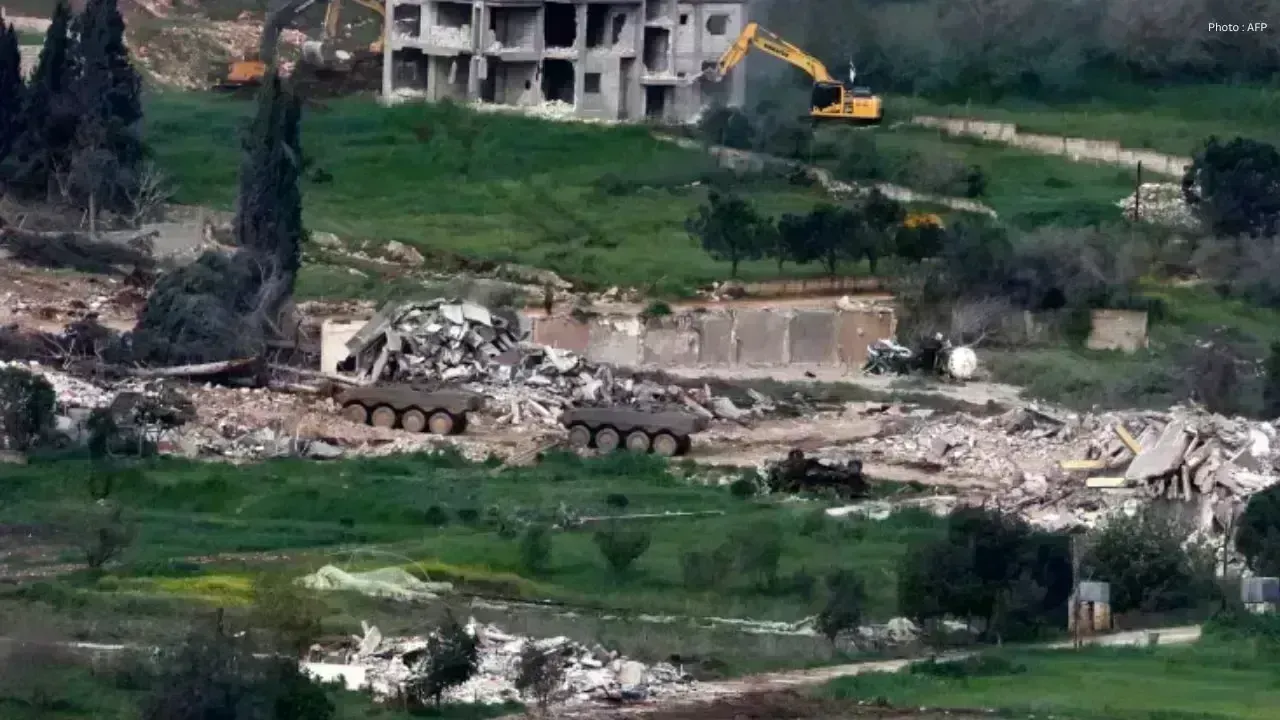
Initially, the ceasefire—a result of weeks of fierce hostilities—was intended to halt all forms of aggression. However, on-ground reports indicate that Israeli troops have persistently engaged in actions such as demolishing structures, firing artillery, and conducting land clearances near the border. Such activities pose questions regarding the effective enforcement of the ceasefire.
Israeli authorities maintain that the “Yellow Line” serves as a crucial security buffer. They argue that controlling this territory is vital for safeguarding against threats from Hezbollah and for Israel's capacity to respond defensively when deemed necessary. The government has announced intentions to retain military presence in the area and to carry out operations as required.
Conversely, Lebanon and Hezbollah vehemently oppose this initiative, asserting that the Israeli military's presence in Lebanese lands infringes on their sovereignty and contradicts the essence of the ceasefire. They contend that a true ceasefire necessitates a complete cessation of military undertakings, rather than a selective approach.
The scenario is further muddled by ambiguous language in the ceasefire document. While it calls for an end to hostilities, it simultaneously permits Israel to act in self-defense against perceived threats. Analysts note that this opens the door to varied interpretations, complicating the agreement's enforcement.
Additionally, there is growing concern that the provisional military zone might be solidified as a permanent fixture. Some experts speculate that Israel could leverage ownership of this land in future discussions. This anxiety is particularly palpable among Lebanese residents, many of whom have been displaced and are barred from accessing their homes within the designated area.
The conflict's repercussions extend beyond Lebanese borders, interlinking with broader regional dynamics involving Iran and the United States. Escalation in Lebanon holds the potential to disrupt diplomatic initiatives in the area and elevate the risk of further confrontation.
In spite of both parties publicly asserting the persistence of the ceasefire, ongoing military actions and disputes surrounding the “Yellow Line” indicate that tensions remain precarious. The fragile future of the ceasefire hinges on the ability of both sides to agree on explicit terms and to minimize provocations that could reignite violence.










PM Modi Pays Tribute to Mahatma Gandhi, Urges People to Support Khadi
PM Modi pays tribute to Mahatma Gandhi on Gandhi Jayanti and urges citizens to support Khadi and the

Amazon Seeks to Offload $8 Billion in Nvidia Chips to Investors
Amazon plans to move $8 billion in Nvidia chips to investors, using a new financing model to strengt

Samsung Raises Galaxy S26 Prices as Memory Chip Costs Rise
Samsung raises Galaxy S26 prices in South Korea as rising memory chip costs put pressure on smartpho

Lewis Hamilton Calls Singapore Grand Prix One of F1's Toughest Races
Lewis Hamilton discusses the demanding Singapore Grand Prix and brings Plus44 and Almave to Singapor

Denmark's Pandora Opens World's Largest Jewellery Factory in Vietnam
Pandora opens its largest jewellery factory in Vietnam, expanding global production, strengthening s

Gautam Gambhir Questions Batting-Friendly Pitches After India's Record ODI Chase
Gautam Gambhir questions batting-friendly ODI pitches after India’s record chase, calling for a bett

