
You have not yet added any article to your bookmarks!
Join 10k+ people to get notified about new posts, news and tips.
Do not worry we don't spam!
Post by : Jyoti Gupta
Photo:Reuters
The war in Gaza has reached a critical turning point, marked by escalating airstrikes, the looming threat of a major ground battle in Gaza City, and the shocking killing of five journalists—an incident that encapsulates the mounting risks for civilians and the global outrage over press freedom and human suffering.
The Attack on Journalists
A deadly Israeli airstrike hit a tent where reporters were working in Gaza City. Five journalists lost their lives instantly. The tent, set up for media coverage, was near one of the most heavily bombed areas of the city.
Witnesses say the journalists were clearly identifiable as members of the press. Cameras, tripods, and recording equipment were scattered among the rubble. Gaza residents and fellow reporters believe this was a direct attempt to silence voices telling the world about the conflict.
Israeli authorities, however, accused one of the victims of being linked to Hamas, claiming he was part of a militant cell responsible for rocket attacks on Israel. No evidence was immediately shown, leading to widespread demands for proof from international observers.
Families and friends gathered for the funerals the next day. The coffins, draped in flags, were carried through the streets of Gaza City as mourners chanted and cried. For many, the deaths were another reminder that being a journalist in Gaza is among the most dangerous jobs in the world.
Escalating Bombardment
In the days leading up to the attack, the bombing of Gaza City had already intensified. According to Gaza’s civil defence agency, strikes over the past three days have been some of the heaviest since the war began nearly two years ago.
Mahmud Bassal, a civil defence spokesman, said neighborhoods like Zeitoun and Sabra have been repeatedly targeted. He described “very heavy airstrikes” hitting homes, including high-rise buildings. “The ground shakes with every strike,” said one local resident, Majed al-Hosary. “There are people trapped under the rubble that we can’t reach because the bombing hasn’t stopped.”
At least 24 people were killed across Gaza on Tuesday alone. The United Nations warns that the constant shelling and blockade are creating a risk of famine, with food and clean water running dangerously low.
Netanyahu’s Plan for ‘Victory’
Israeli Prime Minister Benjamin Netanyahu has announced that the military will expand its operations into Gaza City and the central refugee camps. He has called these areas the “last strongholds” of Hamas.
Gaza City, once home to 760,000, now shelters even more people fleeing violence elsewhere. Any major battle here threatens enormous civilian casualties, reinforcing that the entire conflict is pushing the region to an unprecedented humanitarian crisis.
Security experts say fighting in such a crowded city will be slow, dangerous, and extremely destructive. Israeli troops are expected to face thousands of Hamas fighters hidden among narrow streets, tunnels, and ruined buildings.
International Outrage and Calls for Action
The killing of the journalists has triggered a strong international reaction. The United Nations, the European Union, and multiple world leaders condemned the attack.
French President Emmanuel Macron called Israel’s planned ground offensive “a disaster waiting to happen” and proposed creating an international coalition under UN authority to stabilise Gaza.
Italy’s defence minister, Guido Crosetto, said his country is even considering sanctions — not against the Israeli people, but to pressure the government into changing its course. He compared Israel’s actions to other global conflicts where civilian suffering was ignored.
Australia’s Prime Minister Anthony Albanese accused Netanyahu of being “in denial” about the humanitarian crisis. Australia, along with France, Britain, and Canada, has announced it will recognise a Palestinian state at the upcoming United Nations General Assembly.
Hostage Families Demand Action
Inside Israel, the families of hostages still held in Gaza are becoming increasingly vocal. On August 12, opposition leader Yair Lapid backed their call for a nationwide strike this coming Sunday.
The strike is meant to show solidarity and pressure the government to do more to secure the release of the remaining captives. Of the 251 people taken during Hamas’s October 2023 attack, 49 are still in Gaza, and Israeli officials believe 27 of them are dead.
The Hostages and Missing Families Forum accused the government of “sacrificing” the hostages for an “endless, aimless war.” They fear that expanding military action could lead to more deaths among those still held.
The Human Cost
The war began in October 2023 when Hamas fighters stormed southern Israel, killing over 1,200 people, mostly civilians. Israel’s military response has since killed more than 61,000 Palestinians, according to Gaza’s health ministry — numbers considered reliable by the UN. The majority of the dead are civilians, including thousands of children.
The destruction has been staggering. Almost all of Gaza’s schools have been damaged or destroyed. The education minister in Gaza said 293 out of 307 schools are unusable. Universities are also in ruins, forcing students to abandon their studies.
One 26-year-old student, Maha Ali, said she once dreamed of becoming a journalist herself. Now, she spends most of her day searching for food. “We used to dream of studying and traveling. Now we just dream of eating,” she said.
Global Debate Over Aid
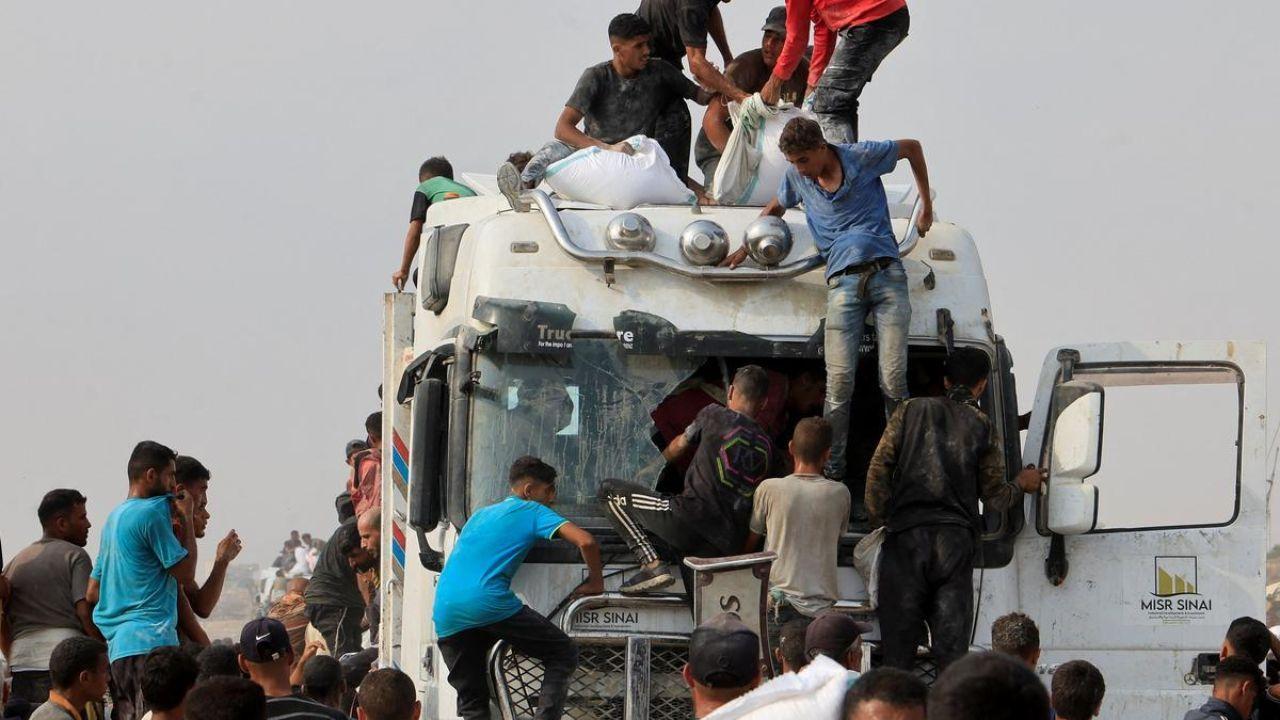
Humanitarian aid is desperately needed, but how to deliver it remains a problem. During the previous U.S. administration, air drops were used to deliver food, but current officials say these are symbolic and cannot meet the needs of 2.1 million people. Aid groups stress that land routes are the only way to bring in enough supplies safely.
Other countries — including Jordan, the United Arab Emirates, and Britain — have continued to carry out air drops. But aid packages are heavy, and there’s a risk of injury as desperate civilians rush to grab them.
A City Bracing for the Worst
Residents of Gaza City say they are preparing for the possibility that “nothing will be left” if the planned ground offensive begins. The combination of airstrikes, artillery, and close-quarters fighting could destroy what little remains of the city’s infrastructure.
Amid relentless conflict, Gaza City residents now brace for a ground offensive that could devastate what remains of their city. With infrastructure collapsing and basic necessities dwindling, the war’s latest escalation threatens both survival and any hope for recovery.










PM Modi Pays Tribute to Mahatma Gandhi, Urges People to Support Khadi
PM Modi pays tribute to Mahatma Gandhi on Gandhi Jayanti and urges citizens to support Khadi and the

Amazon Seeks to Offload $8 Billion in Nvidia Chips to Investors
Amazon plans to move $8 billion in Nvidia chips to investors, using a new financing model to strengt

Samsung Raises Galaxy S26 Prices as Memory Chip Costs Rise
Samsung raises Galaxy S26 prices in South Korea as rising memory chip costs put pressure on smartpho

Lewis Hamilton Calls Singapore Grand Prix One of F1's Toughest Races
Lewis Hamilton discusses the demanding Singapore Grand Prix and brings Plus44 and Almave to Singapor

Denmark's Pandora Opens World's Largest Jewellery Factory in Vietnam
Pandora opens its largest jewellery factory in Vietnam, expanding global production, strengthening s

Gautam Gambhir Questions Batting-Friendly Pitches After India's Record ODI Chase
Gautam Gambhir questions batting-friendly ODI pitches after India’s record chase, calling for a bett

