
You have not yet added any article to your bookmarks!
Join 10k+ people to get notified about new posts, news and tips.
Do not worry we don't spam!
Post by : Rameen Ariff
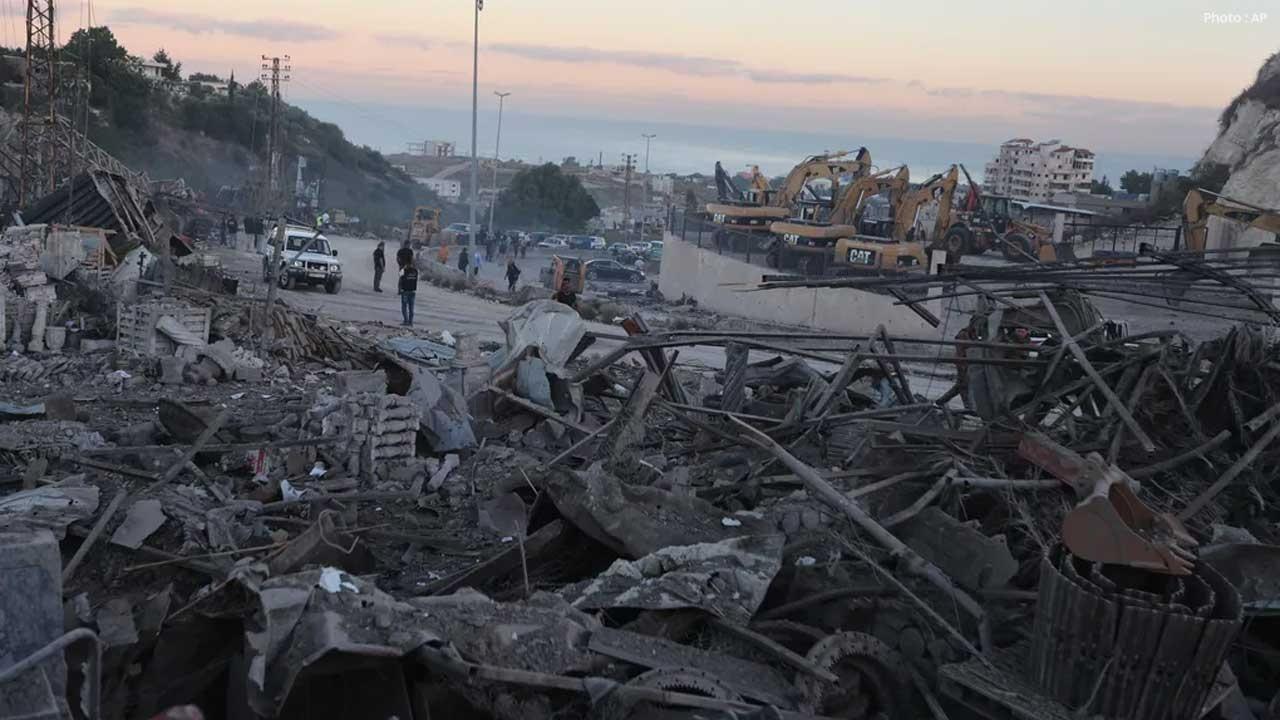
In a troubling resurgence, southern Lebanon is once again under Israeli airstrikes, occurring nearly a year after a ceasefire brokered by the United States. Targeting critical infrastructure and construction equipment, these latest attacks have tragically resulted in civilian casualties, complicating efforts to rebuild from past violence. This newfound escalation has raised alarms regarding the tenuousness of ceasefires in the region, hinting at a potential resurgence of intermittent assaults on Gaza as well. Analysts speculate that these actions might set a precedent for how Israel handles future ceasefire situations, suggesting that low-intensity conflict could persist without triggering full-blown warfare.
The impact of the Israeli strikes in Lebanon is profound, inflicting significant damage on civilian life and critical rebuilding machinery. Local leaders and residents have vocally criticized these airstrikes, pointing to the heavy toll on innocent lives. UN reports indicate that since the ceasefire, over 270 individuals have lost their lives and around 850 have suffered injuries due to the bombings, disproportionately affecting civilians. This alarming trend has garnered urgent attention from the UN Security Council, highlighting the ongoing humanitarian crises linked to these military operations.
The aerial assaults in Lebanon are seen as part of a wider tactical approach that could bear implications for Gaza's ceasefire dynamics. Experts caution that while Israel’s attacks are framed as targeting Hezbollah's military capabilities, they frequently result in collateral damage to civilian facilities, raising concerns about similar repercussions in Gaza. Notably, recent airstrikes in Gaza followed instances of alleged aggression by Hamas, showcasing the precarious nature of ceasefires that allow for ongoing hostilities at reduced intensity. Observers believe that both Lebanon and Gaza may be entering a troubling era where ceasefires exist more theoretically than tangibly, underscored by continuing air operations.
Both Hezbollah and the Lebanese government have expressed deep unease about these airstrikes, arguing that such activities undermine stabilization efforts and hinder disarmament initiatives for armed factions. Israel, in defense, states its actions target Hezbollah operatives and installations to mitigate military buildup. However, these strikes have frequently resulted in civilian harm, prompting mounting criticism of Israel's military strategy. Experts point out that without stringent oversight of these military operations, the cycle of violence is poised for repetition, with Gaza potentially facing similar onslaughts in the foreseeable future.
Global observers are increasingly raising alarms that the Israeli actions in Lebanon—and the likelihood of parallel engagements in Gaza—indicate a precarious state of regional stability. Institutions like the UN continue to watch closely, though mechanisms for enforcement remain sorely lacking, leaving civilian populations at heightened risk. The persistence of Israeli airstrikes against the backdrop of complex political landscapes illustrates the substantial obstacles to maintaining effective ceasefires, suggesting that uncertainty and turmoil may persist in both Lebanon and Gaza.
The recent escalations in Lebanon starkly illuminate the fragile fabric of Middle Eastern ceasefires, bringing forth fears that Gaza could similarly face low-intensity conflicts. Experts emphasize that without meaningful diplomatic interventions, these airstrikes may continue unabated, adversely impacting civilian lives and efforts for reconstruction. The situation underscores the pressing necessity for effective mediation and enforcement strategies to prevent any escalation of violence, prioritizing the protection of innocent lives in both Lebanon and Gaza.










Michael Bracewell Chooses Casual Contract, Targets BBL Opportunity
Michael Bracewell moves to a casual contract as he eyes a BBL opportunity while remaining available

Tuchel Says Alex Scott Can Challenge Declan Rice for England Midfield Spot
Thomas Tuchel says Alex Scott can challenge Declan Rice for an England midfield place after his impr

Air Quality Turns Unhealthy in Central and Western Singapore Amid Haze
Singapore haze pushes PSI above 100 in central and western areas as smoke from regional hotspots rai

PM Modi Pays Tribute to Mahatma Gandhi, Urges People to Support Khadi
PM Modi pays tribute to Mahatma Gandhi on Gandhi Jayanti and urges citizens to support Khadi and the

Amazon Seeks to Offload $8 Billion in Nvidia Chips to Investors
Amazon plans to move $8 billion in Nvidia chips to investors, using a new financing model to strengt

Samsung Raises Galaxy S26 Prices as Memory Chip Costs Rise
Samsung raises Galaxy S26 prices in South Korea as rising memory chip costs put pressure on smartpho

