
You have not yet added any article to your bookmarks!
Join 10k+ people to get notified about new posts, news and tips.
Do not worry we don't spam!
Post by : Saif Rahman
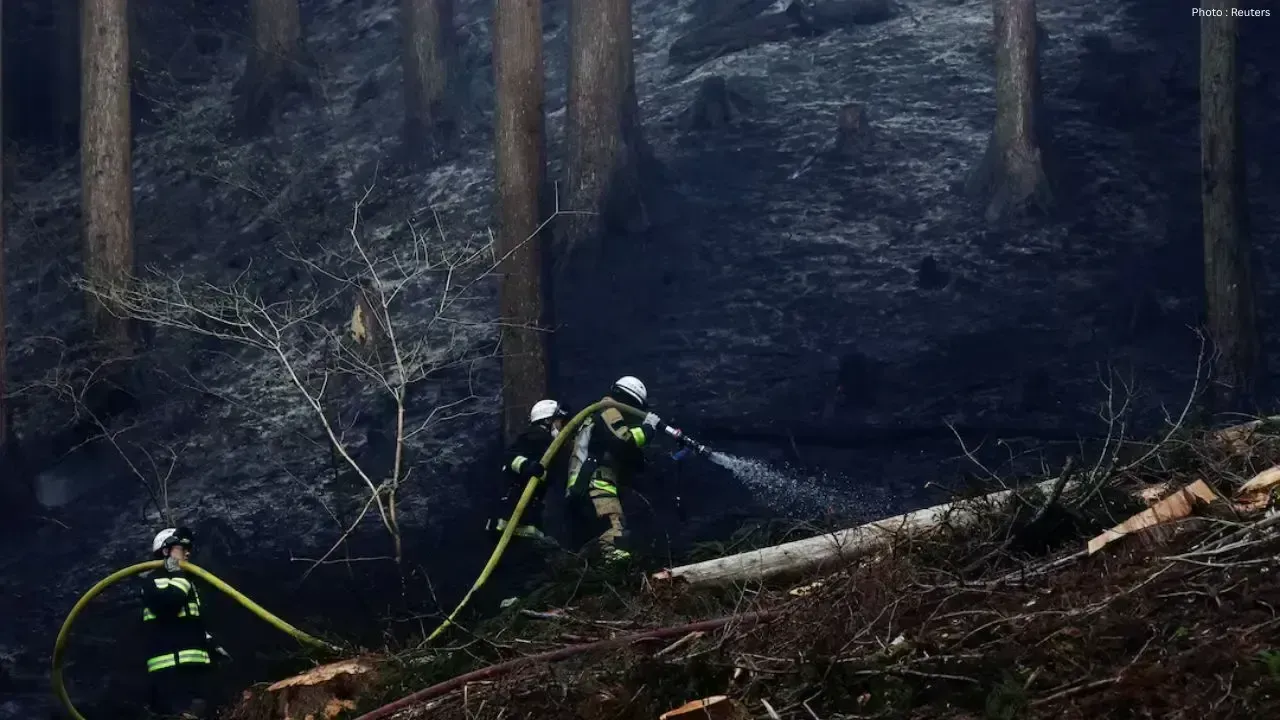
In a dramatic turn of events, wildfires in northern Japan have escalated into a major crisis. Iwate Prefecture is facing severe fire outbreaks, leading thousands of residents to evacuate their homes as firefighting efforts intensify.
The blazes have persisted for several days and remain largely uncontrolled. More than 1,000 firefighters, alongside helicopters and emergency responders, are currently engaged in efforts to manage the situation. Strong winds and dry weather are complicating their battle against the blaze.
The town of Otsuchi has been hit particularly hard, with fires approaching residential areas prompting authorities to evacuate around one-third of the town’s inhabitants. Overall, over 3,000 people have sought refuge in safer locations as a precautionary measure.
Initial reports suggest that the fires ignited in forested regions and have rapidly extended due to adverse weather conditions. The combination of dry vegetation and high winds has facilitated the rampant spread of the flames, complicating control efforts for emergency crews.
To combat the fire, helicopters have been deployed to drop water on the most affected areas, while ground teams focus on preventing the flames from impacting homes and vital infrastructure. However, navigating the challenging terrain makes the operation more arduous for firefighters.
For those impacted, the situation is fraught with uncertainty. Many evacuees have left their homes with minimal belongings, and evacuation centers have been organized to provide shelter, food, and necessary support. Officials are urging the public to heed safety warnings and refrain from returning to hazardous areas.
This wildfire crisis not only has immediate ramifications for residents but also raises significant environmental concerns. Critical forest areas are being compromised, and wildlife habitats are under threat. The smoke from the fires is affecting nearby regions, degrading air quality.
Historically, Japan has confronted wildfires, yet experts warn that shifting weather patterns may be boosting the frequency and severity of such incidents. Increased dry spells and soaring temperatures contribute to the growing risk of forest fires.
The current scenario underscores the need for robust disaster preparedness and response. While prompt actions from emergency services have mitigated potential damage, the scale of the fires reveals the challenges posed by natural disasters.
Authorities remain vigilant in their efforts to control the fires and safeguard communities at risk. The next few days are crucial for determining how swiftly the blazes can be subdued and when evacuated residents may return home.
This wildfire emergency in Iwate serves as a poignant reminder of the unpredictable nature of disasters and the urgent need for resilient emergency frameworks, heightened public awareness, and ongoing environmental management.










PM Modi Pays Tribute to Mahatma Gandhi, Urges People to Support Khadi
PM Modi pays tribute to Mahatma Gandhi on Gandhi Jayanti and urges citizens to support Khadi and the

Amazon Seeks to Offload $8 Billion in Nvidia Chips to Investors
Amazon plans to move $8 billion in Nvidia chips to investors, using a new financing model to strengt

Samsung Raises Galaxy S26 Prices as Memory Chip Costs Rise
Samsung raises Galaxy S26 prices in South Korea as rising memory chip costs put pressure on smartpho

Lewis Hamilton Calls Singapore Grand Prix One of F1's Toughest Races
Lewis Hamilton discusses the demanding Singapore Grand Prix and brings Plus44 and Almave to Singapor

Denmark's Pandora Opens World's Largest Jewellery Factory in Vietnam
Pandora opens its largest jewellery factory in Vietnam, expanding global production, strengthening s

Gautam Gambhir Questions Batting-Friendly Pitches After India's Record ODI Chase
Gautam Gambhir questions batting-friendly ODI pitches after India’s record chase, calling for a bett

