
You have not yet added any article to your bookmarks!
Join 10k+ people to get notified about new posts, news and tips.
Do not worry we don't spam!
Post by : Rameen Ariff
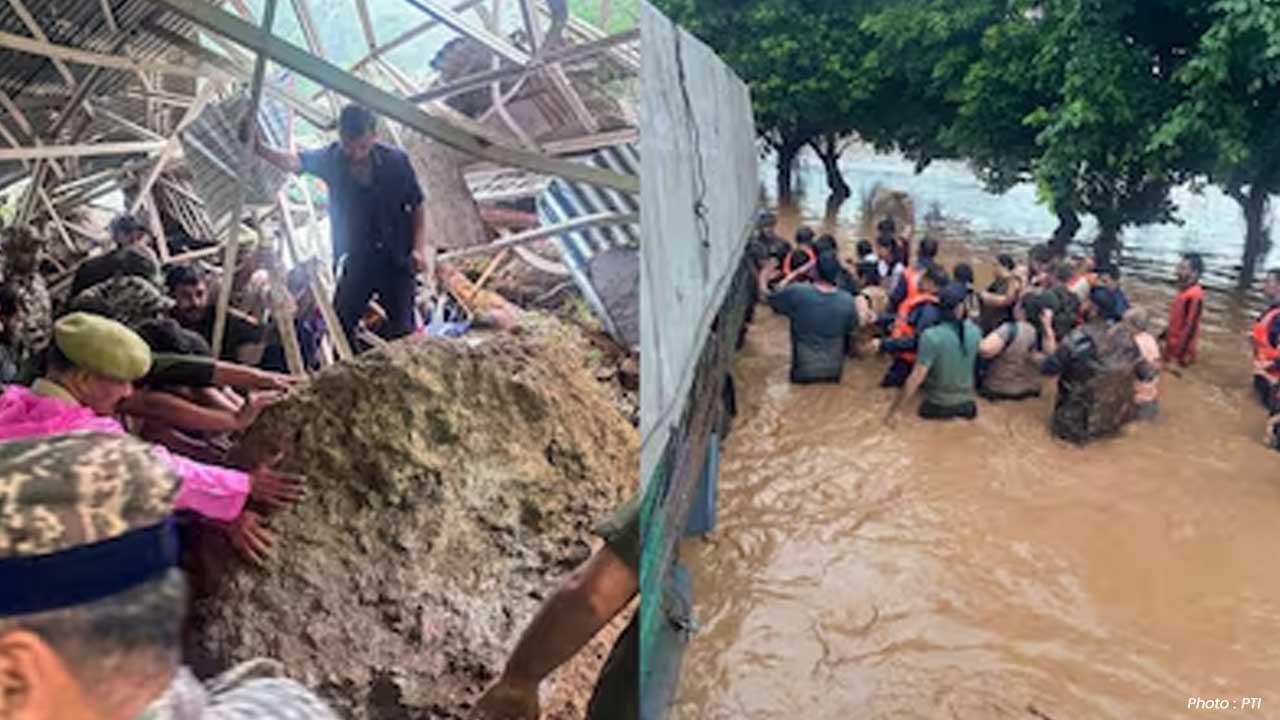
Jammu and Kashmir is facing one of its worst natural disasters in recent years. On Tuesday, heavy rains triggered flash floods and a massive landslide near the Shri Mata Vaishno Devi shrine. The landslide struck close to Inderprastha Bhojnalaya at Adhkwari, killing at least 30 people and leaving many others injured.
The tragedy has shocked the nation. Pilgrims who were walking on the sacred route suddenly found themselves trapped under falling debris. Rescue teams rushed to the spot, but the heavy rains and difficult terrain made their work extremely hard.
Officials have confirmed that the Vaishno Devi Yatra has been suspended until conditions improve.
Prime Minister Narendra Modi expressed deep sorrow over the loss of lives. In a message posted on X (formerly Twitter), he said:
“The loss of lives due to a landslide on the route to the Shri Mata Vaishno Devi Temple is saddening. My thoughts are with the bereaved families. May the injured recover at the earliest. The administration is assisting all those affected.”
The Prime Minister also prayed for the safety of all pilgrims and relief workers.
The landslide is only part of the larger crisis. Heavy rains have caused severe damage across Jammu and Kashmir:
Madhopur Bridge Damaged: This historic bridge, linked to the 1953 arrest of Dr. Shyama Prasad Mukherjee, was damaged in the floods. Traffic on the bridge has been stopped.
Schools and Colleges Shut: Authorities have closed all educational institutions in Jammu for safety.
Electricity and Water Disruption: Thousands of homes are without electricity, water supply, and mobile services.
Chenab River Danger: While the Tawi River has receded, the Chenab River is still flowing dangerously close to the danger mark.
The rainfall has been extraordinary. The Udhampur Air Force Station recorded 540 mm of rain in just 12 hours—a figure equal to almost 84% of Delhi’s total average rainfall for an entire monsoon season.
The government has launched large-scale relief and rescue operations.
The Indian Air Force has deployed aircraft like C-130 and IL-76 to carry National Disaster Response Force (NDRF) personnel and supplies.
Helicopters such as Chinook and Mi-17 V5 have been kept ready at Jammu, Udhampur, Srinagar, and Pathankot for emergency evacuations.
More than 3,500 people have already been moved to safety.
Temporary shelters have been set up to provide food, clean water, and medical aid.
Union Minister Jitendra Singh confirmed that restoring basic services like electricity, water, and mobile networks is now the top priority.
Former Jammu and Kashmir Chief Minister Omar Abdullah shared that communication lines remain weak. Internet services are down in many areas, making it difficult for people to contact loved ones.
The Shri Mata Vaishno Devi Shrine Board has advised pilgrims to replan their journey until the weather stabilizes.
For families of devotees, helpline numbers have been shared by police authorities in Katra and Reasi to help track missing persons and seek assistance.
Behind every number is a story of loss. Families who came to Vaishno Devi for blessings are now mourning loved ones. Injured pilgrims are being treated in nearby hospitals, while others are stranded far from home.
The tragedy also highlights the growing risks of natural disasters in mountain regions. Sudden cloudbursts, flash floods, and landslides have become more frequent due to climate change, unplanned construction, and deforestation.
This disaster is a reminder that while nature’s fury cannot be fully controlled, preparation and infrastructure can reduce its impact. Stronger flood management, early warning systems, and better rescue equipment are urgently needed.
At the same time, the courage of the NDRF, SDRF, police, Army, and local volunteers shows the spirit of resilience. Thousands of lives have already been saved because of their quick action.
The path to recovery will not be easy. Roads, bridges, schools, and hospitals must be rebuilt. Families will need long-term support to recover from their losses.
But the tragedy also serves as a wake-up call. Jammu and Kashmir, a region of breathtaking beauty, is also highly vulnerable to natural disasters. Policymakers must ensure that safety measures, disaster planning, and environmental protection go hand in hand with development.
As India prays for the victims of the Vaishno Devi landslide and floods, the message is clear: safety of people must come first. Pilgrimage routes, schools, and cities must be made stronger against natural disasters.
For now, the focus remains on saving lives, helping survivors, and bringing back normalcy to the region.










PM Modi Pays Tribute to Mahatma Gandhi, Urges People to Support Khadi
PM Modi pays tribute to Mahatma Gandhi on Gandhi Jayanti and urges citizens to support Khadi and the

Amazon Seeks to Offload $8 Billion in Nvidia Chips to Investors
Amazon plans to move $8 billion in Nvidia chips to investors, using a new financing model to strengt

Samsung Raises Galaxy S26 Prices as Memory Chip Costs Rise
Samsung raises Galaxy S26 prices in South Korea as rising memory chip costs put pressure on smartpho

Lewis Hamilton Calls Singapore Grand Prix One of F1's Toughest Races
Lewis Hamilton discusses the demanding Singapore Grand Prix and brings Plus44 and Almave to Singapor

Denmark's Pandora Opens World's Largest Jewellery Factory in Vietnam
Pandora opens its largest jewellery factory in Vietnam, expanding global production, strengthening s

Gautam Gambhir Questions Batting-Friendly Pitches After India's Record ODI Chase
Gautam Gambhir questions batting-friendly ODI pitches after India’s record chase, calling for a bett

