You have not yet added any article to your bookmarks!
Join 10k+ people to get notified about new posts, news and tips.
Do not worry we don't spam!
Post by : Badri Ariffin
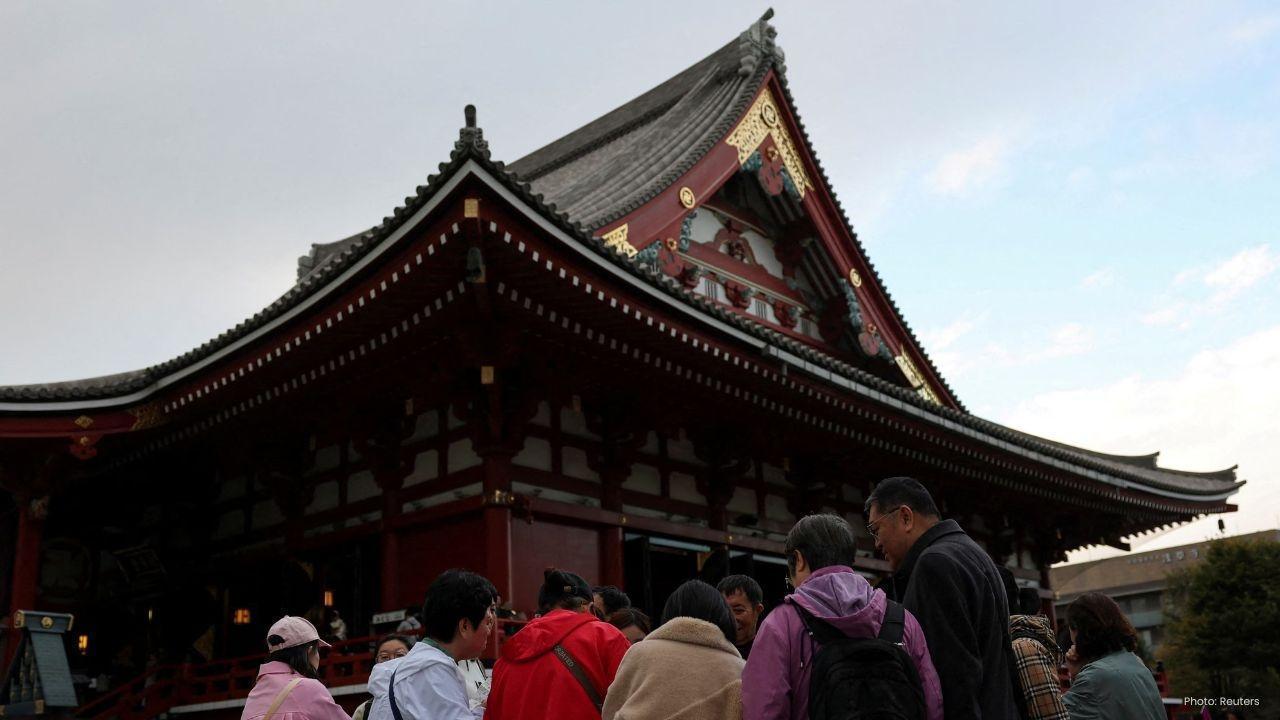
Tokyo — Japan’s tourism industry is facing an unprecedented challenge as Chinese authorities urged their citizens to avoid travel to the country, following a diplomatic clash over Taiwan. Within days, travel agencies reported drastic cancellations, threatening billions in revenue.
East Japan International Travel Service, a small Tokyo-based operator specializing in group tours for Chinese visitors, revealed it had lost 80% of its bookings for the remainder of the year. "This is a huge loss for us," said Yu Jinxin, the company’s vice president.
Tourism has been a significant contributor to Japan’s economy, accounting for roughly 7% of its GDP. Visitors from mainland China and Hong Kong make up about one-fifth of all arrivals, making the region crucial for sustained growth. Analysts estimate that a prolonged boycott could cost Japan around 2.2 trillion yen ($14.23 billion) annually.
Flight cancellations have surged, with over 10 Chinese airlines offering refunds for Japan-bound routes until the end of December. Industry sources suggest that nearly half a million tickets may already have been canceled. Tourism-related stocks in Japan have also reacted sharply, reflecting investor concerns over the fallout.
The dispute escalated after Japanese Prime Minister Sanae Takaichi warned lawmakers that a Chinese attack on Taiwan could threaten Japan’s security, potentially triggering a military response. Chinese diplomats and state media responded strongly, prompting Tokyo to issue safety advisories for Japanese citizens in China. Beijing has demanded a retraction of Takaichi’s remarks, but Japan has maintained its stance, signaling that resolution may not come soon.
Beyond travel, the dispute has affected entertainment and media exchanges. China has suspended screenings of upcoming Japanese films, and popular Japanese celebrities in China have expressed support for the “One China” policy to preempt backlash.
For small businesses like Yu’s travel agency, the stakes are high. While past flare-ups, including the 2012 island nationalization protests, were weathered, the prolonged nature of the current crisis could have devastating consequences. “If this lasts for one or two months, we can manage, but if it continues to worsen, the impact will be major,” Yu warned.
Japan now faces the dual challenge of managing diplomatic tensions while attempting to stabilize a tourism sector that has been a cornerstone of its post-pandemic economic recovery.









Hyundai raises profit target, expands hybrid lineup in the US
Hyundai hybrid cars get a major boost as the automaker raises its profit margin target and plans new

Josh Kerr and Jakob Ingebrigtsen Set for 1,500m Rivalry Rematch
Josh Kerr and Jakob Ingebrigtsen will renew their 1,500m rivalry at the Ultimate Championship in Bud

PSG Coach Luis Enrique Urges Players to Step Outside Comfort Zone
PSG coach Luis Enrique says players must leave their comfort zone and keep improving as the club tar

China’s Tiangong Sets New 400m Record at Robot Olympics
China’s Tiangong robot sets a new 400m record at the Robot Olympics, beating a South African robot i

George Russell Wins Dutch GP Sprint, Boosts Mercedes Morale
George Russell wins the Dutch GP Sprint from pole as Mercedes teammate Kimi Antonelli extends his F1

Australia 50/3 After Bangladesh Bowled Out for 64 in Second Test
Australia reached 50/3 after Bangladesh were bowled out for 64 in the second Test, with Mitchell Sta