You have not yet added any article to your bookmarks!
Join 10k+ people to get notified about new posts, news and tips.
Do not worry we don't spam!
Post by : Rohit Dhiman
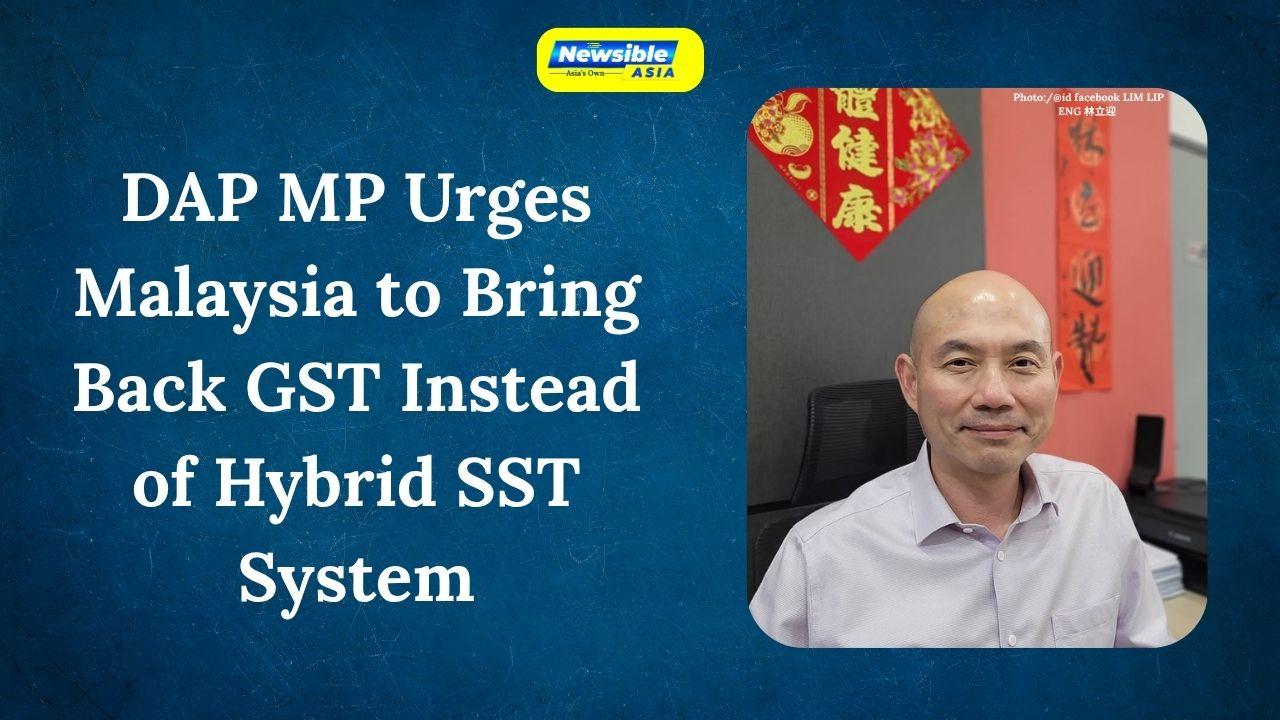
PETALING JAYA: Malaysia's ongoing discussion over changes to its tax system has taken a new turn after DAP's Kepong Member of Parliament Lim Lip Eng urged the government to consider bringing back the Goods and Services Tax instead of creating a complicated system that combines elements of GST with the existing Sales and Service Tax. The debate comes as the government examines ways to improve SST Malaysia and address concerns surrounding the current consumption tax structure. Lim said that if GST principles are considered necessary to overcome weaknesses in the existing system, the government should be willing to examine a properly designed GST return rather than creating a new hybrid model simply to avoid using the GST name. Lim argued that tax policy should focus on effectiveness, transparency and fairness rather than terminology.
According to Lim, the government should provide clear financial projections before introducing major changes to the tax system. He said Malaysians need to know how much revenue would be collected, how much businesses could claim back and how quickly refunds would be processed. He also raised concerns about whether businesses could continue facing tax-on-tax effects under a hybrid arrangement. The DAP lawmaker pointed to the international use of GST as another reason for Malaysia to reconsider the system. He said GST is used by a large number of countries, while Malaysia's existing model is relatively different from the consumption tax structures used elsewhere. The argument has added fresh momentum to the GST Malaysia debate, particularly as the government considers whether selected GST mechanisms could be incorporated into the current SST framework.
The issue follows comments by Prime Minister and Finance Minister Anwar Ibrahim last month. He said the government was open to examining whether certain components of GST could be incorporated into the existing SST system. However, Anwar indicated that SST would remain the foundation of Malaysia's tax structure, while selected GST-based features could potentially be used to make the system more progressive. This approach could result in a modified tax framework rather than a complete return to the previous GST system. Lim, however, believes the government should first compare the expected costs, revenue and administrative requirements of such a hybrid system with a properly structured GST.
Lim highlighted that Malaysia expects to collect around RM59.6 billion through SST in 2026. He said this figure should form an important part of any discussion about changing the country's tax structure. He questioned how much of that revenue would ultimately remain with the government if businesses were allowed to claim more input-related refunds under a revised system. He also called for greater clarity on refund procedures, processing times and the sectors that could continue experiencing tax-on-tax effects. According to Lim, these figures would help Malaysians understand whether the proposed changes would genuinely make taxation simpler, fairer and more efficient.
The government's review could lead to further discussions about the future of sales and service tax in Malaysia. Policymakers may have to balance government revenue needs with the impact of consumption taxes on businesses and households. For the government, the key challenge will be designing a system that generates sufficient revenue without creating unnecessary complexity or placing disproportionate pressure on lower-income groups. The debate over Malaysia tax reform is therefore expected to continue as policymakers assess whether the existing SST structure can be improved or whether a broader GST-based framework could eventually provide a more effective alternative.
Lim Lip Eng said Malaysia should consider bringing back GST if GST-based mechanisms are needed to address weaknesses in the current SST system. He argued that the government should focus on creating an effective and transparent tax system rather than developing a complicated hybrid simply to avoid the GST name.
Read Also: Israeli Military Presence Grows in Southern Lebanon
There is currently no confirmation that Malaysia is fully bringing back GST. Prime Minister Anwar Ibrahim has said the government is open to studying whether some GST components could be integrated into the existing SST system, while SST would remain the base tax structure.
Malaysia is expected to collect approximately RM59.6 billion in SST revenue in 2026, according to Lim Lip Eng's statement. Malaysia: The debate concerns the country's national consumption tax framework, particularly the future of SST and the possible use of GST-based mechanisms. Kuala Lumpur: DAP Kepong MP Lim Lip Eng, who is also Kuala Lumpur DAP secretary, has called for greater transparency before any major changes are made to the tax system. Key Issue: The Malaysian government is considering whether elements associated with GST could improve the existing SST framework while retaining SST as the main tax structure.








MotoGP Qatar GP to Proceed Despite Regional Tensions and Safety Fears
MotoGP Qatar GP is scheduled for November 6-8 despite regional tensions, as Alex Marquez questions s

Fiji Appeals to Mark Nawaqanitawase’s Pride Ahead of Rugby World Cup
Fiji hopes Mark Nawaqanitawase will choose his ancestral homeland over Australia as the 2027 Rugby W

OpenAI and Poland’s NASK Team Up to Improve AI Safety
OpenAI and Poland’s NASK will research AI safety, security risks and stronger safeguards as concerns

Asian Football Confederation Backs Infantino for FIFA Re-Election
The Asian Football Confederation has backed Gianni Infantino for FIFA re-election, despite earlier o

Tesla Shares Fall 5% as Spending Cuts Raise AI Concerns
Tesla shares drop 5% after cutting its 2026 spending forecast to $20 billion, raising questions abou

Spotify Forecasts Higher Fourth-Quarter Profit on AI Investments
Spotify forecasts fourth-quarter operating income above estimates as AI-powered playlists and person