
You have not yet added any article to your bookmarks!
Join 10k+ people to get notified about new posts, news and tips.
Do not worry we don't spam!
Post by : Saif Rahman
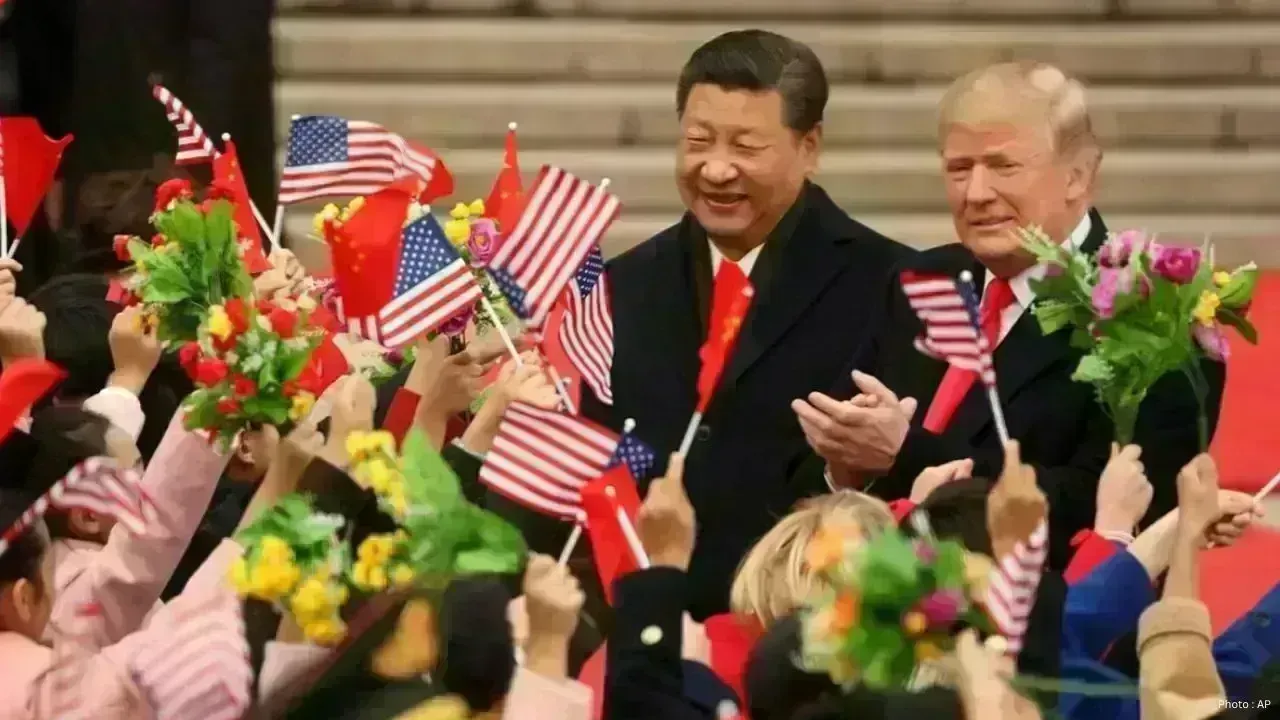
This week, President Donald Trump embarks on a significant journey to China, where key discussions with President Xi Jinping are anticipated. The visit coincides with escalating tensions in the Middle East, persistent trade conflicts between the U.S. and China, and an atmosphere of global uncertainty.
The agenda for this high-stakes meeting will encompass critical international matters such as the Iranian conflict, trade dynamics, issues surrounding Taiwan, developments in artificial intelligence, and avenues for economic collaboration. Despite both nations' efforts to uphold cordial ties, significant disagreements loom over these topics.
Trump’s trip is set against a backdrop of complex global politics. The ongoing situation with Iran adds new complexity for both the United States and China, as China maintains lucrative economic ties and is a leading purchaser of Iranian oil. Meanwhile, the U.S. is urging Beijing to employ its influence to help stabilize the region and ensure safety around the strategically vital Strait of Hormuz, a major artery for oil transportation.
Reports indicate that the White House hopes for a more substantial diplomatic engagement from China regarding Iran. Beijing has escalated its diplomatic outreach, advocating for a ceasefire and a focus on peaceful negotiations while striving to position itself as a stabilizing force rather than a military aggressor.
However, the situation with Iran is merely one segment of the broader relationship between the world’s foremost economies. Ongoing trade tensions create an atmosphere of distrust, marked by disputes over tariffs, technological restrictions, and fierce competition. Although temporary pacts have offered some relief, a multitude of issues remains unresolved.
Speculation suggests that discussions may also revolve around enhancing trade and potentially reigniting economic cooperation. There are expectations that China could disclose plans to import more American products, including agricultural goods and aircraft, aiming to strengthen economic links. Such measures could ease pressures on business sectors and markets in both nations.
Nevertheless, analysts caution that significant breakthroughs may not be on the horizon. The relationship between Washington and Beijing has since evolved into a more complex scenario compared to Trump’s inaugural visit in 2017, which featured a relatively warmer dynamic. Current relations are overshadowed by a fierce rivalry concerning global influence, technology, military strength, and international alliances.
A major topic likely to capture attention is Taiwan. While China views Taiwan as part of its territory, the United States maintains its commitment to Taiwan's defense and democratic governance. Military activities around Taiwan have intensified, raising alarms over potential conflicts.
Issues regarding artificial intelligence and advanced technology are also slated for discussion. Both nations are vying for supremacy in AI and semiconductor competencies. The United States has imposed export limitations on technology to China, while Beijing continues to invest aggressively in its technology sector. This heightened competition forms a central piece of U.S.-China relations in the contemporary era.
Despite existing tensions, both governments recognize the importance of maintaining open lines of communication. The intertwining of trade, global markets, and security concerns connects the two nations deeply. A collapse in relations could reverberate through the world’s economies and political landscapes.
Political observers assert that this meeting may lean more toward the management of competition rather than the cultivation of friendship. Both leaders are likely to focus on safeguarding their respective national interests while seeking to prevent a total breakdown in relations. Experts suggest the emphasis will be on tangible outcomes rather than superficial gestures or public displays of camaraderie.
The summit also underscores the evolving nature of international diplomacy. China is increasingly asserting itself as a significant diplomatic player in global disputes, particularly in the Middle East, positioning itself as an alternative power capable of influencing peace talks.
For Trump, this visit holds both political and economic stakes. A favorable outcome could boost market sentiments and mitigate tensions between the two giants. Conversely, a lack of progress may further heighten mistrust amidst an already precarious global landscape.
Ultimately, the engagement between Trump and Xi extends beyond trade or diplomacy. It embodies the ongoing balance between collaboration and rivalry that defines today’s international relations. Both nations possess mutual economic dependencies, yet they continue to vie for influence and leadership across the globe.
As the world watches the summit unfold in Beijing, many hope the dialogues yield constructive resolutions rather than a deeper rift. The outcomes of these discussions could shape international relations, commerce, and security well into the future.










PM Modi Pays Tribute to Mahatma Gandhi, Urges People to Support Khadi
PM Modi pays tribute to Mahatma Gandhi on Gandhi Jayanti and urges citizens to support Khadi and the

Amazon Seeks to Offload $8 Billion in Nvidia Chips to Investors
Amazon plans to move $8 billion in Nvidia chips to investors, using a new financing model to strengt

Samsung Raises Galaxy S26 Prices as Memory Chip Costs Rise
Samsung raises Galaxy S26 prices in South Korea as rising memory chip costs put pressure on smartpho

Lewis Hamilton Calls Singapore Grand Prix One of F1's Toughest Races
Lewis Hamilton discusses the demanding Singapore Grand Prix and brings Plus44 and Almave to Singapor

Denmark's Pandora Opens World's Largest Jewellery Factory in Vietnam
Pandora opens its largest jewellery factory in Vietnam, expanding global production, strengthening s

Gautam Gambhir Questions Batting-Friendly Pitches After India's Record ODI Chase
Gautam Gambhir questions batting-friendly ODI pitches after India’s record chase, calling for a bett

