
You have not yet added any article to your bookmarks!
Join 10k+ people to get notified about new posts, news and tips.
Do not worry we don't spam!
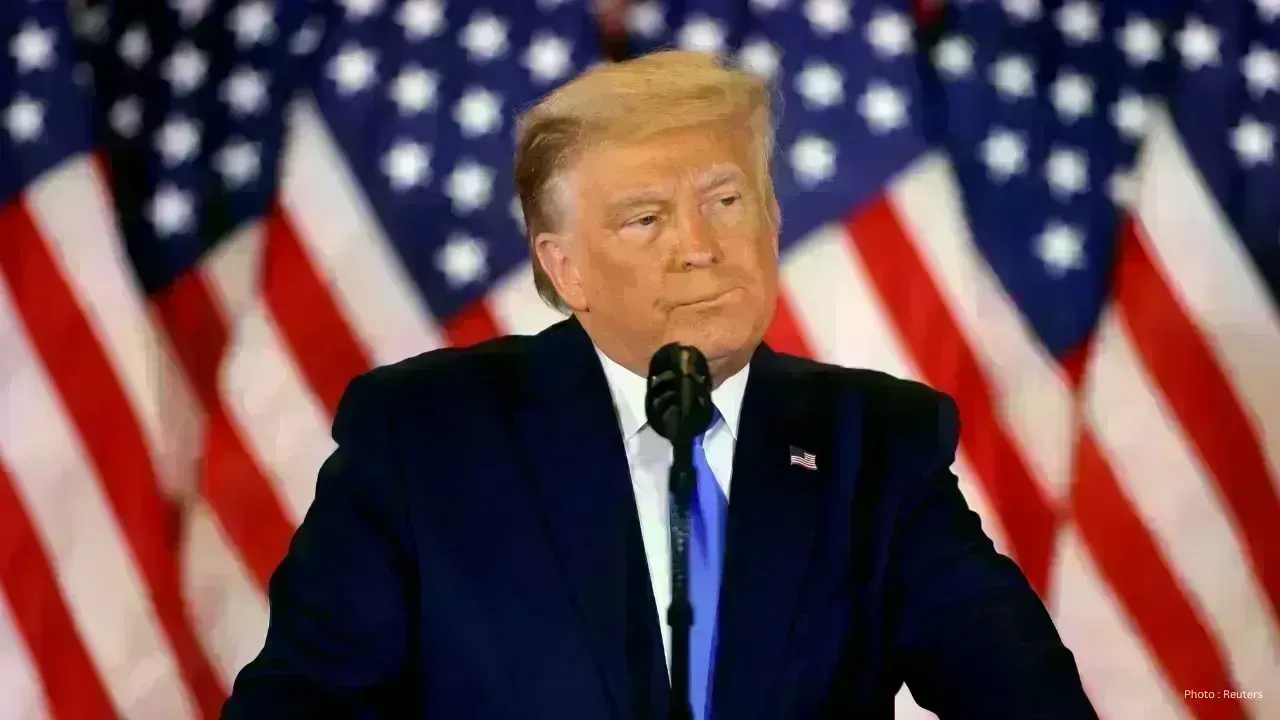
Post by : Shweta
President Donald Trump has issued a grave warning to Iran, demanding the reopening of the strategically vital Strait of Hormuz, or face severe consequences. This stern announcement coincides with the unveiling of complex details surrounding a U.S. rescue mission for an American military aviator following a crash on Iranian soil.
In a sequence of posts on social media, Trump cautioned that the U.S. might consider targeting essential Iranian infrastructure, such as bridges and power plants, if the strait remains closed past the determined deadline. The Strait of Hormuz serves as a critical artery for global oil and gas transportation, and disturbances here could have significant repercussions on international energy markets.
The warning came on the heels of a military operation in which U.S. forces successfully rescued a wounded aviator whose aircraft had gone down in Iran. U.S. officials reported that the rescue was intricate, requiring the coordination of multiple aircraft in a perilous theater of operations. One crew member was retrieved swiftly, while another was located later after exhaustive search efforts.
Reports indicate that the operation involved several aircraft and required meticulous planning to mitigate the risk of additional losses. Some U.S. sources revealed that technical difficulties led to the downing of certain aircraft, though Iran maintains its forces were responsible. The narrative remains contested, with both sides offering differing accounts.
Amid these developments, tensions have escalated notably between the U.S. and Iran, sparked by the ongoing regional conflict. Iranian officials condemned Trump's remarks as provocative, asserting that strikes on infrastructure could provoke further escalation. Iran has also hinted at potential disruptions to other vital maritime routes, such as the Bab el-Mandeb Strait, crucial for global commerce.
In the meantime, behind-the-scenes diplomatic talks are ongoing, involving nations such as Oman, Egypt, and Russia, with the objective of easing tensions and facilitating safe passage through these critical shipping lanes. Discussions aim to forge a resolution that can stave off conflict while upholding stability in international trade.
Currently, the landscape remains fraught with tension, as airstrikes and attacks are reported in various regions. In Iran, multiple explosions have been noted across Tehran and other urban areas, though specifics regarding the targets remain scarce. Neighboring countries have also reported damage to infrastructures like oil and power facilities.
The ongoing strife has resulted in significant casualties and displacement in the region, affecting thousands of individuals, with rising concerns regarding civilian safety and global stability.
As events unfold, the international community is vigilantly observing the situation, amplifying calls for restraint and diplomatic resolution. The upcoming days are deemed critical in deciding whether tensions will mitigate or exacerbate.










PM Modi Pays Tribute to Mahatma Gandhi, Urges People to Support Khadi
PM Modi pays tribute to Mahatma Gandhi on Gandhi Jayanti and urges citizens to support Khadi and the

Amazon Seeks to Offload $8 Billion in Nvidia Chips to Investors
Amazon plans to move $8 billion in Nvidia chips to investors, using a new financing model to strengt

Samsung Raises Galaxy S26 Prices as Memory Chip Costs Rise
Samsung raises Galaxy S26 prices in South Korea as rising memory chip costs put pressure on smartpho

Lewis Hamilton Calls Singapore Grand Prix One of F1's Toughest Races
Lewis Hamilton discusses the demanding Singapore Grand Prix and brings Plus44 and Almave to Singapor

Denmark's Pandora Opens World's Largest Jewellery Factory in Vietnam
Pandora opens its largest jewellery factory in Vietnam, expanding global production, strengthening s

Gautam Gambhir Questions Batting-Friendly Pitches After India's Record ODI Chase
Gautam Gambhir questions batting-friendly ODI pitches after India’s record chase, calling for a bett

