
You have not yet added any article to your bookmarks!
Join 10k+ people to get notified about new posts, news and tips.
Do not worry we don't spam!
Post by : Rameen Ariff
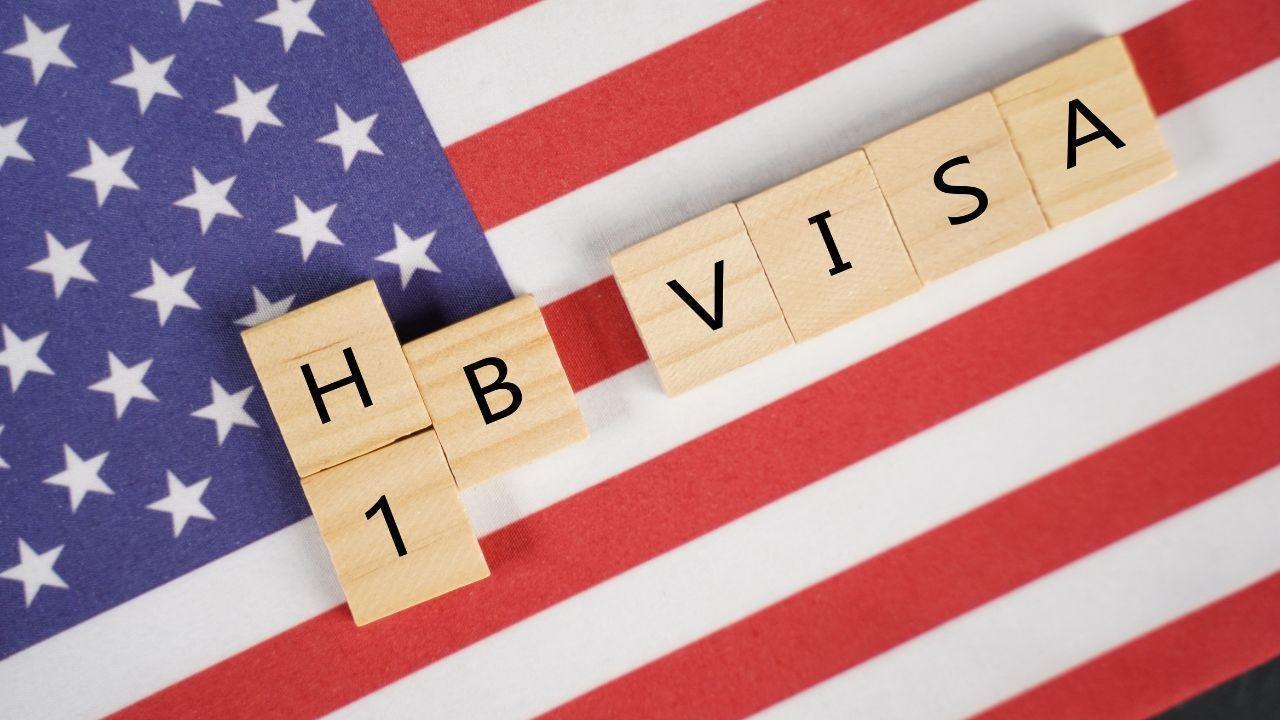
Washington, D.C. – The Trump administration has rolled out a novel strategy for the H-1B visa program, focused on temporarily importing skilled foreign workers to the United States for the purpose of training American employees in high-demand fields like semiconductors and precision manufacturing.
Treasury Secretary Scott Bessent, in an interview with Fox News, outlined this policy as a “knowledge transfer” initiative aimed at revitalizing crucial manufacturing jobs that have been outsourced over the years. “For two to three decades, we have not created new precision manufacturing jobs... We can’t just wish for ships to appear overnight. We aim to bring the semiconductor sector back to America, with major facilities planned for Arizona,” Bessent pointed out.
The revised H-1B framework allows foreign professionals to remain in the US for three, five, or seven years, primarily for the purpose of training local workers. Post-training, these foreign workers are expected to return to their home nations. “An American cannot occupy that particular role just yet,” Bessent stated, addressing concerns regarding job displacement for local labor.
Restoring Crucial Industries
This visa policy transition is in line with President Trump’s broader economic strategy aimed at bringing vital industries back to American shores and decreasing dependency on imports. The administration is looking for foreign specialists to share their skills in advanced manufacturing, technology, and semiconductors with a new wave of American employees, thereby fostering long-term job creation and industrial advancement in the US.
Bessent emphasized that this initiative isn’t merely about meeting labor shortages but about restoring domestic capabilities: “We haven’t manufactured ships or semiconductors here for years. Incoming foreign partners, teaching American workers – that’s a real win-win.”
Economic Initiatives and Tariff Rebate Plans
Alongside H-1B revisions, the Trump administration is contemplating economic measures like a potential USD 2,000 tariff rebate for families earning under USD 100,000, designed to ensure trade agreements provide genuine benefits for American households. Bessent described this strategy as part of a vision for “Parallel Prosperity,” where both Wall Street and Main Street can flourish together, supported by a stable and accessible Treasury market.
The revamped H-1B visa strategy highlights the administration’s commitment to strategic economic growth, self-sufficiency in technology, and workforce development, representing a notable shift away from the previous long-term reliance on foreign labor.










PM Modi Pays Tribute to Mahatma Gandhi, Urges People to Support Khadi
PM Modi pays tribute to Mahatma Gandhi on Gandhi Jayanti and urges citizens to support Khadi and the

Amazon Seeks to Offload $8 Billion in Nvidia Chips to Investors
Amazon plans to move $8 billion in Nvidia chips to investors, using a new financing model to strengt

Samsung Raises Galaxy S26 Prices as Memory Chip Costs Rise
Samsung raises Galaxy S26 prices in South Korea as rising memory chip costs put pressure on smartpho

Lewis Hamilton Calls Singapore Grand Prix One of F1's Toughest Races
Lewis Hamilton discusses the demanding Singapore Grand Prix and brings Plus44 and Almave to Singapor

Denmark's Pandora Opens World's Largest Jewellery Factory in Vietnam
Pandora opens its largest jewellery factory in Vietnam, expanding global production, strengthening s

Gautam Gambhir Questions Batting-Friendly Pitches After India's Record ODI Chase
Gautam Gambhir questions batting-friendly ODI pitches after India’s record chase, calling for a bett

