
You have not yet added any article to your bookmarks!
Join 10k+ people to get notified about new posts, news and tips.
Do not worry we don't spam!
Post by : Shweta
Engineers and scientists from Ukraine's Ministry of Defence have completed an in-depth technical assessment of missile debris linked to North Korean systems. Their analysis reveals several unique design elements that distinguish these missiles from Russian models. This investigation stems from fragments found after a strike in Kharkiv in early 2024.
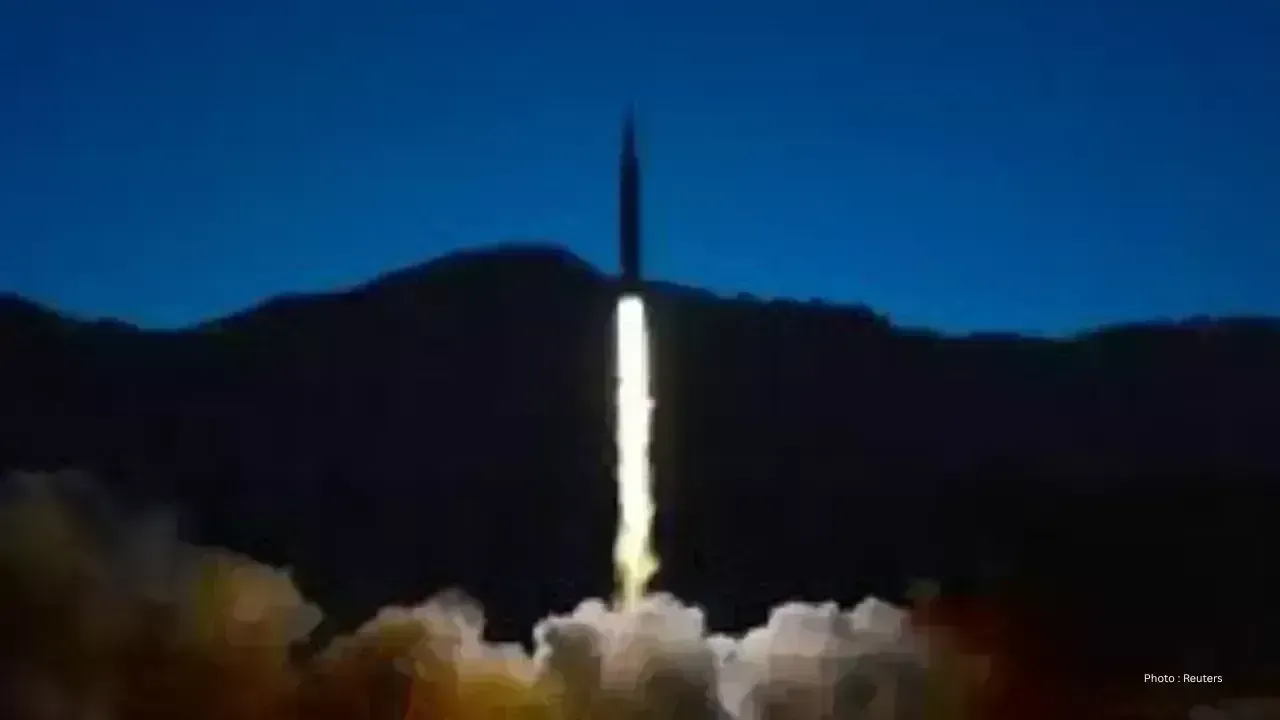
Officials noted notable resemblances to the KN-23 and KN-24, two short-range ballistic missiles engineered by North Korea. Among the unique structural characteristics is the KN-23's tail diameter of 110 cm, tapering to 90 cm at its front, a specification not typically seen in missiles from other nations. The KN-24, in contrast, has an approximate diameter of 100 cm.
The analysis also highlighted various technical similarities with publicly accessible images from North Korean manufacturing sites, including bolt configurations around the engine nozzle and custom compartments for satellite navigation systems.
While there are some visual similarities to the 9M723 Iskander missile system, Ukrainian officials assert that the KN-23 and KN-24 are not straightforward duplicates or licensed reproductions. Nevertheless, it appears that North Korea may have incorporated early design concepts related to the Iskander during their development phase.
Further findings indicated disparities in manufacturing standards and materials. The analysis revealed that North Korean missiles utilize less advanced propellants and larger engine assemblies to achieve comparable range capabilities. Additionally, the techniques employed in their production seemed outdated, with soldering quality mirroring earlier industrial practices.
Investigators also found commercially available electronic components in the control units, indicating potential acquisition through indirect methods despite ongoing international sanctions. Furthermore, the use of a graphite-based nose cone suggests cost-effective but less sophisticated measures to withstand high-temperature conditions during flight.
Officials emphasize that such forensic investigations are crucial for comprehending the evolution of missile technologies and addressing the potential risks emerging from the ongoing conflict between Ukraine and Russia.










PM Modi Pays Tribute to Mahatma Gandhi, Urges People to Support Khadi
PM Modi pays tribute to Mahatma Gandhi on Gandhi Jayanti and urges citizens to support Khadi and the

Amazon Seeks to Offload $8 Billion in Nvidia Chips to Investors
Amazon plans to move $8 billion in Nvidia chips to investors, using a new financing model to strengt

Samsung Raises Galaxy S26 Prices as Memory Chip Costs Rise
Samsung raises Galaxy S26 prices in South Korea as rising memory chip costs put pressure on smartpho

Lewis Hamilton Calls Singapore Grand Prix One of F1's Toughest Races
Lewis Hamilton discusses the demanding Singapore Grand Prix and brings Plus44 and Almave to Singapor

Denmark's Pandora Opens World's Largest Jewellery Factory in Vietnam
Pandora opens its largest jewellery factory in Vietnam, expanding global production, strengthening s

Gautam Gambhir Questions Batting-Friendly Pitches After India's Record ODI Chase
Gautam Gambhir questions batting-friendly ODI pitches after India’s record chase, calling for a bett

