
You have not yet added any article to your bookmarks!
Join 10k+ people to get notified about new posts, news and tips.
Do not worry we don't spam!
Post by : Rameen Ariff
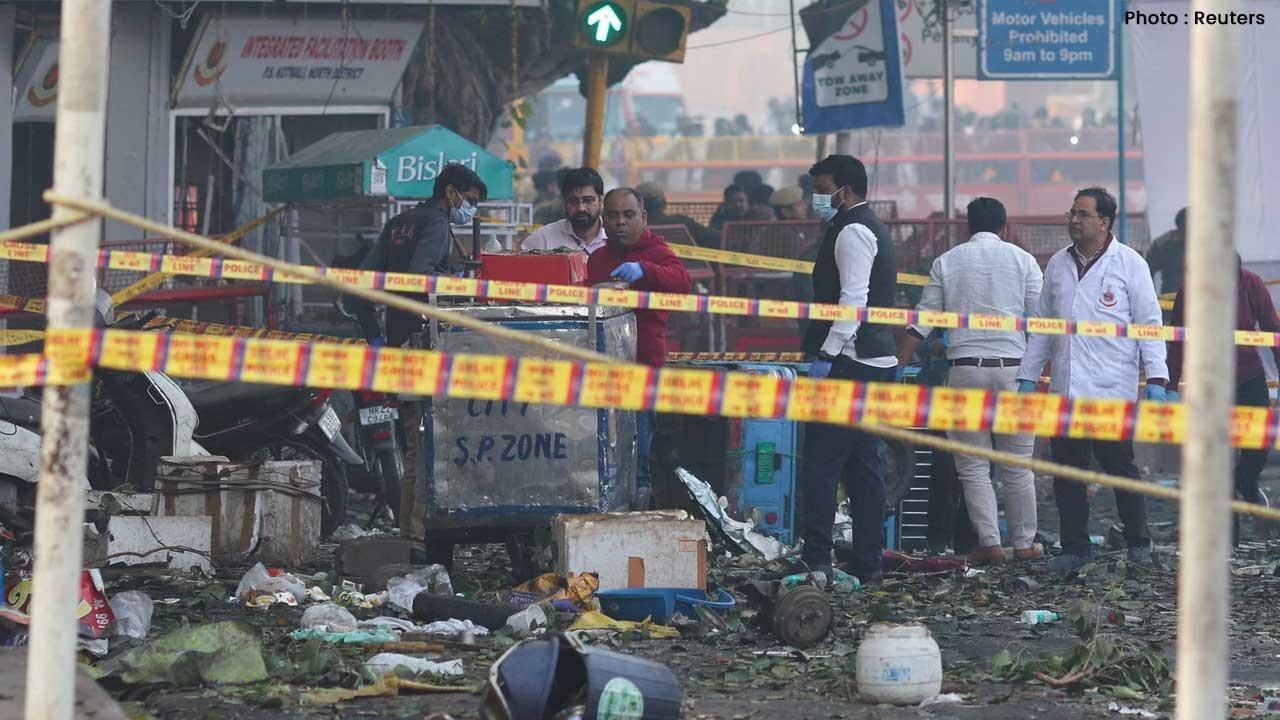
The probe into the Red Fort explosion has uncovered a meticulously crafted six-phase strategy by the terrorist group Jaish-e-Mohammed, aimed at multiple sites throughout Delhi on December 6, coinciding with the anniversary of the Babri Masjid demolition. Authorities confirmed that the Hyundai i20, which detonated on Monday night, was part of a broader coordinated attack led by a terror cell based in Pakistan.
Officials revealed that a total of 32 vehicles, including models such as Maruti Suzuki Brezza, Maruti Swift Dzire, Ford EcoSport, and the Hyundai i20, were being readied to transport explosives or deliver bombs across the capital. Out of these, four have been identified, selected due to their age and numerous ownership transfers, making tracking difficult.
The Brezza was located on the premises of Al-Falah School of Medical Sciences and Research Centre in Faridabad, which has now been identified as a pivotal center for the terror group's operations. Meanwhile, the Ford EcoSport (registration DL10 CK 0458) was found abandoned in Faridabad, leading to the arrest of a young male suspect. The Dzire contained an assault rifle and ammunition when seized.
The explosion at the Red Fort claimed the lives of 13 individuals and involved the use of ammonium nitrate fuel oil (ANFO). Initial investigations suggest that the suspect, Umar Mohammed, prematurely triggered the blast after the apprehension of his accomplices—Adil Ahmad Rather, Mujammil Shakeel, and Shahina Saeed—and the recovery of nearly 3,000 kg of explosives and firearms from Faridabad and Anantnag, Jammu & Kashmir.
Authorities indicated that Umar Mohammed entered Delhi via the Badarpur border driving the Hyundai i20, intending to detonate it in the Red Fort parking area. However, due to the site being closed to visitors, he adapted his plan, setting off the bomb at a bustling traffic intersection near the metro station. There were indications of a planned Diwali attack on October 20, which ultimately did not proceed.
Led by the National Investigation Agency (NIA), the investigation unveiled a sophisticated approach employed by the terrorists—blending in as professionals, such as doctors, to gain the trust of the locals and evade suspicion. Surveillance footage assisted in exposing the operation, particularly when Rather was observed putting up posters endorsing Jaish-e-Mohammed in Nowgam, Jammu & Kashmir. He was later apprehended in Saharanpur, unraveling the structure of the terror cell.
Several participants of the terror cell had connections to Al-Falah University, which has publicly disavowed their actions, asserting no ties beyond professional engagements, and reaffirming its dedication to national security.
This investigation underscores the shifting methodologies of terrorist organizations, the imminent threat posed by urban sequential attacks, and the crucial involvement of intelligence and law enforcement in thwarting significant terrorist endeavors.










PM Modi Pays Tribute to Mahatma Gandhi, Urges People to Support Khadi
PM Modi pays tribute to Mahatma Gandhi on Gandhi Jayanti and urges citizens to support Khadi and the

Amazon Seeks to Offload $8 Billion in Nvidia Chips to Investors
Amazon plans to move $8 billion in Nvidia chips to investors, using a new financing model to strengt

Samsung Raises Galaxy S26 Prices as Memory Chip Costs Rise
Samsung raises Galaxy S26 prices in South Korea as rising memory chip costs put pressure on smartpho

Lewis Hamilton Calls Singapore Grand Prix One of F1's Toughest Races
Lewis Hamilton discusses the demanding Singapore Grand Prix and brings Plus44 and Almave to Singapor

Denmark's Pandora Opens World's Largest Jewellery Factory in Vietnam
Pandora opens its largest jewellery factory in Vietnam, expanding global production, strengthening s

Gautam Gambhir Questions Batting-Friendly Pitches After India's Record ODI Chase
Gautam Gambhir questions batting-friendly ODI pitches after India’s record chase, calling for a bett

