
You have not yet added any article to your bookmarks!
Join 10k+ people to get notified about new posts, news and tips.
Do not worry we don't spam!
Post by : Rameen Ariff
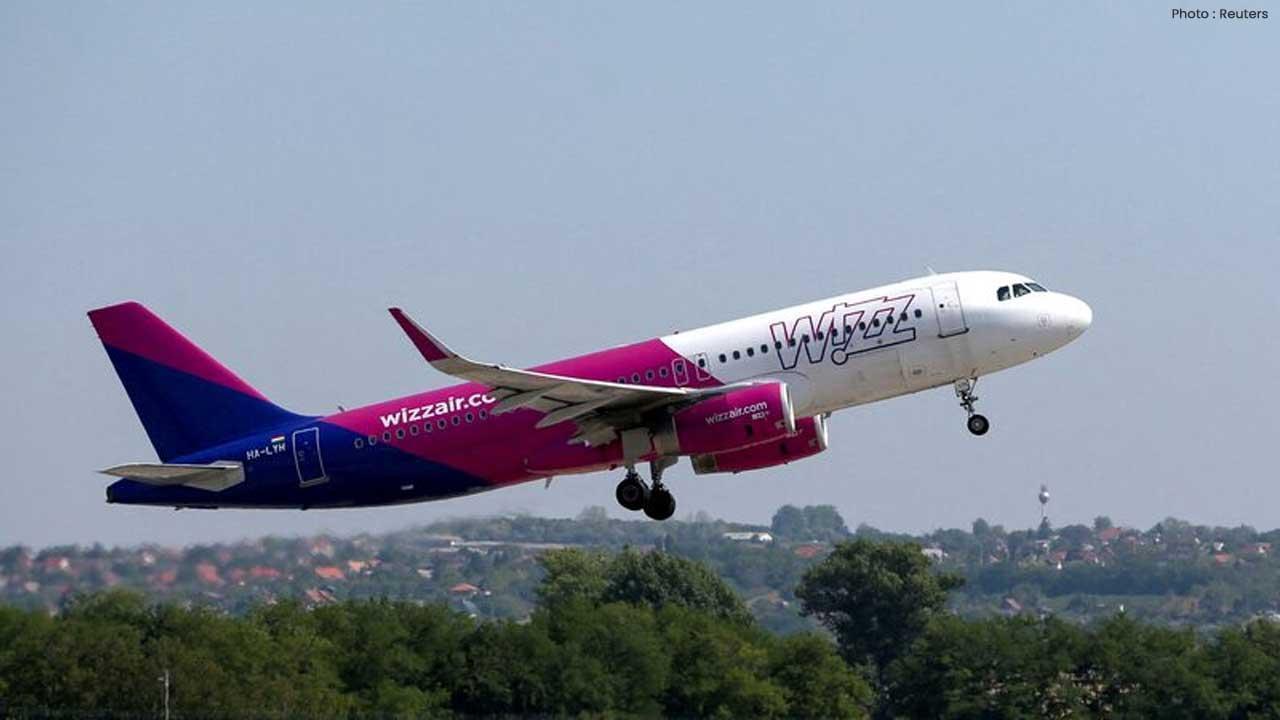
Wizz Air Holdings Plc, the Hungary-based low-cost airline, is reportedly in discussions to defer about 100 Airbus aircraft deliveries into the next decade, according to sources familiar with the matter. Wizz Air’s plan to defer these planes reflects a strategic shift as the carrier slows its rapid expansion, aiming to control rising costs and stabilize operations. The airline, which had initially scheduled the deliveries between now and 2030, now seeks to push them beyond 2030, highlighting Wizz Air’s cautious approach to fleet growth amid operational and financial pressures. Analysts note that these deferrals could significantly alter Wizz Air’s capacity expansion in the coming years.
Wizz Air’s negotiations with Airbus come at a time when the airline is retrenching from certain markets. Wizz Air recently curtailed its ambitions in the Middle East and South Asia and has been dealing with grounded A320 family jets due to engine issues from RTX Corp.’s Pratt & Whitney unit. Wizz Air’s stock has declined roughly 21 percent this year, reflecting investor concerns over the airline’s rapid expansion and operational hurdles. By deferring 90 to 100 aircraft, Wizz Air aims to balance fleet growth with cost control, ensuring the airline can maintain profitability while managing its delivery commitments.
The potential deferral of aircraft could represent more than a third of Wizz Air’s planned deliveries in the near term. Wizz Air currently has 281 A321neo jets on order, according to Airbus data, and aims for a fleet of 500 planes by fiscal year 2032, a target now delayed by two years. The airline projects that it could defer as many as 50 planes in 2027 alone, which would reduce its annual fleet growth from the planned 14 percent to around 10 percent. Wizz Air’s fleet strategy demonstrates the airline’s focus on long-term operational sustainability, balancing ambitious growth with financial prudence.
Wizz Air’s strategic changes, including the planned aircraft deferrals, come alongside closures of operations in certain locations. The airline shut down its Abu Dhabi unit in September due to a combination of engine issues, geopolitical challenges, and restrictions preventing access to India and Pakistan. Wizz Air is also planning to close its Vienna base by March, consolidating operations to focus on core markets. The deferral of Airbus aircraft deliveries gives Wizz Air the flexibility to adapt its fleet plans while maintaining its position as a leading low-cost carrier in Europe.
Overall, Wizz Air’s decision to defer aircraft deliveries underscores the airline’s effort to manage costs, navigate operational challenges, and maintain sustainable growth. Wizz Air’s fleet strategy, in partnership with Airbus, reflects a careful approach to expansion, ensuring that the airline can continue to compete effectively in a highly competitive market. Analysts suggest that Wizz Air’s measured approach may strengthen investor confidence over time, while the deferred Airbus aircraft will allow the airline to align capacity growth with actual demand and operational capabilities.










PM Modi Pays Tribute to Mahatma Gandhi, Urges People to Support Khadi
PM Modi pays tribute to Mahatma Gandhi on Gandhi Jayanti and urges citizens to support Khadi and the

Amazon Seeks to Offload $8 Billion in Nvidia Chips to Investors
Amazon plans to move $8 billion in Nvidia chips to investors, using a new financing model to strengt

Samsung Raises Galaxy S26 Prices as Memory Chip Costs Rise
Samsung raises Galaxy S26 prices in South Korea as rising memory chip costs put pressure on smartpho

Lewis Hamilton Calls Singapore Grand Prix One of F1's Toughest Races
Lewis Hamilton discusses the demanding Singapore Grand Prix and brings Plus44 and Almave to Singapor

Denmark's Pandora Opens World's Largest Jewellery Factory in Vietnam
Pandora opens its largest jewellery factory in Vietnam, expanding global production, strengthening s

Gautam Gambhir Questions Batting-Friendly Pitches After India's Record ODI Chase
Gautam Gambhir questions batting-friendly ODI pitches after India’s record chase, calling for a bett

