
You have not yet added any article to your bookmarks!
Join 10k+ people to get notified about new posts, news and tips.
Do not worry we don't spam!
Post by : Saif Rahman
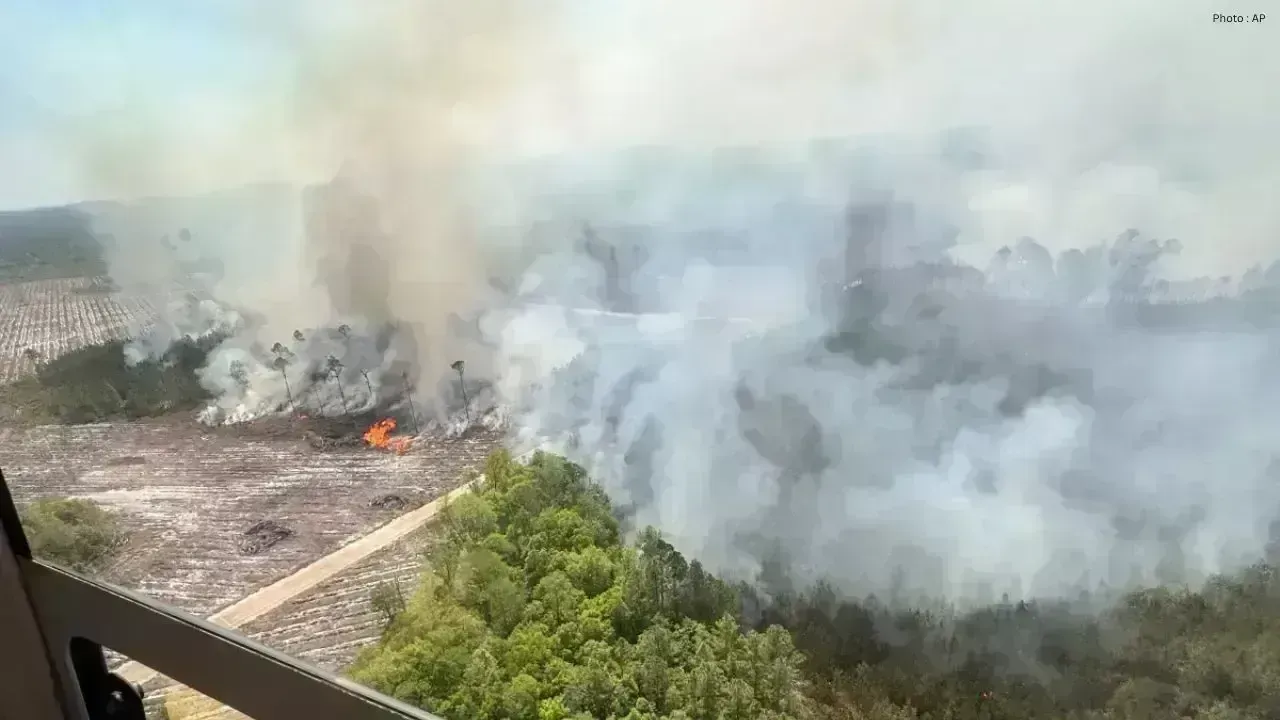
Across the southeastern United States, intense wildfires are ravaging areas in Georgia and Florida as prolonged dry spells and gusty winds exacerbate the blaze. Homes have been destroyed, residents evacuated, and alarming concerns about safety and climate escalation are arising.
In southeastern Georgia, a significant fire has already scorched a large tract of land. Officials indicate it remains partially under control, hinting that the flames could surge once again. Firefighters are facing daunting challenges, with strong winds hampering containment efforts, and officials warn that additional evacuations may soon follow if conditions worsen.
The wildfires are numerous across Georgia and Florida, starkly highlighting the gravity of the situation. Emergency personnel are tirelessly battling the flames, but the adverse weather complicates their operations.
The core factor driving these fires is an extreme drought. The region has been parched for an extended period, leading to dry vegetation. This lack of moisture renders the land and surrounding flora highly flammable. High temperatures and robust winds further accelerate the fires’ spread.
In various locales, families have had to evacuate to ensure their safety. Tragically, many have lost homes and possessions. The wildfires have also deteriorated air quality, sending smoke into bordering towns, creating breathing difficulties for vulnerable populations, including children and the elderly.
Firefighters are confronting extreme circumstances, with dry foliage, downed trees, and shifting wind patterns compounding their challenges. These unpredictable elements enable the blaze to spread dangerously fast, intensifying risks for both residents and emergency responders.
This situation has escalated to lethal levels, underlining the perils faced by first responders. Firefighting teams continue to valiantly risk their lives to shield communities, underscoring the critical nature of the current crisis.
In response, local authorities have enacted urgent measures. State of emergency declarations are in place in certain areas along with strict fire prevention regulations. Residents are advised against outdoor ignitions and encouraged to adhere closely to safety directives.
Experts suggest that shifts in climate patterns might be amplifying the frequency of such events. Lengthier dry spells, elevated temperatures, and reduced rainfall are all contributing to rising wildfire risks, affecting places previously less vulnerable.
The current situation illustrates how swiftly wildfires may escalate under extreme weather. It also emphasizes the vital need for preemptive actions, public awareness, and stronger emergency preparedness.
As firefighting efforts continue, many await the hopeful arrival of rain, which could assist in controlling the blazes. Until that moment arrives, the priority remains on safeguarding lives, preserving properties, and halting the fire’s advance.








PM Modi Pays Tribute to Mahatma Gandhi, Urges People to Support Khadi
PM Modi pays tribute to Mahatma Gandhi on Gandhi Jayanti and urges citizens to support Khadi and the

Amazon Seeks to Offload $8 Billion in Nvidia Chips to Investors
Amazon plans to move $8 billion in Nvidia chips to investors, using a new financing model to strengt

Samsung Raises Galaxy S26 Prices as Memory Chip Costs Rise
Samsung raises Galaxy S26 prices in South Korea as rising memory chip costs put pressure on smartpho

Lewis Hamilton Calls Singapore Grand Prix One of F1's Toughest Races
Lewis Hamilton discusses the demanding Singapore Grand Prix and brings Plus44 and Almave to Singapor

Denmark's Pandora Opens World's Largest Jewellery Factory in Vietnam
Pandora opens its largest jewellery factory in Vietnam, expanding global production, strengthening s

Gautam Gambhir Questions Batting-Friendly Pitches After India's Record ODI Chase
Gautam Gambhir questions batting-friendly ODI pitches after India’s record chase, calling for a bett

