
You have not yet added any article to your bookmarks!
Join 10k+ people to get notified about new posts, news and tips.
Do not worry we don't spam!
Post by : Saif Rahman
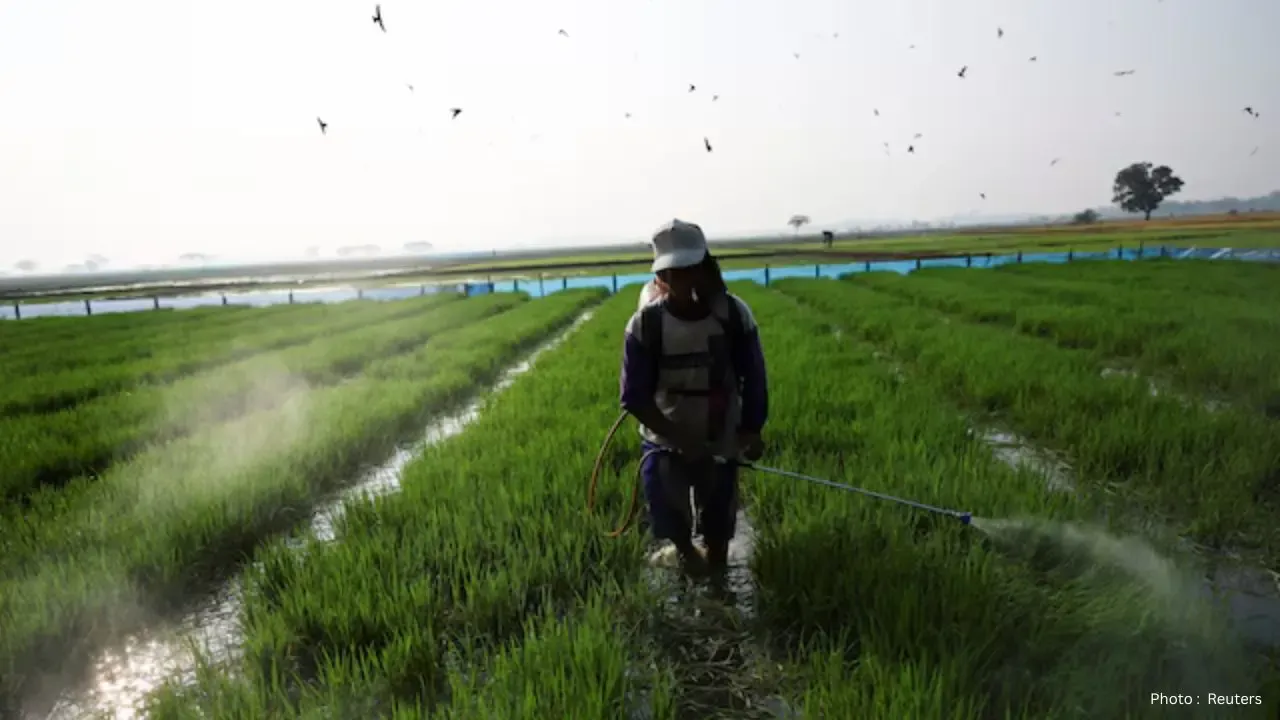
Indonesia's Meteorology, Climatology, and Geophysics Agency (BMKG) has called on farmers to reassess their agricultural strategies as the nation braces for a potentially harsh dry spell fueled by the El Niño phenomenon.
This advisory comes as extensive regions across Indonesia have already begun experiencing the dry season, with several areas registering below-average precipitation. Officials assert that proactive measures are essential to mitigate the effects of extended dry conditions on agriculture and food supply.
Significant Portions of Indonesia Enter Dry Phase
By the end of June, BMKG reported that roughly 38% of the country's seasonal zones had transitioned into the dry season.
Simultaneously, about 47% of these zones indicated lesser than usual rainfall, heightening worries about water sources for farming practices.
Weather authorities predict that these dry conditions will worsen in the upcoming months.
El Niño to Reach Its Peak Between July and September
According to BMKG representative Ardhasena Sopaheluwakan, the prevailing El Niño weather pattern significantly impacts this year's dry season.
The agency anticipates that the dry season's severity will peak from July to September, leading to elevated temperatures and diminished rainfall across numerous regions.
El Niño represents a naturally occurring climatic discretion linked to higher than usual sea temperatures in the Pacific, commonly causing drier weather conditions throughout Southeast Asia, which amplifies drought risks and negatively affects agricultural productivity.
Farmers Urged to Revise Cultivation Plans
To avert potential losses, BMKG has suggested farmers adapt their agricultural methodologies in response to the evolving weather landscape.
Recommended strategies include:
Authorities maintain that these tactics can enhance resilience amid extended drought scenarios.
Safeguarding Agriculture and Food Security
Agriculture is vital to Indonesia's economy, with weather profoundly influencing crop yields.
Prolonged dry conditions threaten harvest levels, disrupt irrigation systems, and elevate food prices.
Government bodies are closely tracking meteorological developments and providing ongoing updates to farmers, enabling them to make educated decisions during the dry season.
Officials stress the necessity of effective water management and climate-resilient agricultural practices to uphold productivity.
Monitoring Weather Patterns Continues
BMKG will persist in monitoring precipitation trends and climatic variations throughout the year.
Farmers are encouraged to keep abreast of official weather reports and agricultural guidance to navigate the risks linked to harsh weather occurrences.
The agency emphasizes that timely preparation and adaptation are crucial for ensuring steady food production during extended dry periods.










APEC Members Emphasise Safe and Responsible Use of Artificial Intelligence
APEC members discuss responsible AI use, digital innovation and data governance as China and the US

Union of European Clubs Challenge UEFA and EFC Over EU Competition Rules
UEC files an EU competition complaint against UEFA and EFC, challenging club representation, governa

Mohammed Shami Retires From Test Cricket, Eyes White-Ball Career
Mohammed Shami retires from Test cricket after 13 years, with 229 wickets. He will continue playing

Singapore Warns Users About Privacy and Security Risks of AI Agents
Singapore warns users about AI agent security risks, data privacy, online scams and unauthorised acc

Chris Lynn Completes One-Month Ban After Positive Cocaine Test
Australian cricketer Chris Lynn completes a one-month ban after a positive cocaine test during the T

Djokovic Eyes Strong Season Finish as Health Improves Ahead of Paris Masters
Novak Djokovic reports improved health and performance as he targets a strong Paris Masters finish a