
You have not yet added any article to your bookmarks!
Join 10k+ people to get notified about new posts, news and tips.
Do not worry we don't spam!
Post by : Shakul
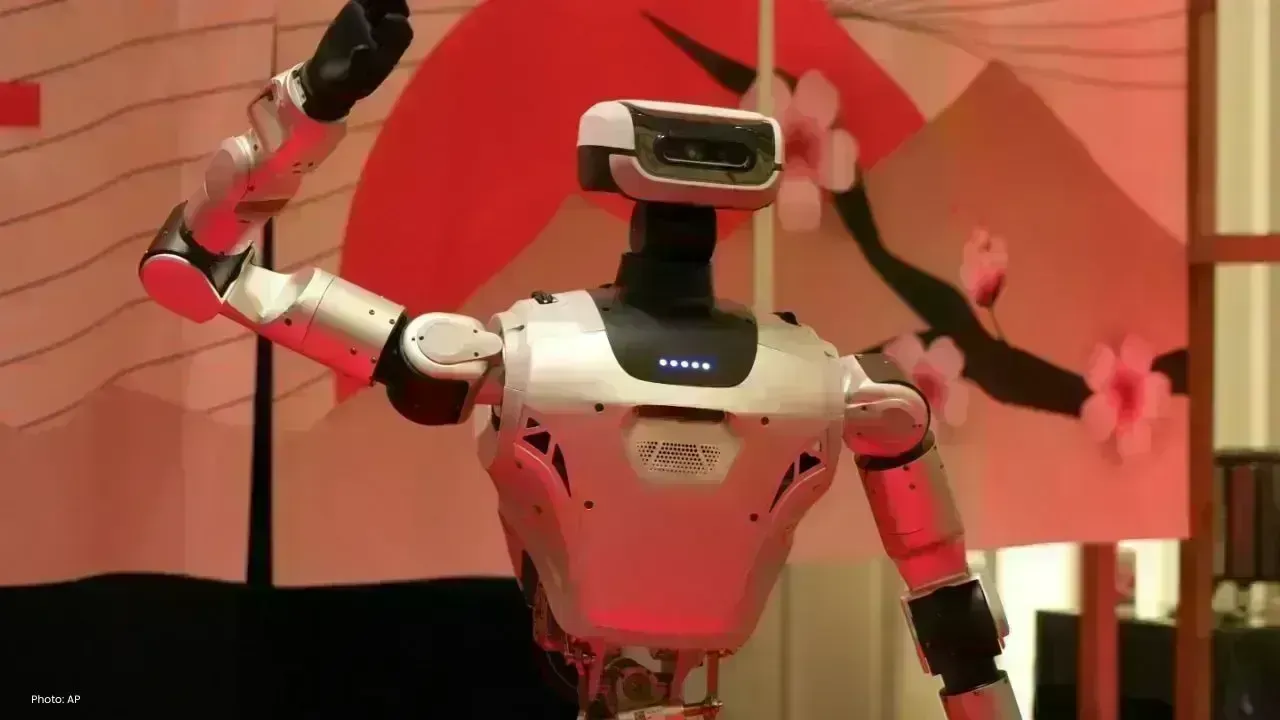
The global competition in humanoid robotics took center stage at the Humanoids Summit in Tokyo, where leading technology companies showcased advanced machines capable of performing remarkably human-like tasks. From threading needles with precision to dancing and handling logistics work, the event highlighted how rapidly the robotics industry is evolving.
One of the biggest talking points at the summit was the growing influence of Chinese robotics companies. Firms such as Booster Robotics and LimX Dynamics demonstrated humanoid machines that have attracted attention for combining advanced technology with lower production costs, making them increasingly competitive in international markets.
Industry experts noted that many of the technologies originally pioneered in Japan and the United States are now being refined and commercialized more effectively by Chinese manufacturers. This trend mirrors developments previously seen in sectors such as consumer electronics, smartphones, and electric vehicles, where Chinese companies gained significant global market share.
Among the crowd favorites was the Mini Pi Plus robot, a compact humanoid developed in China. While it is not yet designed for industrial labor, its interactive movements, dancing abilities, and affordable pricing generated strong interest among visitors and technology enthusiasts attending the event.
Japanese companies also demonstrated their engineering strengths. Honda presented a highly advanced robotic hand capable of handling delicate operations such as threading a needle and manipulating tiny components. Engineers emphasized that Japanese robotics continue to focus on precision, durability, and long-term reliability.
The summit also highlighted Japan's efforts to address labor shortages through automation. Several projects are being developed to deploy humanoid robots in airports, logistics centers, and service industries where workforce shortages have become a growing challenge. Experts believe robots could eventually work alongside humans in a wide range of everyday environments.
Professor Hiroshi Ishiguro of Osaka University, known internationally for creating a humanoid robot modeled after himself, stressed that Japan's unique cultural acceptance of robots remains a major advantage. He argued that Japanese society is particularly well-positioned to integrate robots into daily life and public services.
As competition intensifies, the event demonstrated that the future of humanoid robotics will likely be shaped by both Japanese innovation and Chinese manufacturing strength. The race to create practical, affordable, and intelligent robots is accelerating, with Asia increasingly becoming the center of global robotics development.
#Japan News #China #Tokyo #Technology #Artificial Intelligence










PM Modi Pays Tribute to Mahatma Gandhi, Urges People to Support Khadi
PM Modi pays tribute to Mahatma Gandhi on Gandhi Jayanti and urges citizens to support Khadi and the

Amazon Seeks to Offload $8 Billion in Nvidia Chips to Investors
Amazon plans to move $8 billion in Nvidia chips to investors, using a new financing model to strengt

Samsung Raises Galaxy S26 Prices as Memory Chip Costs Rise
Samsung raises Galaxy S26 prices in South Korea as rising memory chip costs put pressure on smartpho

Lewis Hamilton Calls Singapore Grand Prix One of F1's Toughest Races
Lewis Hamilton discusses the demanding Singapore Grand Prix and brings Plus44 and Almave to Singapor

Denmark's Pandora Opens World's Largest Jewellery Factory in Vietnam
Pandora opens its largest jewellery factory in Vietnam, expanding global production, strengthening s

Gautam Gambhir Questions Batting-Friendly Pitches After India's Record ODI Chase
Gautam Gambhir questions batting-friendly ODI pitches after India’s record chase, calling for a bett

