
You have not yet added any article to your bookmarks!
Join 10k+ people to get notified about new posts, news and tips.
Do not worry we don't spam!
Post by : Rameen Ariff
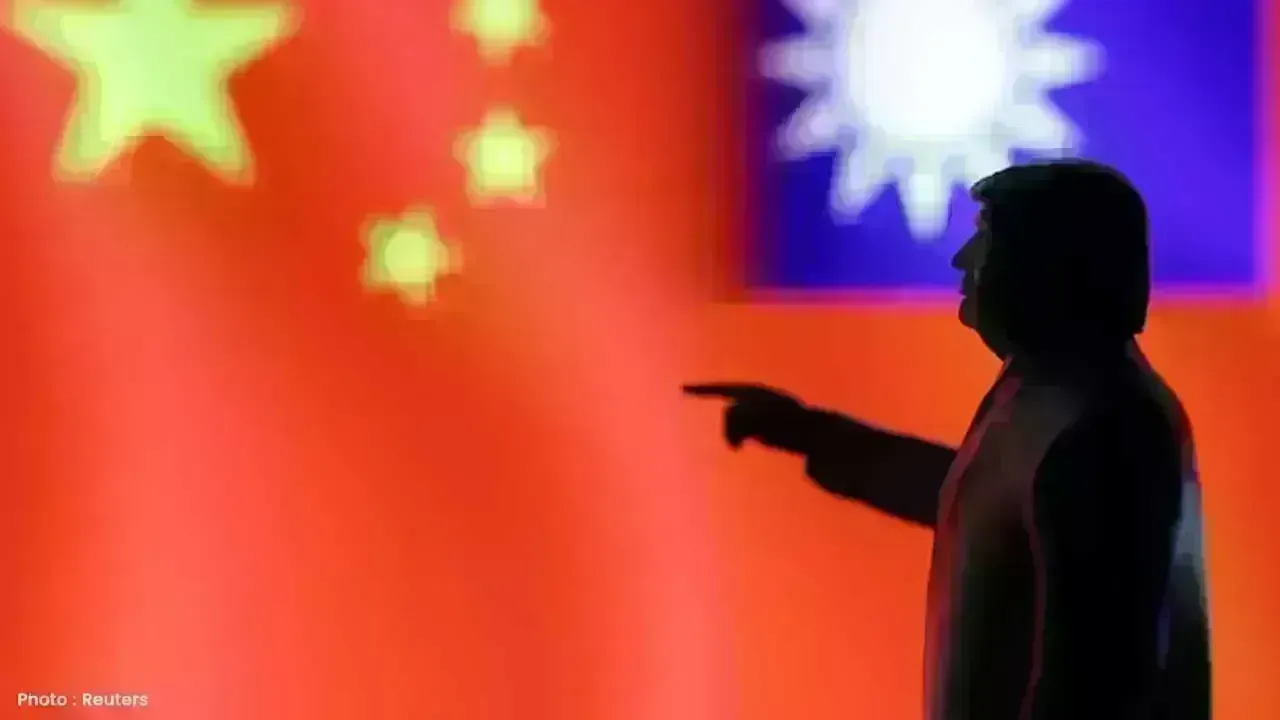
China has strongly responded to the United States’ latest National Security Strategy, pledging to defend its sovereignty and warning against any form of external interference. The U.S. strategy, unveiled on Friday, outlines Washington’s plans to strengthen military capabilities to deter potential conflicts with Beijing, particularly over Taiwan, one of the most sensitive issues in global diplomacy.
The announcement comes amid heightened tensions in East Asia, where China last week conducted its largest maritime display to date, deploying a significant number of naval and coast guard vessels across regional waters. Chinese officials emphasized that such measures are a necessary defense of national sovereignty and a warning against foreign powers attempting to influence or challenge China’s territorial claims.
Experts say the U.S. strategy reflects Washington’s commitment to counterbalance China’s growing regional influence and to reinforce security partnerships with allies in the Indo-Pacific. Beijing, however, views these moves as provocations that could escalate tensions further. Analysts also note that China’s assertive naval activity signals its readiness to respond to perceived threats in the Taiwan Strait and surrounding areas.
While the National Security Strategy focuses on deterrence, China’s response highlights the delicate balance in U.S.-China relations, with both sides seeking to assert strategic influence without triggering open confrontation. The situation underscores the ongoing geopolitical competition in the Indo-Pacific and the challenges of maintaining regional stability amid rising military and diplomatic pressures.
China’s stance signals its determination to protect sovereignty while cautioning the U.S. and other nations against interfering in matters it considers internal, particularly regarding Taiwan. The developments are expected to influence future diplomatic engagements, military planning, and economic interactions between the two global powers, with implications for regional security and international relations.
This rising tension between the U.S. and China marks a critical moment in East Asian geopolitics, where both nations are recalibrating strategies to safeguard their interests while managing the risks of escalation in the Taiwan Strait and surrounding maritime regions.










PM Modi Pays Tribute to Mahatma Gandhi, Urges People to Support Khadi
PM Modi pays tribute to Mahatma Gandhi on Gandhi Jayanti and urges citizens to support Khadi and the

Amazon Seeks to Offload $8 Billion in Nvidia Chips to Investors
Amazon plans to move $8 billion in Nvidia chips to investors, using a new financing model to strengt

Samsung Raises Galaxy S26 Prices as Memory Chip Costs Rise
Samsung raises Galaxy S26 prices in South Korea as rising memory chip costs put pressure on smartpho

Lewis Hamilton Calls Singapore Grand Prix One of F1's Toughest Races
Lewis Hamilton discusses the demanding Singapore Grand Prix and brings Plus44 and Almave to Singapor

Denmark's Pandora Opens World's Largest Jewellery Factory in Vietnam
Pandora opens its largest jewellery factory in Vietnam, expanding global production, strengthening s

Gautam Gambhir Questions Batting-Friendly Pitches After India's Record ODI Chase
Gautam Gambhir questions batting-friendly ODI pitches after India’s record chase, calling for a bett

