
You have not yet added any article to your bookmarks!
Join 10k+ people to get notified about new posts, news and tips.
Do not worry we don't spam!
Post by : Shweta
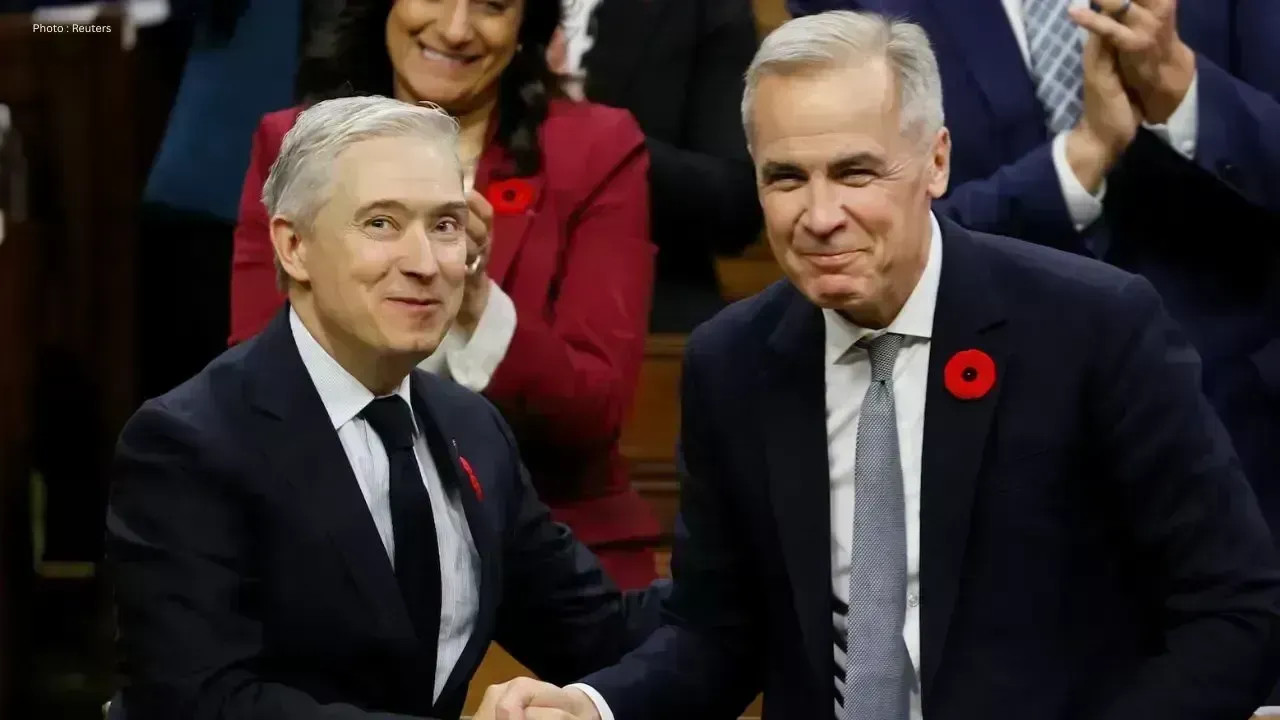
The latest fiscal strategy from Prime Minister Mark Carney has garnered backlash from both political commentators and economic analysts, who claim the government's financial plans focus excessively on spending while inadequately tackling escalating debt and economic challenges.
Columnist Jesse Kline was among those expressing discontent, asserting that the federal government's methods disregard real economic challenges as Canadians grapple with affordability issues, inflation worries, and uncertainty about the economy's future.
This discourse unfolds as the Canadian government rolls out significant spending efforts linked to climate initiatives, infrastructure, social programs, and environmental stewardship. Proponents of the government argue that such investments are critical to modernizing the economy, nurturing clean energy innovation, and equipping Canada for upcoming global economic shifts.
Nevertheless, critics contend that ramping up public spending without stricter fiscal discipline might strain federal finances further. Concerns have arisen over burgeoning deficits, government borrowings, and the viability of spending commitments if economic conditions deteriorate.
Kline's critique zeroed in on what he referred to as symbolic and politically palatable spending moves that may not yield substantial benefits for everyday Canadians. He hinted that the government appears to favor costly environmental and social projects, while many households face persistent struggles with housing, soaring living costs, and economic unpredictability.
The term "save the whales" has emerged in the criticism, highlighting broader concerns among detractors who argue that environmental issues are overshadowing fundamental economic topics such as productivity, tax relief, and cost-of-living challenges.
In defense, the Carney administration argues that strategic public investment is vital for sustaining competitiveness and fostering long-term growth. Officials maintain that initiatives in clean energy, green infrastructure, and industrial development aim to generate employment while guiding Canada towards a sustainable economic future.
Supporters also insist that investing in climate-conscious spending is crucial, as nations worldwide heavily invest in renewable energy, environmental technology, and low-carbon sectors. Federal representatives warn that failure to invest right now might hinder Canada's competitiveness in future global markets.
Simultaneously, opposing views continue to raise doubts regarding the realism of the government's financial forecasts. Some economists caution that sluggish economic growth, elevated interest rates, and global uncertainties could complicate Canada's ability to manage future debt while maintaining expansive spending.
The fiscal conversation gains urgency as Canadians confront mounting pressures related to housing affordability, soaring grocery bills, and strained public services. Many voters are monitoring whether governmental strategies will enhance economic conditions in the years ahead or add financial burdens on taxpayers.
Political analysts predict that disputes over government spending and economic management will remain pivotal in Canadian politics in the coming days. Advocates perceive the fiscal strategy as an avenue for long-term economic reform, while adversaries warn of escalating debt risks without providing immediate relief for citizens.
As dialogue continues, the Carney administration is projected to experience mounting pressure to reconcile environmental aspirations, social investment, and fiscal prudence while addressing economic anxieties from both the business sector and households throughout Canada.










PM Modi Pays Tribute to Mahatma Gandhi, Urges People to Support Khadi
PM Modi pays tribute to Mahatma Gandhi on Gandhi Jayanti and urges citizens to support Khadi and the

Amazon Seeks to Offload $8 Billion in Nvidia Chips to Investors
Amazon plans to move $8 billion in Nvidia chips to investors, using a new financing model to strengt

Samsung Raises Galaxy S26 Prices as Memory Chip Costs Rise
Samsung raises Galaxy S26 prices in South Korea as rising memory chip costs put pressure on smartpho

Lewis Hamilton Calls Singapore Grand Prix One of F1's Toughest Races
Lewis Hamilton discusses the demanding Singapore Grand Prix and brings Plus44 and Almave to Singapor

Denmark's Pandora Opens World's Largest Jewellery Factory in Vietnam
Pandora opens its largest jewellery factory in Vietnam, expanding global production, strengthening s

Gautam Gambhir Questions Batting-Friendly Pitches After India's Record ODI Chase
Gautam Gambhir questions batting-friendly ODI pitches after India’s record chase, calling for a bett

