
You have not yet added any article to your bookmarks!
Join 10k+ people to get notified about new posts, news and tips.
Do not worry we don't spam!
Post by : Jyoti Gupta
Photo:Reuters
On August 27, Moldova will mark its 34th year of independence. This year’s celebration will carry extra weight, as the leaders of three major European nations — French President Emmanuel Macron, German Chancellor Friedrich Merz, and Polish Prime Minister Donald Tusk — will arrive in the capital city, Chisinau, for a historic visit.
Their presence is more than ceremonial. It is intended as a strong show of unity and support for Moldova, a small but strategically important country in Eastern Europe that has accused Russia of trying to destabilize it. The visit, timed with Independence Day, is meant to send a clear message: Moldova’s future lies with Europe, and its sovereignty will not be left undefended.
A Nation Between East and West
Moldova, a country of around 2.5 million people, sits in a sensitive geographic position. To its west lies Romania, a member of both NATO and the European Union. To its east is Ukraine, which has been locked in a brutal war since Russia’s full-scale invasion in February 2022. This location makes Moldova vulnerable, but also highly important to European security.
Since gaining independence from the Soviet Union in 1991, Moldova has struggled with its identity. Some citizens push for closer ties with the European Union, seeing their future alongside democracies that promise stability, opportunity, and reform. Others, influenced by history and culture, lean toward Russia, with which Moldova has long-standing ties.
This divide is not just political — it runs deep through Moldovan society. Russia has worked hard to maintain influence, using media campaigns, political allies, and financial support for pro-Russian groups.
President Maia Sandu’s Stand Against Moscow
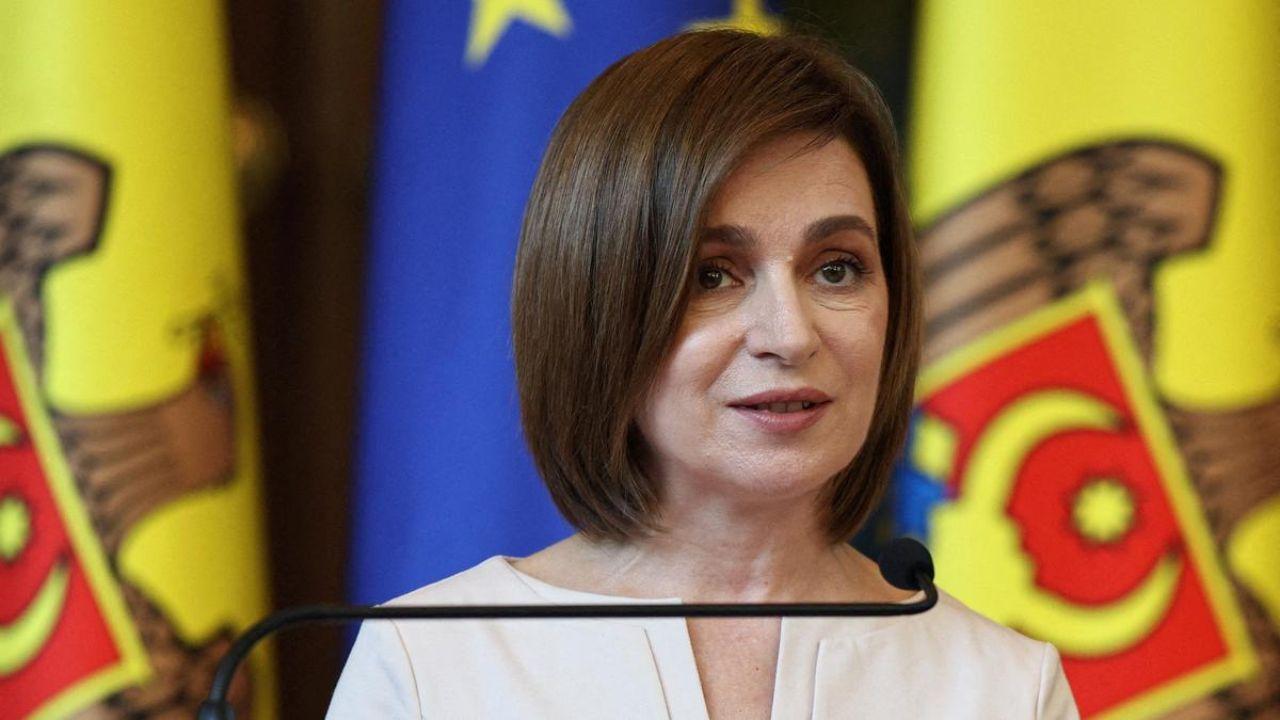
At the center of this struggle is President Maia Sandu, who has become one of the most outspoken critics of Russia in the region. Since being elected in 2020, she has consistently pushed for Moldova to integrate more closely with Europe.
Her leadership style is firm and clear: she portrays Moldova as a country determined to protect its independence, strengthen democracy, and resist outside interference. For this, Sandu has drawn heavy criticism from Moscow.
In July this year, Sandu accused Russia of planning a coordinated campaign to interfere in Moldova’s national elections scheduled for September. She warned of “disinformation campaigns, cyberattacks, and violent protests” allegedly funded by Moscow to weaken her government. These claims reflect long-standing concerns that Russia is trying to undermine Moldova’s institutions from within.
Sandu’s fears are not unfounded. Security experts across Europe have pointed to suspicious activity, including fake social media campaigns spreading false information about the Moldovan government, attempts to hack government networks, and unexplained funding for political groups linked to Russia.
Why the Visit Matters
Against this tense backdrop, the visit by Macron, Merz, and Tusk carries huge significance. These three leaders represent countries that are pillars of the European Union. France and Germany are its founding powers, while Poland, with its history of resisting Soviet domination, has become a leading voice on Eastern Europe’s security.
By coming together in Chisinau on Independence Day, they intend to show solidarity not just with Moldova’s leaders, but with its people. Their presence underscores that Moldova is not isolated in its struggle, but rather part of a broader European community that stands against external threats.
This visit also has symbolic power. Independence Day is one of Moldova’s most important national holidays, celebrating its break from Soviet rule in 1991. By marking the occasion alongside Moldovan leaders, Europe is aligning itself with Moldova’s independence, freedom, and chosen path toward Europe.
The Political Stakes
Moldova is preparing for national elections in September, which many see as a decisive moment for the country’s future. A poll taken in mid-July showed Sandu’s Action and Solidarity Party (PAS) leading with 39% support, while the pro-Russian Socialist Party stood at about 15%.
Although the numbers look promising for Sandu, analysts caution that the weeks ahead could be turbulent. If Russia succeeds in stirring up unrest or spreading doubt about the fairness of elections, public opinion could shift quickly. That is why international support, like this upcoming visit, matters so much. It reassures Moldovans that their efforts to move toward Europe are recognized and supported.
Europe’s Wider Strategy
The visit also ties into Europe’s larger strategy in response to the ongoing war in Ukraine. The EU has made it clear that it will not allow Russia to expand its influence unchecked. Supporting Moldova is part of this plan.
Since 2022, the EU has increased financial aid to Moldova, provided energy support during times of crisis, and worked closely with Sandu’s government on reforms. Moldova has been granted EU candidate status, but joining the bloc is still a long-term process that will require years of work.
For now, visits like this show that Europe sees Moldova as an important partner whose stability is vital for regional security.
Challenges Ahead
Despite the strong words of support, Moldova faces real challenges. Economically, it remains one of the poorest countries in Europe, making it vulnerable to outside pressure. The unresolved issue of Transnistria, a breakaway region supported by Russia, continues to threaten the country’s unity. In addition, energy dependency has long been a tool Russia has used to apply pressure.
Moldova must also balance its path toward Europe with the reality of internal divisions. Not all citizens agree with Sandu’s pro-European stance, and pro-Russian voices remain powerful in certain regions.
What to Expect on August 27
During the Independence Day celebrations, Macron, Merz, and Tusk are expected to join President Sandu in official ceremonies. They are likely to make strong public statements affirming support for Moldova’s sovereignty, independence, and European path. While no major policy decisions are expected, the symbolism of the visit alone will carry weight.
Diplomatic meetings between the European leaders and Moldovan officials will also take place. These talks may focus on security cooperation, election monitoring, and further European assistance to ensure stability in the months ahead.
Moldova’s Independence Day this year will be more than a celebration of freedom from Soviet rule. It will be a moment when Europe comes together to signal its support for a small country facing immense pressure.
For Maia Sandu and her government, the visit is a lifeline of political and diplomatic strength as elections approach. For Macron, Merz, and Tusk, it is a chance to show that Europe stands united against destabilization efforts in its neighborhood.
Most importantly, for ordinary Moldovans, it will serve as reassurance that their struggles for democracy and independence are seen, recognized, and supported by the wider world.
The coming weeks will determine whether Moldova can withstand the pressures it faces, but August 27 will remain a historic day — one that reminds the world how even small nations play a crucial role in the larger fight for freedom and security in Europe.










PM Modi Pays Tribute to Mahatma Gandhi, Urges People to Support Khadi
PM Modi pays tribute to Mahatma Gandhi on Gandhi Jayanti and urges citizens to support Khadi and the

Amazon Seeks to Offload $8 Billion in Nvidia Chips to Investors
Amazon plans to move $8 billion in Nvidia chips to investors, using a new financing model to strengt

Samsung Raises Galaxy S26 Prices as Memory Chip Costs Rise
Samsung raises Galaxy S26 prices in South Korea as rising memory chip costs put pressure on smartpho

Lewis Hamilton Calls Singapore Grand Prix One of F1's Toughest Races
Lewis Hamilton discusses the demanding Singapore Grand Prix and brings Plus44 and Almave to Singapor

Denmark's Pandora Opens World's Largest Jewellery Factory in Vietnam
Pandora opens its largest jewellery factory in Vietnam, expanding global production, strengthening s

Gautam Gambhir Questions Batting-Friendly Pitches After India's Record ODI Chase
Gautam Gambhir questions batting-friendly ODI pitches after India’s record chase, calling for a bett

