
You have not yet added any article to your bookmarks!
Join 10k+ people to get notified about new posts, news and tips.
Do not worry we don't spam!
Post by : Saif Rahman
The Strait of Hormuz has re-emerged as a focal point for escalating tensions between the United States and Iran, with both nations asserting claims over this critical shipping passage amid renewed military actions in the region. These developments heighten anxiety regarding global energy supply chains, commercial maritime operations, and regional security.
The conflict has reignited following a weekend of attacks, including a notable incident involving a cargo vessel off Oman’s coast. This escalation has raised fears that diplomatic initiatives to soothe tensions may fail, potentially leading to a wider regional conflict.
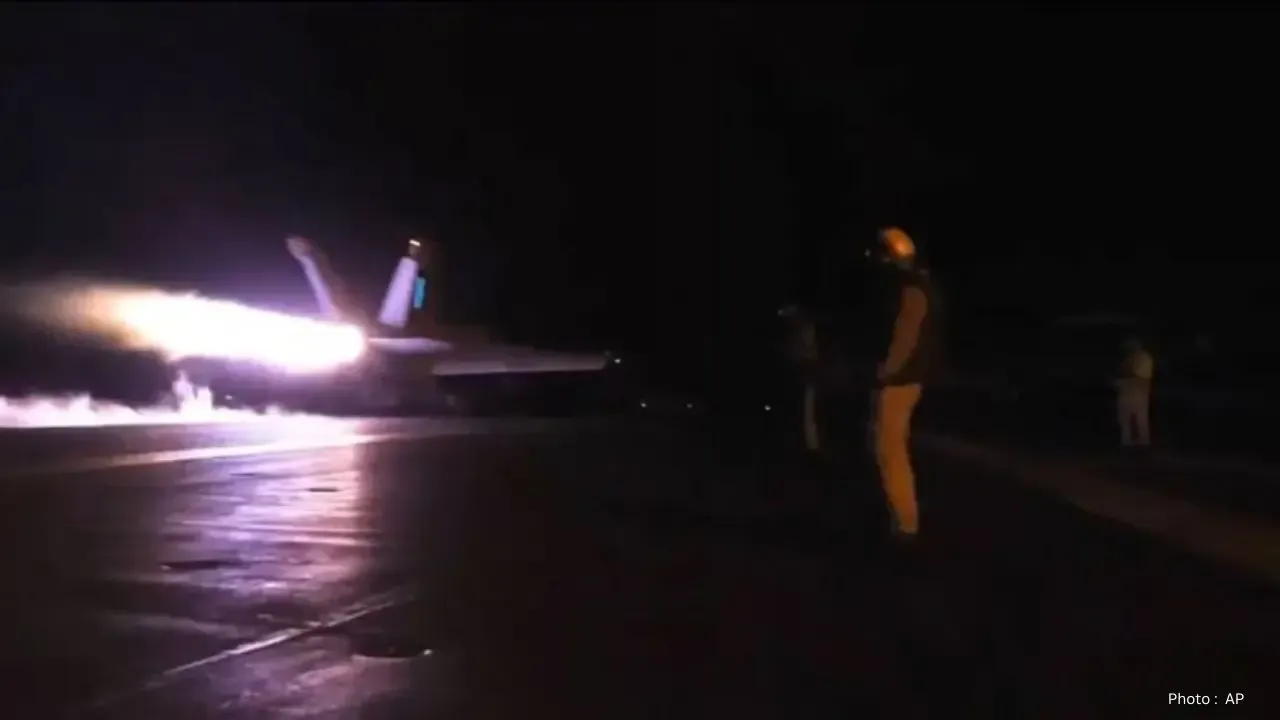
The United States has undertaken a fresh series of targeted military strikes, impacting numerous sites within Iran. US officials reported that the operations concentrated on air defense systems, radar facilities, missile launch points, drone assets, and quick-attack vessels thought to be facilitating military actions in the Gulf.
Military representatives from the US emphasized the aim was to diminish Iran’s operational powers while safeguarding international shipping lanes and US interests in the area. They reaffirmed that the Strait of Hormuz is recognized as an international waterway essential for global trade.
Iran has consistently demonstrated its influence around the Strait of Hormuz, one of the key arteries for global energy transportation. This narrow passage connects the Persian Gulf to the Gulf of Oman, acting as a major conduit for the export of crude oil and liquefied natural gas (LNG).
Since the escalation earlier this year, commercial shipping has endured significant interruptions, including assaults on vessels and heightened security risks for cargo operations. Shipping lines are reassessing routes as governments keep a vigilant watch on the evolving dynamics.
The Strait of Hormuz is pivotal in the global energy landscape, with a substantial portion of the world's oil and natural gas traversing this route daily. Any disruption could result in significant impacts on international fuel supplies, increased transportation costs, and rising oil prices.
Energy specialists caution that ongoing military activities in the Gulf could exert further strain on global markets, particularly if vessels find themselves unable to transit the region safely.
Recent military exchanges come amidst an interim agreement aimed at facilitating longer-term peace discussions between the US and Iran. Nevertheless, repeated hostilities around the Strait of Hormuz have diminished optimism for achieving a sustained resolution.
United Nations Secretary-General António Guterres has called on all involved parties to prevent any escalation, emphasizing that a return to full-blown violence would have dire humanitarian, economic, and security repercussions for both the region and the globe.
While diplomatic avenues remain accessible, analysts suggest that the next few weeks will be critical in ascertaining if negotiations can revive or if military actions will persist.









Spain's Diego Poncelet Sets Skateboarding World Speed Record
Spain's Diego Poncelet reaches 151.83 km/h in a record-breaking downhill skateboard run in Canada, s

Hyundai Recalls 94,622 US Vehicles Over Potential Fire Risk
Hyundai recalls 94,622 US vehicles over overheating seat motors. Check affected Genesis models, fire

Nvidia Pledges $250 Million for UK AI Safety Research
Nvidia will provide $250 million in computing resources over five years to support AI safety researc

Jacob Bethell Returns as England Name Squads for Australia Tour
England name ODI and T20 squads for the Australia tour, with Jacob Bethell returning from injury and

Beauden Barrett Opens Up About Mental Struggles During All Blacks Exile
Beauden Barrett discusses his confidence struggles after missing six tests, his return against Austr

IMF Says AI Investment Supports Global Growth Despite Energy Shock
IMF says AI investment is supporting global growth near 3%, with Asian economies benefiting from ris