
You have not yet added any article to your bookmarks!
Join 10k+ people to get notified about new posts, news and tips.
Do not worry we don't spam!
Post by : Shweta
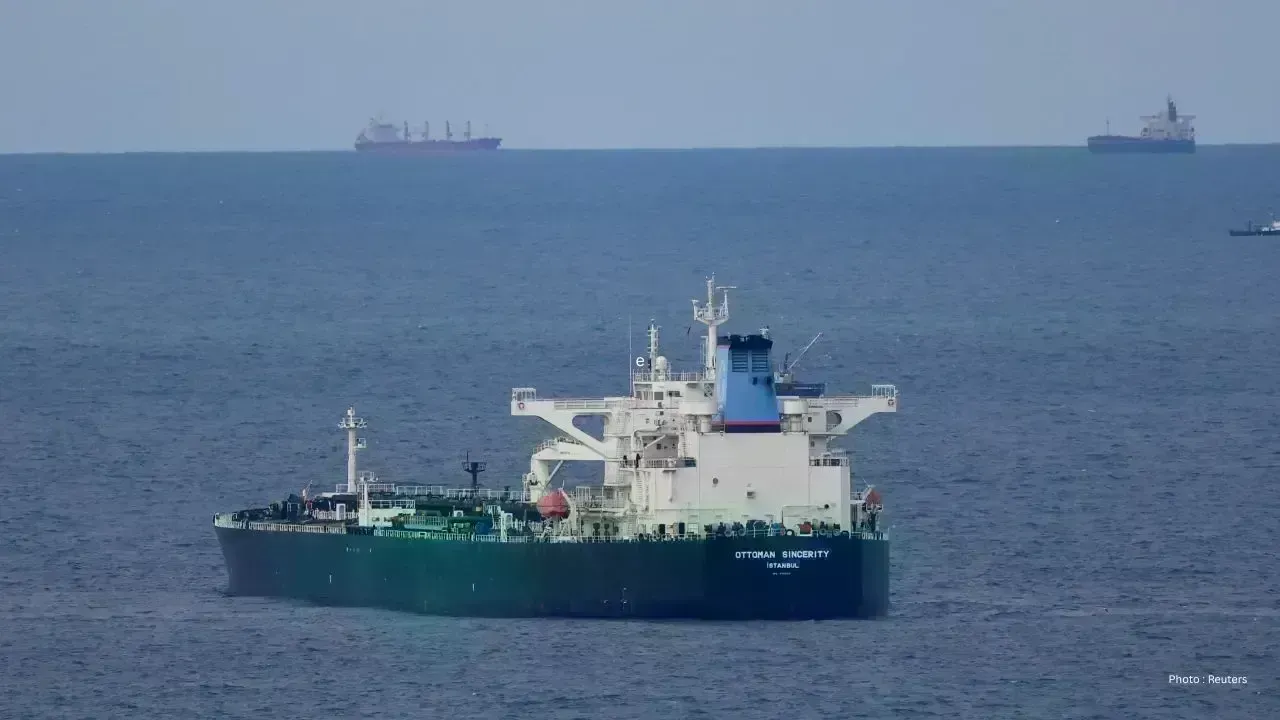
In a significant security incident, an oil tanker was hijacked off Yemen’s coast and redirected towards Somali waters, intensifying worries about piracy in the Gulf of Aden and the Horn of Africa. Armed personnel, whose identities remain unknown, boarded the vessel near southeastern Yemen and took control of it.
Officials from Yemen's Coast Guard confirmed that the tanker, named M/T EUREKA, was seized near Shabwa province. The attackers managed to overpower the vessel's crew and altered its course towards the Gulf of Aden and the Somali coastline. Ongoing efforts are focused on tracking the tanker and guaranteeing the safety of those on board.
The M/T EUREKA was navigating one of the world's busiest maritime routes, critical for trade between the Red Sea and the Indian Ocean. The area has faced increased sensitivity due to piracy threats, ongoing political turmoil, and assaults on commercial shipping in recent years. Maritime security agencies are diligently monitoring developments as concerns mount regarding a resurgence of large-scale Somali piracy.
The UK Maritime Trade Operations (UKMTO) had previously noted suspicious activity by small armed vessels in the vicinity prior to the tanker’s hijacking. Security analysts suspect that fast skiffs may have been employed by the attackers to board the vessel.
Current reports indicate that authorities have pinpointed the tanker's location and rescue operations are underway to observe its movements. Details concerning the crew's nationality or the number of individuals onboard have not been disclosed, and there are no immediate reports of injuries linked to the incident.
The oil products tanker M/T EUREKA flies the Togo flag and had docked at the UAE port of Fujairah earlier this year. Shipping records reveal that it was active in the region before the hijacking.
This incident has raised fears of a revival in Somali piracy after recent similar attacks. International shipping organizations caution that diminished naval patrols, coupled with persisting regional conflicts, may allow armed pirate groups to re-establish activities.
Somali piracy posed a severe threat to global shipping between 2008 and 2012, leading to numerous assaults on commercial vessels. Although international naval operations reduced incidents significantly, recent trends suggest pirate networks may be expanding their activities in East African waters once again.
Analysts emphasize that this recent hijacking could have far-reaching effects on international trade routes and could elevate insurance rates for shipping firms navigating the Gulf of Aden, a vital corridor for the transport of millions of barrels of oil and various commercial goods daily.
Investigations are being conducted by Yemeni authorities and regional maritime agencies into the hijacking, as international observers keep a close eye on the situation surrounding the tanker and its crew.









Union of European Clubs Challenge UEFA and EFC Over EU Competition Rules
UEC files an EU competition complaint against UEFA and EFC, challenging club representation, governa

Mohammed Shami Retires From Test Cricket, Eyes White-Ball Career
Mohammed Shami retires from Test cricket after 13 years, with 229 wickets. He will continue playing

Singapore Warns Users About Privacy and Security Risks of AI Agents
Singapore warns users about AI agent security risks, data privacy, online scams and unauthorised acc

Chris Lynn Completes One-Month Ban After Positive Cocaine Test
Australian cricketer Chris Lynn completes a one-month ban after a positive cocaine test during the T

Djokovic Eyes Strong Season Finish as Health Improves Ahead of Paris Masters
Novak Djokovic reports improved health and performance as he targets a strong Paris Masters finish a

SpaceX in Talks to Buy Boost Mobile or Use Its Network
SpaceX reportedly explores a Boost Mobile deal with EchoStar to expand Starlink Mobile and challenge