
You have not yet added any article to your bookmarks!
Join 10k+ people to get notified about new posts, news and tips.
Do not worry we don't spam!
Post by : Samjeet Ariff
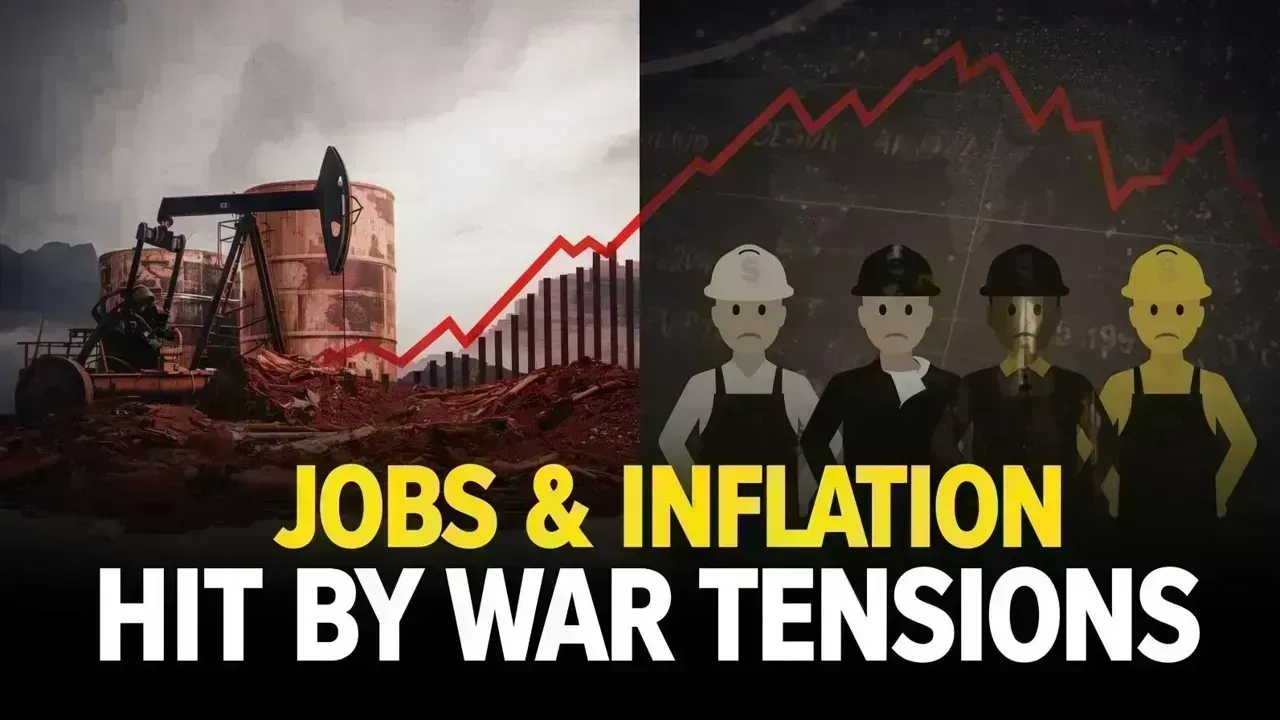
The escalating conflict between the United States and Iran has emerged as a direct threat to the US economy, job opportunities, and everyday expenses. This situation is more than just a geopolitical issue; it profoundly affects fuel costs, hiring practices, business sentiment, and inflation levels throughout the nation.
Central to this economic disruption is the Strait of Hormuz, a vital artery for global oil transport. Increased tensions in this area have immediate repercussions for the US economy, due to the fundamental role energy prices play across diverse sectors.
The initial and most significant economic impact originates from the rise in oil prices.
Global oil supplies are compromised due to the conflict, causing prices to escalate dramatically, with certain crude oil prices exceeding $110 per barrel and consequently raising fuel costs in the US.
This phenomenon occurs because:
Oil’s significance extends beyond a mere commodity—it is the backbone of modern economies. Rising oil prices invariably influence almost all other costs.
Surging oil prices lead to increased inflation, a trend already evident in the US.
The chain of cause and effect unfolds as follows:
This scenario has resulted in:
Even the agricultural sector feels the strain, as costs for fuel and fertilizers rise.
Economists express concern that this could usher in persistent inflation, where prices remain inflated for a protracted duration.
The current economic climate poses unique challenges for policymakers.
Traditionally, inflation can be controlled by adjusting interest rates. However, the inflation resulting from war disruptions is driven by supply chain issues, rather than consumer demand.
This complicates matters:
This raises the specter of potential stagflation, characterized by:
The most apparent fallout from rising costs and uncertainty is seen in the job market.
Businesses are adopting a cautious approach due to:
Particularly hit are service-oriented industries that employ a significant portion of the workforce.
The impact of the crisis isn’t uniform across all sectors.
Industries Facing Struggles:
These sectors, heavily dependent on fuel and stable supply chains, are most susceptible to escalating costs.
Industries Thriving in this Situation:
Energy companies are enjoying the benefits of higher oil prices, while defense industries are witnessing increased demand due to heightened geopolitical uncertainties.
Companies across the US are recalibrating their strategies in response to the current conditions.
Typical adjustments include:
For instance, transportation and delivery firms are imposing fuel surcharges, thereby ultimately driving up consumer costs.
This creates a feedback loop where rising expenses further fuel inflation.
The average American is already feeling the pressure of current economic shifts.
Simultaneously, job stability may be diminishing, complicating household management of escalating costs.
The combination of increased expenses and stagnant wage growth places formidable pressure on overall living standards.
Uncertainty stemming from war tensions is also making its mark on financial markets.
Doubtful investor behavior can lead to:
This only intensifies economic strain.
If tensions persist, the possibility of a larger economic downturn escalates.
Projected outcomes might encompass:
The longer the disruption in global oil supply lingers, the more pronounced these impacts may become.
The length of the ongoing conflict is a significant variable.
If instability in the Strait of Hormuz continues, the implications for inflation and employment could deepen considerably.
The US economy exhibits strength while remaining interconnected within global fabrics.
Even with domestic energy production, influences extend from:
This significance ensures external conflicts can wield substantial influence on the US economic landscape.
The geopolitical tensions between the United States and Iran are generating a notable ripple effect on inflation and job creation.
At the heart of this influence lies the escalated energy prices, necessitating businesses to rethink strategies.
The current state of affairs presents a challenging equilibrium for the US:
If conflicts do not abate, the potential for a more profound economic downturn looms large.
The forthcoming weeks will prove critical in discerning whether conditions stabilize or escalate into more severe economic ramifications.
This article is intended for informational use only and reflects ongoing economic trends. The landscape may shift in light of global developments.










PM Modi Pays Tribute to Mahatma Gandhi, Urges People to Support Khadi
PM Modi pays tribute to Mahatma Gandhi on Gandhi Jayanti and urges citizens to support Khadi and the

Amazon Seeks to Offload $8 Billion in Nvidia Chips to Investors
Amazon plans to move $8 billion in Nvidia chips to investors, using a new financing model to strengt

Samsung Raises Galaxy S26 Prices as Memory Chip Costs Rise
Samsung raises Galaxy S26 prices in South Korea as rising memory chip costs put pressure on smartpho

Lewis Hamilton Calls Singapore Grand Prix One of F1's Toughest Races
Lewis Hamilton discusses the demanding Singapore Grand Prix and brings Plus44 and Almave to Singapor

Denmark's Pandora Opens World's Largest Jewellery Factory in Vietnam
Pandora opens its largest jewellery factory in Vietnam, expanding global production, strengthening s

Gautam Gambhir Questions Batting-Friendly Pitches After India's Record ODI Chase
Gautam Gambhir questions batting-friendly ODI pitches after India’s record chase, calling for a bett

