
You have not yet added any article to your bookmarks!
Join 10k+ people to get notified about new posts, news and tips.
Do not worry we don't spam!
Post by : Shakul
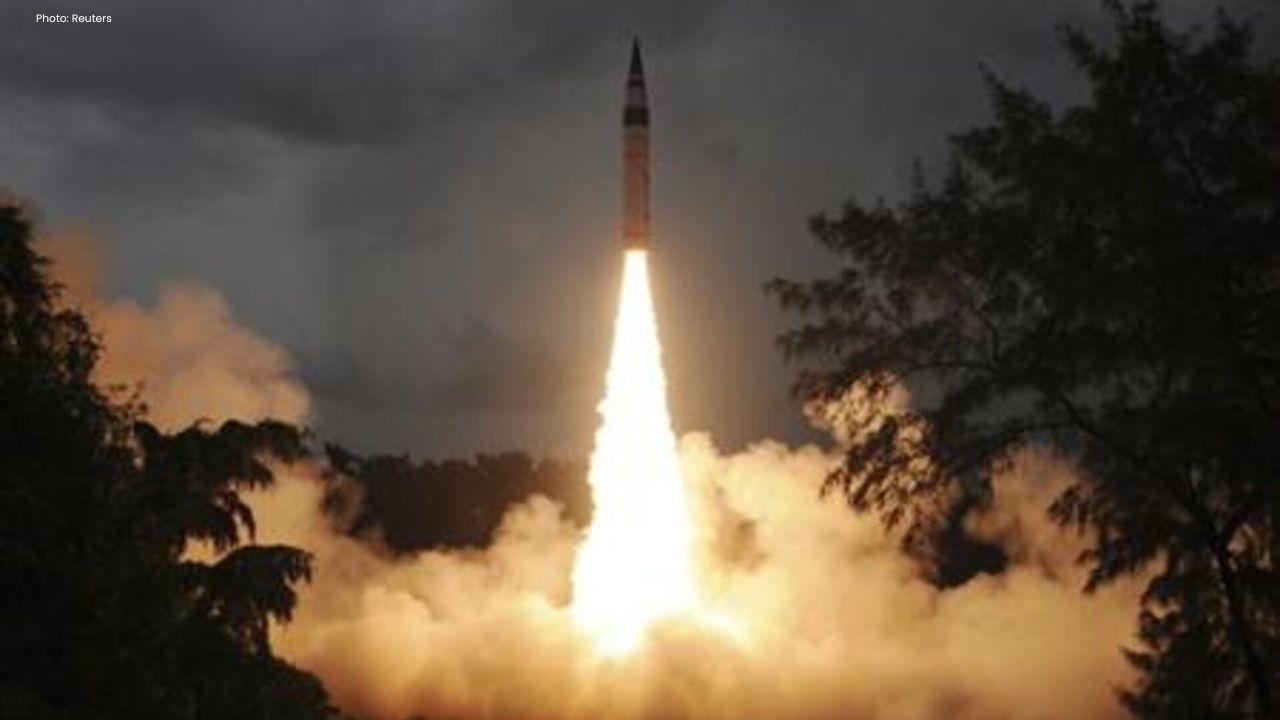
India has successfully conducted the first test of its indigenous Long Range Land Attack Cruise Missile (LRLACM), marking a major milestone in the country's defence modernization efforts. The missile was tested by the Defence Research and Development Organisation (DRDO) off the coast of Odisha and achieved all planned operational and technical objectives.
Indigenous Missile Program Reaches Key Milestone
The LRLACM is being described as India's equivalent of the US Tomahawk cruise missile. Developed entirely within India, the project involved several DRDO laboratories and domestic industry partners, with Bengaluru-based Aeronautical Development Establishment serving as the lead development agency. The successful test demonstrates India's growing self-reliance in advanced missile technology.
Long-Range Precision Strike Capability
Although official specifications have not been disclosed, defence experts estimate the missile's range to be between 1,000 and 1,500 kilometers. Such a range would allow Indian forces to engage strategic targets far beyond the country's borders while remaining within national territory or operating from naval platforms.
Designed for Multiple Launch Platforms
One of the missile's key strengths is its operational flexibility. The LRLACM is expected to be deployable from ground-based launchers, warships and submarines. It can also be configured to carry different types of payloads, increasing its usefulness across a variety of military missions and strategic scenarios.
Low-Altitude Flight Enhances Survivability
Unlike ballistic missiles that travel through high-altitude trajectories, cruise missiles fly at very low altitudes and follow terrain-hugging routes. This flight profile makes them significantly harder for enemy radar systems and air-defence networks to detect and intercept. The missile is expected to use advanced navigation and guidance technologies for high-precision strikes.
Strategic Impact on Regional Security
The successful test is expected to strengthen India's long-range deterrence capabilities. Defence analysts believe the missile could provide the armed forces with an effective stand-off weapon capable of targeting critical infrastructure, command centers and military facilities at extended distances while minimizing exposure to enemy defences.
Future Development and Induction Plans
The Defence Ministry confirmed that additional trials will be conducted before the missile enters operational service. Officials expect the weapon system to undergo further testing over the next two years. Once inducted, the LRLACM is likely to become a key component of India's evolving precision-strike arsenal and a significant addition to the country's strategic defence posture.










PM Modi Pays Tribute to Mahatma Gandhi, Urges People to Support Khadi
PM Modi pays tribute to Mahatma Gandhi on Gandhi Jayanti and urges citizens to support Khadi and the

Amazon Seeks to Offload $8 Billion in Nvidia Chips to Investors
Amazon plans to move $8 billion in Nvidia chips to investors, using a new financing model to strengt

Samsung Raises Galaxy S26 Prices as Memory Chip Costs Rise
Samsung raises Galaxy S26 prices in South Korea as rising memory chip costs put pressure on smartpho

Lewis Hamilton Calls Singapore Grand Prix One of F1's Toughest Races
Lewis Hamilton discusses the demanding Singapore Grand Prix and brings Plus44 and Almave to Singapor

Denmark's Pandora Opens World's Largest Jewellery Factory in Vietnam
Pandora opens its largest jewellery factory in Vietnam, expanding global production, strengthening s

Gautam Gambhir Questions Batting-Friendly Pitches After India's Record ODI Chase
Gautam Gambhir questions batting-friendly ODI pitches after India’s record chase, calling for a bett

