
You have not yet added any article to your bookmarks!
Join 10k+ people to get notified about new posts, news and tips.
Do not worry we don't spam!
Post by : Meena Ariff
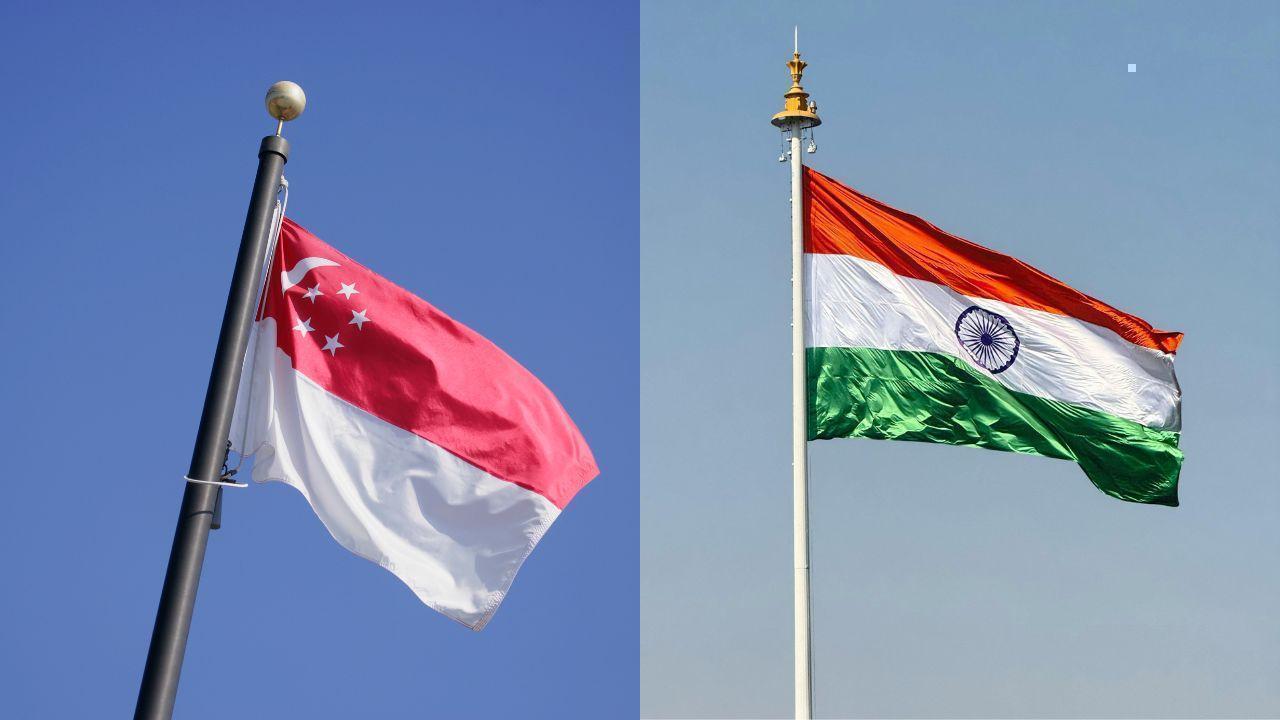
India and Singapore have agreed to work more closely together in many new areas, including technology, skills development, green energy, and manufacturing. The decision came during a major meeting in New Delhi on August 13, when Singapore’s Deputy Prime Minister Gan Kim Yong visited India with a high-level team.
The meeting was the third India-Singapore Ministerial Roundtable (ISMR), a platform where ministers from both nations come together to discuss how to grow cooperation. Both sides said they share a strong and long-standing friendship, built on trade, investment, and close ties between their people.
This year’s discussions focused on emerging industries such as semiconductors, green hydrogen, advanced manufacturing, and digitalisation. They also looked at older but important areas of cooperation like skills training, sustainability, and healthcare.
Leaders from Both Nations Meet
Deputy Prime Minister Gan led a six-member team from Singapore. It included senior ministers responsible for foreign affairs, digital development, manpower, transport, energy, and security. On the Indian side, the team was led by the Finance Minister, along with the Ministers of External Affairs, Commerce and Industry, and Electronics and Information Technology.
The ministers reviewed the progress made since the last meeting in Singapore in 2024. They noted achievements in areas like technology exchange, sustainability projects, and cooperation in manufacturing. Both sides agreed that future growth will come from working together in sectors that are changing rapidly, such as the digital economy and renewable energy.
Why This Meeting Matters Now
The talks come at a time when the global economy is facing many challenges. Trade tensions, including new tariffs from the United States, are creating uncertainty. Experts say this makes it more important for countries like India and Singapore to strengthen regional cooperation.
Professor C. Raja Mohan, a research expert, said that the world is changing fast and both countries must work together to protect their economies. He pointed out that the ISMR has already helped create new opportunities in advanced manufacturing and semiconductors.
Focus on Semiconductors
One of the most promising areas of cooperation is semiconductor manufacturing. India is building several new chip-making plants in states like Gujarat and Assam, and plans to roll out its first locally made chip later this year.
During Prime Minister Modi’s visit to Singapore in 2024, both nations signed an agreement to make it easier for Singaporean companies to work in India’s semiconductor industry. This has already helped firms like Cleantech Services, a Singapore-based company that supplies equipment for chip production, to expand operations in India.
The Indian government aims to capture 5% of the global semiconductor market by 2030. To reach this goal, it recently approved four more projects under the India Semiconductor Mission. Cooperation with Singapore is expected to boost supply chains and speed up industry growth.
Green Energy and Shipping
Another key topic was green energy. Singapore’s Sembcorp Green Hydrogen India has signed an agreement with the Odisha government to set up a green hydrogen manufacturing plant in Paradeep. This plant will produce clean fuel that could be shipped to Singapore.
The two nations are also exploring the creation of a green shipping corridor between Paradeep Port in Odisha and Singapore, covering a distance of around 1,900 nautical miles. Such a route would support trade in green fuels and promote environmentally friendly shipping.
Skills Development – A Shared Priority
India has one of the world’s youngest populations, with more than 65% of its people under the age of 35. To make sure this youthful energy is used well, skill development is essential.
Singapore has been a valuable partner in this area. Its Institute of Technical Education Services has helped India set up five skill centres across the country. The largest one, in Odisha, can train 3,000 students at a time in areas like vertical transport, mechatronics, and air-conditioning.
Both countries agreed to continue and expand these training programs, especially in high-demand fields like semiconductor technology and aircraft maintenance.
Strong Trade and Investment Links
Singapore is India’s top foreign investor, contributing about 24% of all foreign direct investment into India since 2000. Singaporean companies see India as a fast-growing market with opportunities in manufacturing, sustainability, data centres, and technology.
Many Indian start-ups also operate in Singapore, using it as a hub for expansion in Asia. Sectors like fintech and healthtech are especially active.
Neil Parekh, chairman of the Singapore Indian Chamber of Commerce and Industry, said that the ISMR discussions fit perfectly with the business community’s priorities. He expects new opportunities in areas like the digital economy, sustainability, and advanced manufacturing.
Celebrating 60 Years of Friendship
This year marks 60 years of diplomatic relations between India and Singapore. During their visit, the Singapore ministers also met Indian President Droupadi Murmu. Both sides celebrated the milestone and spoke about the importance of continuing to work together.
Deputy Prime Minister Gan invited President Murmu to visit Singapore, carrying a message from Singapore’s President Tharman Shanmugaratnam.
On the same day as the ISMR, the India-Singapore Business Roundtable (ISBR) was also held. This event brought together top business leaders from both countries, including executives from Blackstone Singapore and Temasek Holdings. They discussed partnerships in digitalisation, industrial parks, skills training, and infrastructure finance.
With Singapore Prime Minister Lawrence Wong expected to visit India in early September, cooperation between the two countries is set to grow further. The focus will remain on building strong economic links, sharing technology, training young people, and protecting the environment.
Both nations believe that working closely together will help them face global challenges, create jobs, and support long-term growth. The ISMR has already shown that when India and Singapore join forces, the results benefit both countries and their people.









PM Modi Pays Tribute to Mahatma Gandhi, Urges People to Support Khadi
PM Modi pays tribute to Mahatma Gandhi on Gandhi Jayanti and urges citizens to support Khadi and the

Amazon Seeks to Offload $8 Billion in Nvidia Chips to Investors
Amazon plans to move $8 billion in Nvidia chips to investors, using a new financing model to strengt

Samsung Raises Galaxy S26 Prices as Memory Chip Costs Rise
Samsung raises Galaxy S26 prices in South Korea as rising memory chip costs put pressure on smartpho

Lewis Hamilton Calls Singapore Grand Prix One of F1's Toughest Races
Lewis Hamilton discusses the demanding Singapore Grand Prix and brings Plus44 and Almave to Singapor

Denmark's Pandora Opens World's Largest Jewellery Factory in Vietnam
Pandora opens its largest jewellery factory in Vietnam, expanding global production, strengthening s

Gautam Gambhir Questions Batting-Friendly Pitches After India's Record ODI Chase
Gautam Gambhir questions batting-friendly ODI pitches after India’s record chase, calling for a bett

