
You have not yet added any article to your bookmarks!
Join 10k+ people to get notified about new posts, news and tips.
Do not worry we don't spam!
Post by : Shakul
Indonesia is accelerating its transition to renewable energy as global geopolitical tensions continue to disrupt oil markets and push prices higher.
Rising instability in the Middle East has driven crude oil prices above $100 per barrel, with supply concerns centered around key routes like the Strait of Hormuz. This has prompted countries worldwide to rethink energy strategies and reduce dependence on fossil fuels.
President Prabowo Subianto has described the crisis as an opportunity for Indonesia to fast-track its goals of energy and food self-sufficiency. The government is now prioritizing renewable sources such as solar, wind, hydro, geothermal, and biomass.
Energy Minister Bahlil Lahadalia has been tasked with leading a national energy transition push, including the formation of a dedicated task force to accelerate clean energy development.
Currently, renewable energy accounts for around 15.75% of Indonesia’s energy mix. The government aims to increase this to between 17% and 21% by 2026 through major investments and policy reforms.
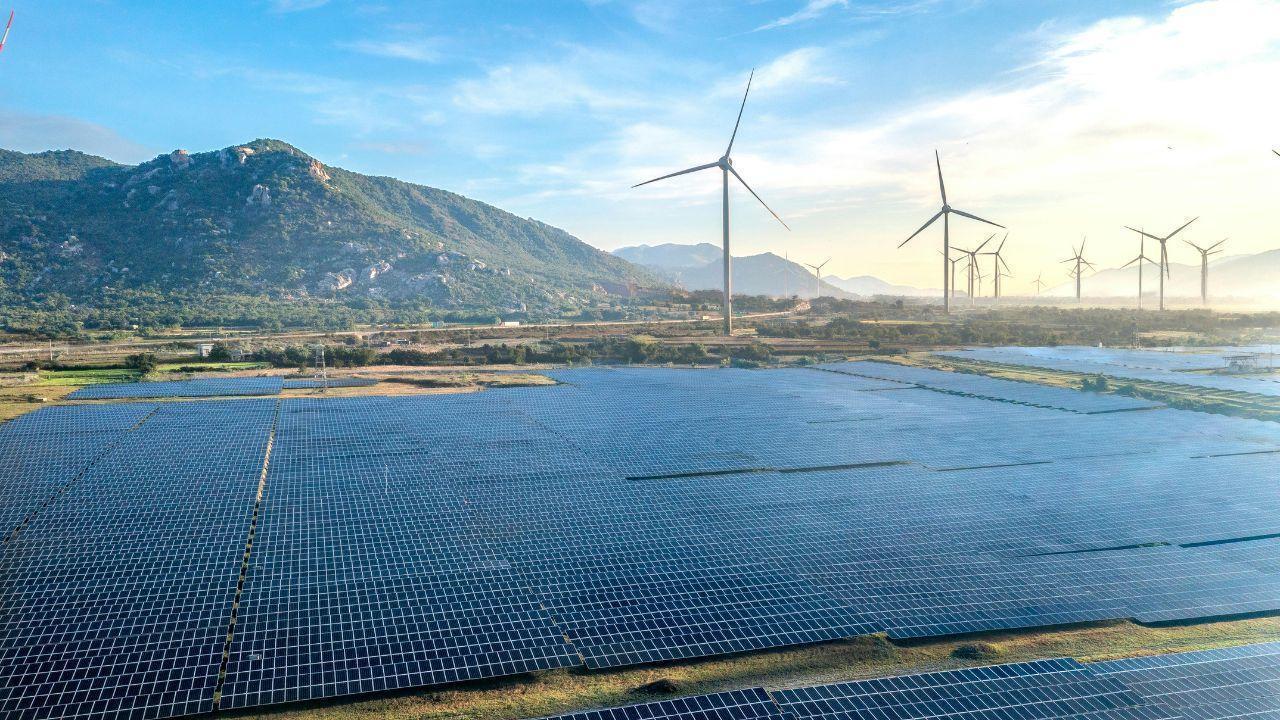
One of the flagship initiatives is a large-scale solar energy program targeting up to 100 gigawatts (GW) of capacity. Despite having an estimated solar potential exceeding 3,000 GW, utilization remains limited, highlighting the need for infrastructure development.
Indonesia is also expanding its bioenergy sector. The country continues to implement its B40 biodiesel program and is exploring a transition to B50, which would increase the share of palm oil-based fuel. In parallel, plans are underway to introduce E20 bioethanol blending by 2028, inspired partly by models used in countries like Brazil.
The government is also investing in geothermal energy, where Indonesia ranks among the world’s largest producers, with over 2.6 GW of installed capacity.
Officials say these efforts are not only aimed at shielding the economy from volatile oil prices but also at supporting climate goals and long-term sustainability. By diversifying its energy mix and investing in clean technologies, Indonesia hopes to build a more resilient and self-reliant energy system.
The transition to renewable energy is increasingly seen as both an economic necessity and an environmental responsibility in the face of global uncertainty.










PM Modi Pays Tribute to Mahatma Gandhi, Urges People to Support Khadi
PM Modi pays tribute to Mahatma Gandhi on Gandhi Jayanti and urges citizens to support Khadi and the

Amazon Seeks to Offload $8 Billion in Nvidia Chips to Investors
Amazon plans to move $8 billion in Nvidia chips to investors, using a new financing model to strengt

Samsung Raises Galaxy S26 Prices as Memory Chip Costs Rise
Samsung raises Galaxy S26 prices in South Korea as rising memory chip costs put pressure on smartpho

Lewis Hamilton Calls Singapore Grand Prix One of F1's Toughest Races
Lewis Hamilton discusses the demanding Singapore Grand Prix and brings Plus44 and Almave to Singapor

Denmark's Pandora Opens World's Largest Jewellery Factory in Vietnam
Pandora opens its largest jewellery factory in Vietnam, expanding global production, strengthening s

Gautam Gambhir Questions Batting-Friendly Pitches After India's Record ODI Chase
Gautam Gambhir questions batting-friendly ODI pitches after India’s record chase, calling for a bett

