
You have not yet added any article to your bookmarks!
Join 10k+ people to get notified about new posts, news and tips.
Do not worry we don't spam!
Post by : Shweta
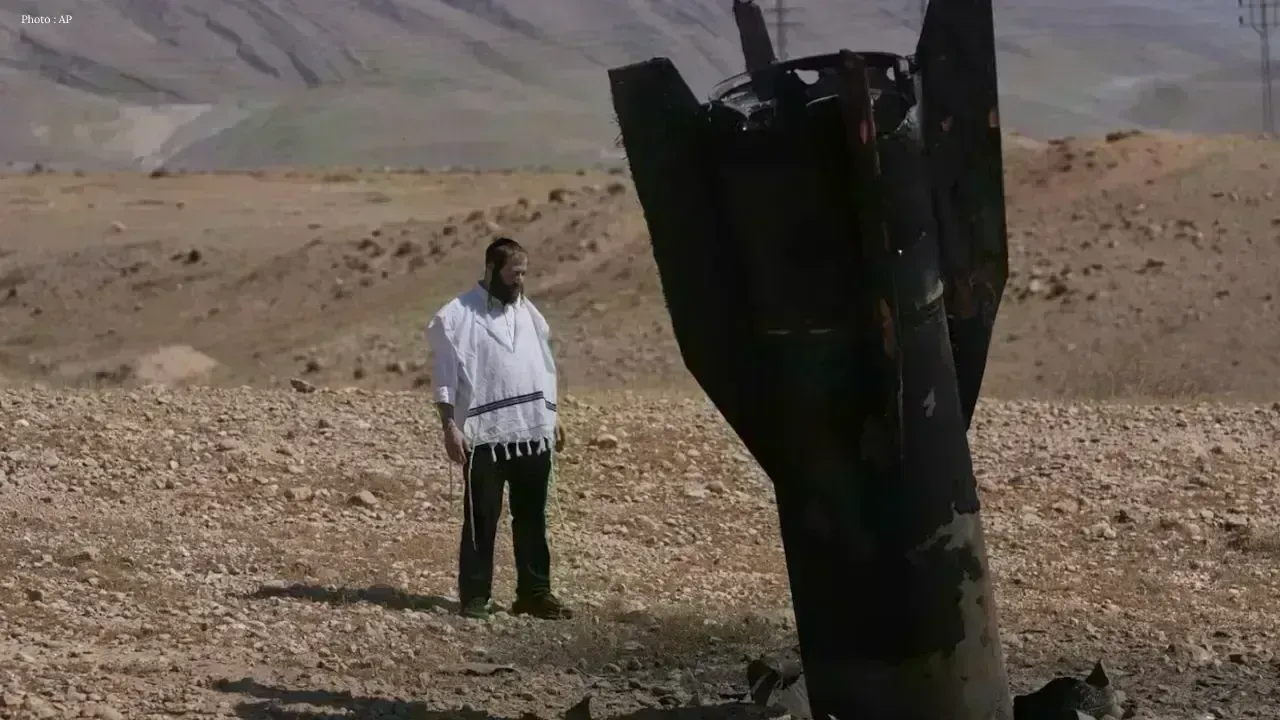
On Monday, Israel and Iran appeared to momentarily cease hostilities following their first exchange of attacks since April's ceasefire, which had been facilitated by the United States. The recent violence had heightened concerns about a potential escalation into a broader conflict, but both nations indicated a willingness to de-escalate while warning of severe repercussions for any further aggressions.
This incident marks the first significant breach of the ceasefire that had put an end to months of hostilities between these two regional adversaries. The resurgence of conflict, which surged in late February, has had repercussions on global markets, leading to spikes in energy prices and inflation of everyday products worldwide.
In light of the renewed skirmishes, U.S. President Donald Trump called for an immediate halt to the violence. Following this, Iran's military leadership announced it would suspend offensive actions. However, Iranian officials cautioned that any further Israeli strikes or actions by its allies would be met with a forceful response.
Israeli Prime Minister Benjamin Netanyahu indicated that this phase of fighting appeared to conclude, yet he reaffirmed Israel's commitment to retaliate against any Iranian provocations. He reiterated that military operations against Hezbollah in Lebanon would persist, asserting Israel’s right to self-defense.
With tensions showing signs of easing, both nations began to lift emergency measures put in place during the conflict. Israeli authorities stated that most schools, which had been closed, would resume operations, whereas Iranian officials reopened the country's airspace for commercial flights.
Despite this cautious calm, numerous issues continue to jeopardize the tenuous ceasefire. Iran maintains strict control over the Strait of Hormuz, a crucial passageway for global oil and natural gas supplies, with disruptions in this area contributing to rising fuel costs worldwide.
Concurrently, Israeli forces persisted in their operations against Hezbollah in Lebanon. The U.S. has upheld a blockade on Iranian ports, with U.S. Central Command reporting that it disabled an oil tanker in the Gulf of Oman after it allegedly sought to breach the blockade. Indian authorities confirmed the safety of all 24 crew members on board after a fire occurred onboard.
Diplomatic discussions escalated as regional leaders aimed to avert a return to comprehensive warfare. Officials from Egypt, Saudi Arabia, Türkiye, Pakistan, and Qatar have urged Washington to persuade Israel to suspend military operations, while also advocating for Iran to cease attacks against Israel.
Pakistan’s Prime Minister Shehbaz Sharif called for a measured approach, encouraging all sides to re-embrace diplomacy. Iran’s representative at the United Nations remained hopeful that ongoing talks with the U.S. could ultimately foster a more extensive peace agreement.
Prior to the recent de-escalation, Iran had executed several attacks aimed at Israel, while Israeli forces targeted strategic locations in central and western Iran. Reports from Iranian media indicated that at least 15 individuals sustained injuries due to explosions in Tehran and surrounding areas, but there were no immediate fatalities.
Israeli officials reported these actions were aimed at sites associated with ballistic missile production and mobile missile launchers. In retaliation, the Iranian Revolutionary Guard stated that two military bases within Israel had been struck.
Iran has accused the U.S. of backing Israel's maneuvers, claiming that Israeli actions are conducted with American coordination. This allegation underscores the growing strains within the region and highlights the precarious position of the U.S. as it endeavors to curtail further escalation.
Analysts have noted rising tensions between Trump and Netanyahu. Initially, their strategies were closely aligned, but differing perspectives on operational tactics have become apparent. Trump has consistently sought to conclude the conflict and mitigate economic volatility, while Netanyahu grapples with domestic pressures ahead of forthcoming elections, focusing on countering threats from Iran and Hezbollah.
Another troubling element has emerged from Yemen, where the Iran-aligned Houthi movement announced a resumption of attacks targeting Israeli-affiliated vessels in the Red Sea. Previous assaults during the Israel-Hamas war had significantly disrupted international shipping along one of the world’s critical trade routes.
Even though the pause in hostilities on Monday has alleviated immediate fears of a wider war, uncertainties linger. Diplomatic efforts are intensifying, as leaders throughout the region strive to maintain the ceasefire and avert a major escalation that could further destabilize the Middle East and impact the global economy.
For all the latest updates and developments, stay connected with us.










PM Modi Pays Tribute to Mahatma Gandhi, Urges People to Support Khadi
PM Modi pays tribute to Mahatma Gandhi on Gandhi Jayanti and urges citizens to support Khadi and the

Amazon Seeks to Offload $8 Billion in Nvidia Chips to Investors
Amazon plans to move $8 billion in Nvidia chips to investors, using a new financing model to strengt

Samsung Raises Galaxy S26 Prices as Memory Chip Costs Rise
Samsung raises Galaxy S26 prices in South Korea as rising memory chip costs put pressure on smartpho

Lewis Hamilton Calls Singapore Grand Prix One of F1's Toughest Races
Lewis Hamilton discusses the demanding Singapore Grand Prix and brings Plus44 and Almave to Singapor

Denmark's Pandora Opens World's Largest Jewellery Factory in Vietnam
Pandora opens its largest jewellery factory in Vietnam, expanding global production, strengthening s

Gautam Gambhir Questions Batting-Friendly Pitches After India's Record ODI Chase
Gautam Gambhir questions batting-friendly ODI pitches after India’s record chase, calling for a bett

