
You have not yet added any article to your bookmarks!
Join 10k+ people to get notified about new posts, news and tips.
Do not worry we don't spam!
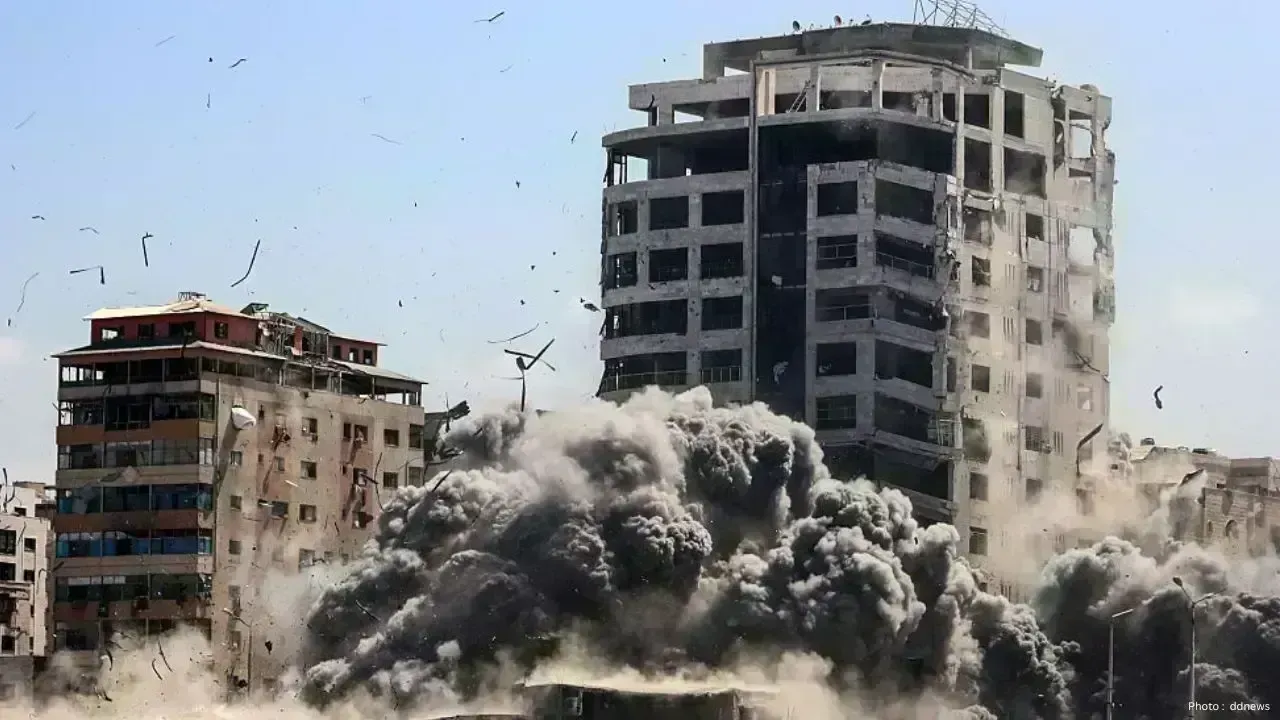
Post by : Saif Rahman
Israel and Lebanon have reached an agreement to prolong their ceasefire for an additional 45 days, driven by diplomatic initiatives that seek to ease escalating tensions along their shared border. This decision offers a temporary respite for countless civilians who have endured months of uncertainty and fear of violence.
The agreement was formulated during discussions held in Washington, supported by international stakeholders. Officials express hope that this extension allows for increased dialogue and reduces the risk of a serious military confrontation.
In recent months, the border area has been marred by numerous confrontations, including airstrikes and rocket fire, forcing many residents to evacuate their homes, particularly in southern Lebanon and northern Israel. This turmoil has led to significant damage to towns and villages close to the border, disrupting schools, businesses, and essential public services.
For countless civilians, daily life has been fraught with apprehension. Families grapple with safety concerns while local economies falter due to persistent tensions. The extension of the ceasefire now offers a brief period of calm for communities grappling with the aftermath of conflict.
Nevertheless, the landscape remains fragile. Minor security incidents and military maneuvers have persisted in certain areas even during earlier ceasefires, underscoring the precarious trust between the two entities and the ongoing threat of renewed hostilities.
One significant driver of these tensions is Hezbollah, the Lebanon-based militant group, which Israel perceives as a substantial security threat, demanding more decisive actions against the organization. Lebanon, meanwhile, is contending with complex political and economic challenges, exacerbating the situation.
The United States has played a pivotal role in fostering negotiations and averting a broader regional conflict, with global leaders warning that another full-scale war could destabilize the entire Middle East.
This ceasefire extension is a crucial diplomatic milestone rather than a conclusive peace accord, granting both parties extra time to deliberate on security issues and seek mechanisms to mitigate future violence.
For residents living near the border, the pursuit of peace is paramount. Many displaced individuals yearn to safely return home and reconstruct their lives following prolonged apprehension and devastation. Local economies and communities also aspire for the return of stability to rejuvenate economic activities.
The upcoming weeks will prove pivotal for the ceasefire’s future. Should discussions proceed positively, tensions might gradually dissipate. Conversely, any failures in negotiations or resurgence in violence could thrust the region into another perilous conflict.
#Middle East #Israel news #Middle East Crisis #Middle East Conflict #Israel war










PM Modi Pays Tribute to Mahatma Gandhi, Urges People to Support Khadi
PM Modi pays tribute to Mahatma Gandhi on Gandhi Jayanti and urges citizens to support Khadi and the

Amazon Seeks to Offload $8 Billion in Nvidia Chips to Investors
Amazon plans to move $8 billion in Nvidia chips to investors, using a new financing model to strengt

Samsung Raises Galaxy S26 Prices as Memory Chip Costs Rise
Samsung raises Galaxy S26 prices in South Korea as rising memory chip costs put pressure on smartpho

Lewis Hamilton Calls Singapore Grand Prix One of F1's Toughest Races
Lewis Hamilton discusses the demanding Singapore Grand Prix and brings Plus44 and Almave to Singapor

Denmark's Pandora Opens World's Largest Jewellery Factory in Vietnam
Pandora opens its largest jewellery factory in Vietnam, expanding global production, strengthening s

Gautam Gambhir Questions Batting-Friendly Pitches After India's Record ODI Chase
Gautam Gambhir questions batting-friendly ODI pitches after India’s record chase, calling for a bett

