
You have not yet added any article to your bookmarks!
Join 10k+ people to get notified about new posts, news and tips.
Do not worry we don't spam!
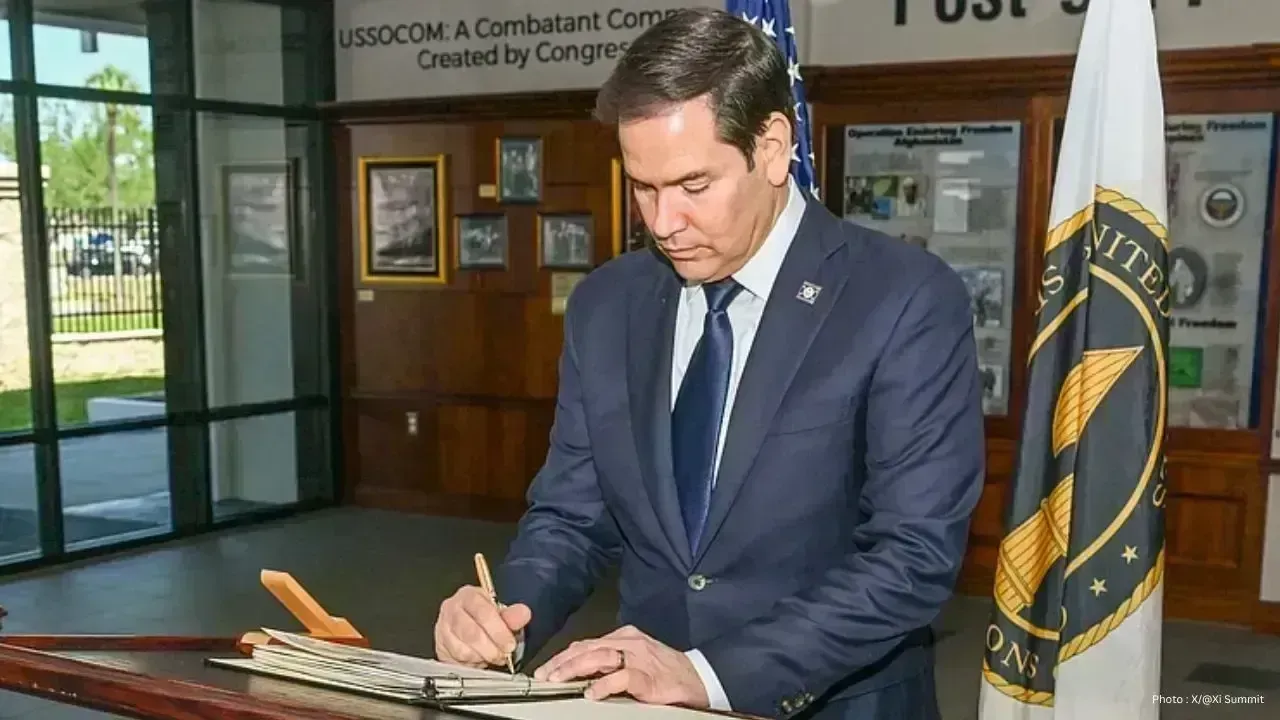
Post by : Shweta
As the summit between U.S. President Donald Trump and Chinese leader Xi Jinping approaches, attention is intensifying on Senator Marco Rubio's steadfast and critical views on China. With major discussions looming, including trade policies and security issues, Rubio's perspectives on these pressing matters are once again taking center stage.
Rubio has established himself as a formidable voice against the Chinese government within American politics over the years. The senator from Florida has consistently raised alarms about China's expanding global influence, military undertakings, technological aspirations, and alleged meddling in domestic affairs. He advocates for stronger economic constraints, enhanced security alliances in Asia, and more rigorous oversight of Chinese enterprises in critical sectors.
The timing of this focus coincides with anticipated discussions between Trump and Xi pertaining to trade conflicts, tariffs, Taiwan, cybersecurity, and global supply challenges. Analysts indicate that Rubio’s stringent position mirrors a growing bipartisan consensus in Washington, where many view China as America's primary strategic adversary.
Particularly, Rubio has highlighted technology and national security concerns. He has been an ardent supporter of restrictions on Chinese tech companies, endorsing stricter measures regarding semiconductor sales and telecommunications technologies. Furthermore, he warns that China's advancements in technology pose potential risks to American economic and military supremacy.
Human rights considerations also play a significant role in Rubio's commentary on China. He has frequently criticized Beijing for its actions in Hong Kong, Xinjiang, and its handling of religious freedoms and political dissent. Rubio has backed sanctions and legislative efforts aimed at Chinese officials tied to human rights violations.
The Trump-Xi discussions are set to gauge how firmly the U.S. intends to confront China while avoiding a deeper economic rift. Some analysts expect Trump to explore limited economic dialogues with Beijing, aimed at mitigating market volatility and stabilizing trade. Yet, political currents in Washington may inhibit any major conciliatory shift toward China.
Rubio's approach aligns with national security proponents who argue for reduced reliance on Chinese production and bolstered alliances with nations like Japan, India, and South Korea. Advocates of this perspective contend that the challenges posed by China's ascendance necessitate a long-term strategy instead of fleeting diplomatic measures.
Nevertheless, critics of a confrontational stance caution that raising tensions could jeopardize global trade, escalate military risks, and worsen economic uncertainties. Business leaders in the U.S. remain apprehensive about tariffs, supply chain interruptions, and the unpredictability of U.S.-China relations going forward.
Rubio’s comments have not gone unnoticed by Beijing, which has previously sanctioned him and other American figures deemed problematic to China's internal affairs. State-run Chinese media often depict Rubio as a leading critic of their policies.
As the global rivalry between the U.S. and China intensifies in technology, energy, and military clout, both nations are working to strengthen their alliances and economic ties while competing for influence globally.
Political analysts assert that Rubio's pronounced anti-China stance reflects a significant shift in American political sentiment, where skepticism toward Beijing is on the rise across party lines. Even those who differ on domestic issues often unite for tougher trade and security measures regarding China.
As the Trump-Xi summit nears, Rubio's advocacy shines a light on how crucial China policy has become in defining American foreign policy today. Regardless of whether this summit fosters collaboration or deepens tensions, the discourse on managing U.S.-China relations is set to remain a pivotal challenge in the political arena.










PM Modi Pays Tribute to Mahatma Gandhi, Urges People to Support Khadi
PM Modi pays tribute to Mahatma Gandhi on Gandhi Jayanti and urges citizens to support Khadi and the

Amazon Seeks to Offload $8 Billion in Nvidia Chips to Investors
Amazon plans to move $8 billion in Nvidia chips to investors, using a new financing model to strengt

Samsung Raises Galaxy S26 Prices as Memory Chip Costs Rise
Samsung raises Galaxy S26 prices in South Korea as rising memory chip costs put pressure on smartpho

Lewis Hamilton Calls Singapore Grand Prix One of F1's Toughest Races
Lewis Hamilton discusses the demanding Singapore Grand Prix and brings Plus44 and Almave to Singapor

Denmark's Pandora Opens World's Largest Jewellery Factory in Vietnam
Pandora opens its largest jewellery factory in Vietnam, expanding global production, strengthening s

Gautam Gambhir Questions Batting-Friendly Pitches After India's Record ODI Chase
Gautam Gambhir questions batting-friendly ODI pitches after India’s record chase, calling for a bett

