
You have not yet added any article to your bookmarks!
Join 10k+ people to get notified about new posts, news and tips.
Do not worry we don't spam!
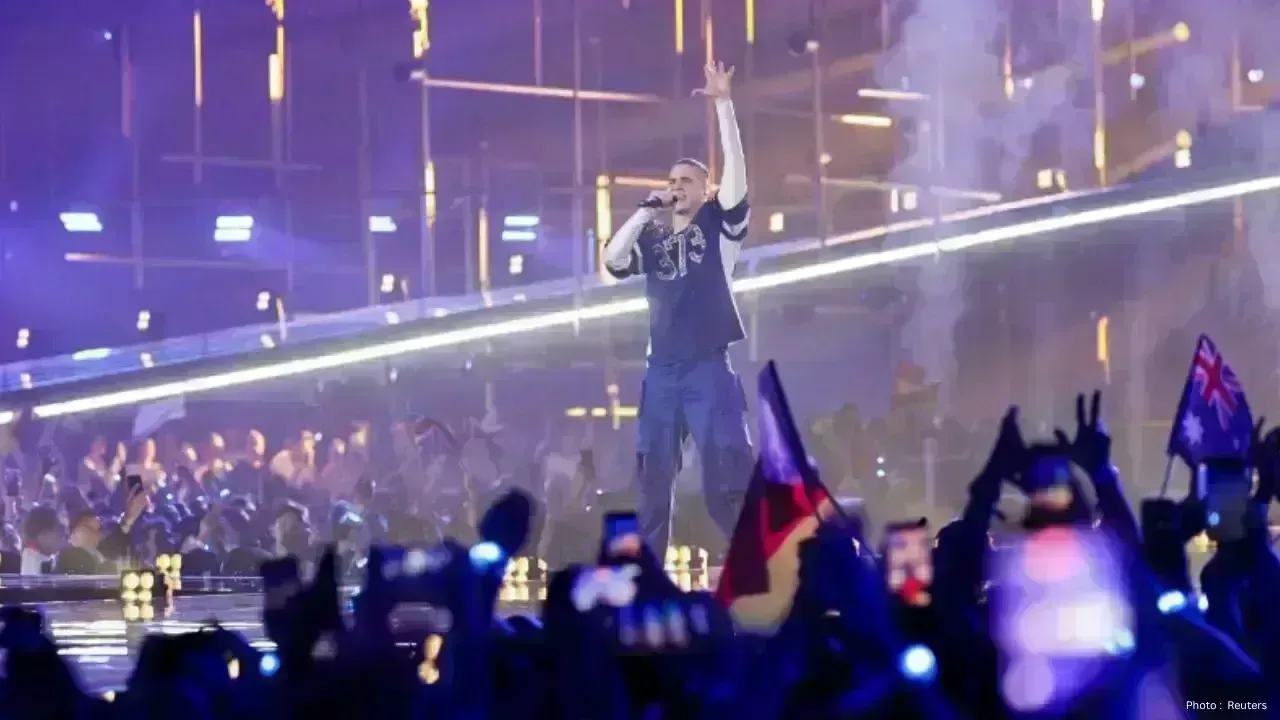
Post by : Saif Rahman
Following a tumultuous Eurovision 2026 voting outcome, Moldova found itself gripped by mass protests, ignited by public outrage. This unrest culminated in the resignation of the head of Moldova's public broadcaster, who faced backlash from citizens and political entities.
The discord began when Moldova's Eurovision jury scored Romania quite poorly during the pivotal voting phase. The low points were surprising given the strong cultural and linguistic bonds between the two countries. Many Moldovans felt that public sentiment aligned more closely with Romania than what the jury's results indicated.
As soon as the final results surfaced, social media buzzed with discontent directed at both the jury and the broadcasting entity. Citizens voiced concerns that the voting did not reflect the shared feelings of the audience. Questions arose over why the Moldovan jury had awarded no points to Ukraine, despite significant support for Ukraine among many in Moldova.
The mounting dissatisfaction sparked protests across various regions of the nation. Demonstrators called for enhanced transparency in the Eurovision voting mechanism and demanded clarity on the jury's decision-making process. Political pressure intensified upon Moldova's national broadcasting network.
In response to ongoing protests and criticism, the broadcaster's chief ultimately tendered his resignation. This move was viewed as a necessary step to ease tensions and rebuild public confidence.
Eurovision, a landmark music event in Europe, often intersects with political currents and international discord. For many, the voting process is perceived not solely as entertainment but also as indicative of political ties and national sentiments.
The situation in Moldova is particularly poignant, given the country's existing political and economic hurdles. Moldova has bolstered its connections with Europe in recent years and has actively supported Ukraine amid the ongoing conflict with Russia. Thus, the Eurovision voting fallout quickly evolved into a broader political dialogue.
Observers note that social media played a critical role in amplifying public frustration. Within mere hours, what was initially a music contest transformed into a national concern. Citizens contended that public broadcasting entities must operate transparently as they represent national interests on global platforms.
This incident has reignited conversations regarding the Eurovision voting framework, questioning the influence of jury members in contrast to public voters. For many Moldovans, the debate has transcended mere musical opinions, delving into issues of trust, accountability, and the legitimacy of public sentiment.










PM Modi Pays Tribute to Mahatma Gandhi, Urges People to Support Khadi
PM Modi pays tribute to Mahatma Gandhi on Gandhi Jayanti and urges citizens to support Khadi and the

Amazon Seeks to Offload $8 Billion in Nvidia Chips to Investors
Amazon plans to move $8 billion in Nvidia chips to investors, using a new financing model to strengt

Samsung Raises Galaxy S26 Prices as Memory Chip Costs Rise
Samsung raises Galaxy S26 prices in South Korea as rising memory chip costs put pressure on smartpho

Lewis Hamilton Calls Singapore Grand Prix One of F1's Toughest Races
Lewis Hamilton discusses the demanding Singapore Grand Prix and brings Plus44 and Almave to Singapor

Denmark's Pandora Opens World's Largest Jewellery Factory in Vietnam
Pandora opens its largest jewellery factory in Vietnam, expanding global production, strengthening s

Gautam Gambhir Questions Batting-Friendly Pitches After India's Record ODI Chase
Gautam Gambhir questions batting-friendly ODI pitches after India’s record chase, calling for a bett

