
You have not yet added any article to your bookmarks!
Join 10k+ people to get notified about new posts, news and tips.
Do not worry we don't spam!
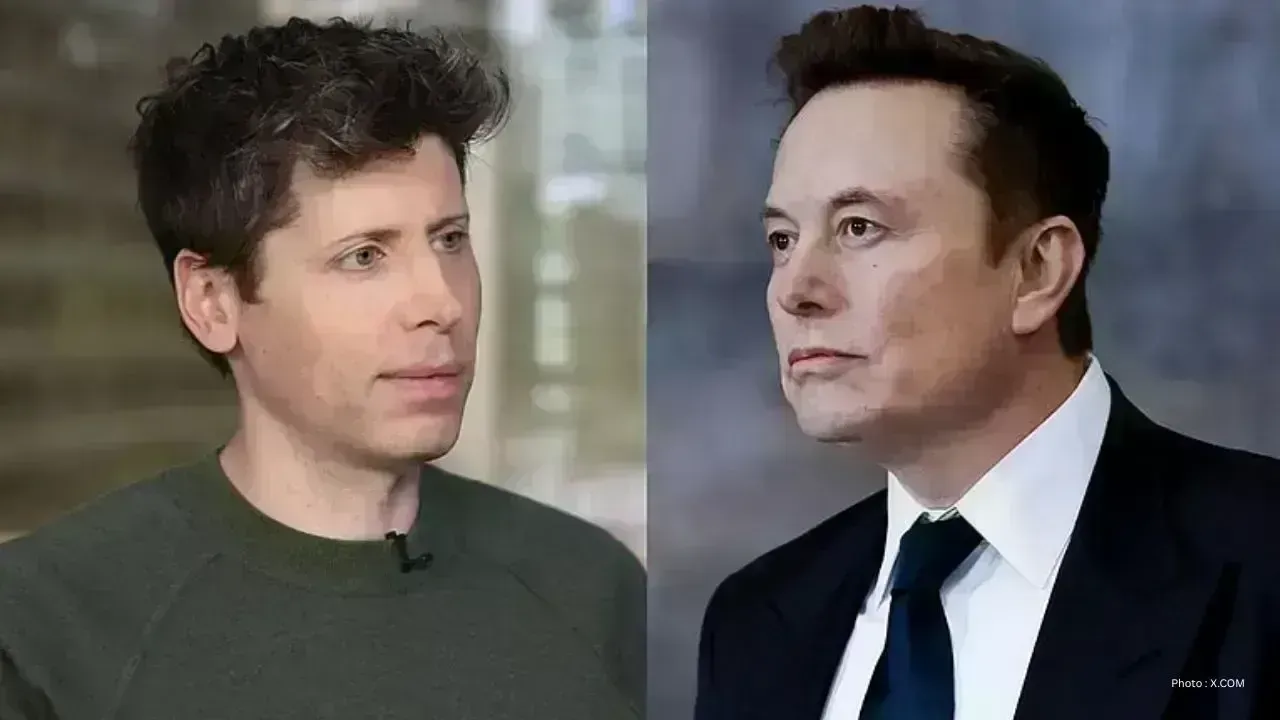
Post by : Shweta
A significant legal confrontation has commenced in the U.S. as Elon Musk takes legal action against OpenAI and its CEO Sam Altman for what he perceives as a breach of the organization’s original mission. This highly publicized trial, which began with jury selection in a federal court close to San Francisco, could have major implications for the future trajectory of artificial intelligence.
Musk, who was a co-founder of OpenAI in 2015 alongside Altman and Greg Brockman, claims he was misled into backing the entity based on the notion that it would remain a nonprofit focused on the welfare of humanity. The lawsuit states that the founders assured that the technologies produced by OpenAI would be shared openly, free from private ownership.
Nonetheless, Musk argues that OpenAI later changed course by establishing a for-profit subsidiary aimed at attracting significant investment. This shift allowed the organization to amass billions of dollars in funding, including a substantial investment from Microsoft, and to develop sophisticated AI systems and infrastructure. Musk contends that these changes contradict the initial vision and represent a form of deceit.
Beyond just seeking financial restitution, the case is about governance and oversight. While Musk initially pursued substantial damages, he has since communicated that any compensation awarded would be funneled back into OpenAI’s nonprofit division. His chief request is for the court to reinstate the organization's original nonprofit status and to oust current leaders, including Altman and Brockman.
This legal conflict highlights intensifying competition within the AI landscape. Musk now heads his own AI venture, xAI, which has launched the chatbot Grok—a direct competitor to OpenAI’s ChatGPT. This rivalry adds further complexity to the courtroom clash, as both entities vie for supremacy in a swiftly growing market.
The trial transcends corporate rivalries, raising larger concerns about the future of artificial intelligence. Analysts and regulatory bodies are monitoring the proceedings closely, as it delves into vital topics such as ethical AI advancement, corporate responsibility, and the potential hazards of allowing powerful technologies to be governed by private entities.
Given OpenAI's valuation in the hundreds of billions and its pivotal role in the global AI innovation sphere, the trial's verdict could necessitate considerable changes within the organization. Furthermore, it may establish a critical standard for governance in AI organizations moving forward.
As the proceedings evolve, this trial is poised to garner substantial international interest, underscoring not just a confrontation among influential tech leaders, but a fundamental dialogue about who should steer the future of artificial intelligence.










PM Modi Pays Tribute to Mahatma Gandhi, Urges People to Support Khadi
PM Modi pays tribute to Mahatma Gandhi on Gandhi Jayanti and urges citizens to support Khadi and the

Amazon Seeks to Offload $8 Billion in Nvidia Chips to Investors
Amazon plans to move $8 billion in Nvidia chips to investors, using a new financing model to strengt

Samsung Raises Galaxy S26 Prices as Memory Chip Costs Rise
Samsung raises Galaxy S26 prices in South Korea as rising memory chip costs put pressure on smartpho

Lewis Hamilton Calls Singapore Grand Prix One of F1's Toughest Races
Lewis Hamilton discusses the demanding Singapore Grand Prix and brings Plus44 and Almave to Singapor

Denmark's Pandora Opens World's Largest Jewellery Factory in Vietnam
Pandora opens its largest jewellery factory in Vietnam, expanding global production, strengthening s

Gautam Gambhir Questions Batting-Friendly Pitches After India's Record ODI Chase
Gautam Gambhir questions batting-friendly ODI pitches after India’s record chase, calling for a bett

