
You have not yet added any article to your bookmarks!
Join 10k+ people to get notified about new posts, news and tips.
Do not worry we don't spam!
Post by : Jyoti Gupta
Photo:AFP
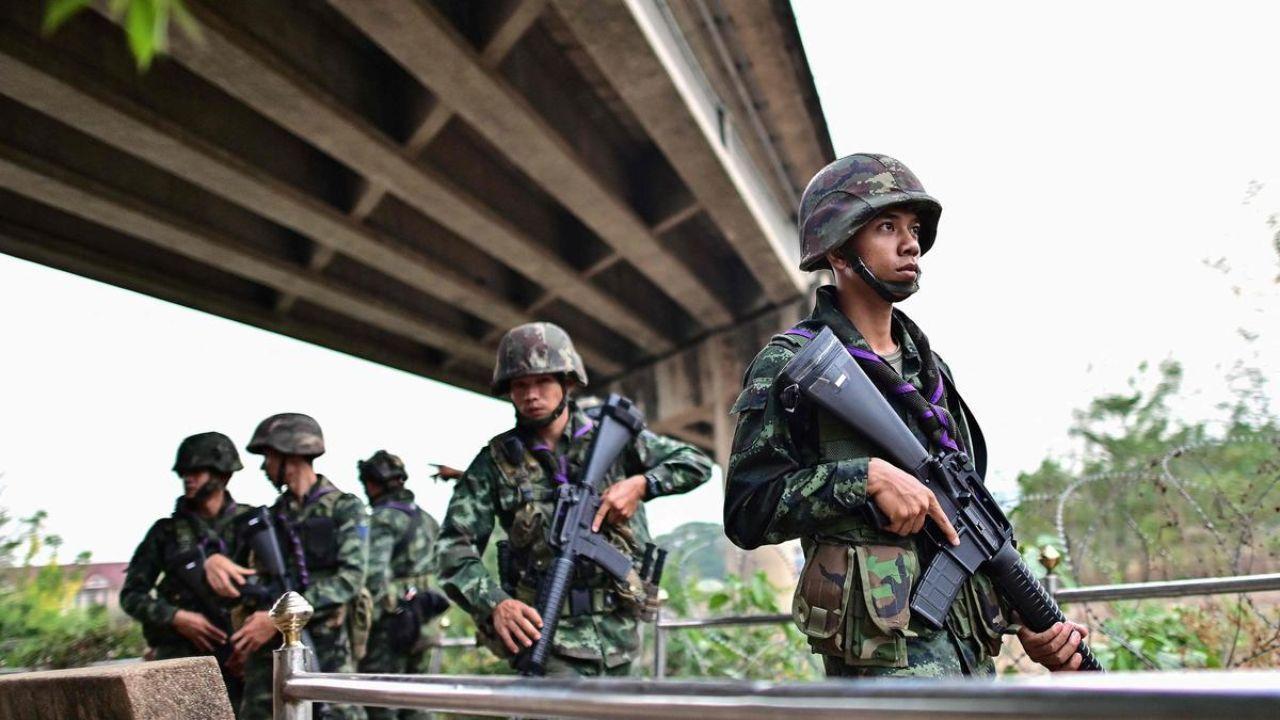
The Myawaddy bridge, the busiest and most vital trade link between Myanmar and Thailand, has been closed for a second consecutive day as of Tuesday, August 19, 2025. This crossing, which normally facilitates over $120 million in monthly trade between the neighboring nations, has become a flashpoint in Myanmar’s ongoing struggle with political instability, civil conflict, and military control. The closure is part of the military junta’s intensified crackdown on black market operations believed to fund armed opposition groups, coming just months before Myanmar’s scheduled December 28 general elections.
Historical and Political Context
Myanmar, a Southeast Asian nation with a long history of military rule, has been in political turmoil since February 2021, when the Tatmadaw, the military, seized control from the democratically elected government led by Aung San Suu Kyi’s National League for Democracy (NLD). The coup ended nearly a decade of tentative democratic reforms and plunged the country back into authoritarian governance. Since then, widespread protests, civil disobedience, and the formation of armed opposition groups have created an environment of ongoing conflict and instability.
The military claims that its actions are necessary to restore order and prevent chaos, but critics argue that the junta has used security concerns as a pretext to consolidate power, suppress dissent, and undermine democratic institutions. Aung San Suu Kyi, Myanmar’s internationally recognized democratic leader, remains imprisoned, her party dissolved, and other political leaders have been forced into exile or underground resistance.
The Role of the Myawaddy Bridge
The Myawaddy bridge is more than just a trade route; it is a lifeline connecting local economies, cross-border traders, and communities on both sides of the border. Every month, it supports an estimated $120 million worth of goods, including agricultural products, textiles, construction materials, and essential supplies. Its closure has immediate economic consequences, disrupting businesses, supply chains, and the daily livelihoods of people dependent on cross-border commerce.
The military’s official explanation for the closure focuses on stopping the flow of funds to opposition armed groups. These groups, which include pro-democracy militias and ethnic armed organizations, often control remote border regions and finance their operations through tolls, smuggling, and local trade. By shutting the bridge, the junta aims to cut off these financial networks, weakening armed resistance ahead of the controversial December election.
The Ongoing Civil War
Myanmar’s civil war is complex, involving multiple actors with overlapping agendas. Along the highway connecting the Myawaddy border to Yangon, the military has engaged in fierce battles with ethnic armed groups and pro-democracy guerrillas. These insurgent groups have united in opposition to the military regime, often controlling territories rich in natural resources or strategic trade routes. The junta has regained some ground in recent months, allowing it to hold elections in regions it controls, but vast areas remain under insurgent control, where elections are unlikely to take place.
A Thai security source near the border, speaking anonymously, noted that the junta’s regulations are designed to “make it uncomfortable for minority communities, to try to stop them from earning money or benefits.” This statement underscores the dual nature of the junta’s strategy: controlling both economic activity and minority populations to strengthen its grip on power.
Upcoming Elections and Political Suppression
The December elections are being conducted under conditions heavily skewed in favor of the military. The junta has introduced strict laws penalizing critics and protesters with prison terms of up to ten years, making it virtually impossible for opposition groups to mobilize openly. Democratic leaders who remain in the country face imprisonment or harassment, while others in exile call for election boycotts. Analysts suggest that the polls are likely to be restricted to areas where the military feels secure, effectively excluding large portions of the population and ethnic minorities from participating.
The military has presented these elections as a pathway to national reconciliation and peace, but critics see them as a cosmetic exercise designed to legitimize ongoing military rule while continuing a campaign of political and economic suppression.
Economic and Humanitarian Implications
The border closure at Myawaddy bridge has immediate economic effects. Traders report delays in shipments, increased transportation costs, and reduced access to essential goods. Small businesses dependent on cross-border trade have temporarily halted operations, and communities that rely on daily commerce are facing financial strain. Economists warn that prolonged disruptions could ripple across the regional economy, affecting Thailand as well, which relies heavily on trade with Myanmar.
Humanitarian concerns are equally pressing. Many communities along the border depend on cross-border commerce for access to food, medicine, and basic necessities. The closure exacerbates hardships in conflict-affected areas, where military operations, insecurity, and displacement have already created difficult living conditions.
Regional and International Implications
The Myawaddy bridge closure also carries broader geopolitical significance. Thailand, as Myanmar’s key trading partner, is closely monitoring the situation, while regional observers in Southeast Asia are concerned about stability and economic disruption. International human rights organizations have condemned Myanmar’s political crackdown and called for attention to the humanitarian impact on civilians caught in conflict zones. The ongoing civil war, combined with trade restrictions and political suppression, highlights the challenges Myanmar faces in balancing governance, economic stability, and democratic processes.
Looking Ahead
As Myanmar approaches its December elections, the country faces a period of heightened tension, uncertainty, and potential conflict. The military’s strategy of combining economic restrictions, military operations, and political suppression appears designed to maintain control while projecting an image of democratic legitimacy. Analysts predict further border closures, crackdowns, and confrontations in the coming months, which will affect not only the political landscape but also social, economic, and humanitarian realities across the nation.
The Myawaddy bridge closure is emblematic of Myanmar’s current predicament: a country struggling with ongoing civil war, economic challenges, political repression, and regional scrutiny. How the junta manages this delicate situation in the lead-up to December will determine the future trajectory of Myanmar’s governance, its economic health, and the well-being of millions of its citizens.










PM Modi Pays Tribute to Mahatma Gandhi, Urges People to Support Khadi
PM Modi pays tribute to Mahatma Gandhi on Gandhi Jayanti and urges citizens to support Khadi and the

Amazon Seeks to Offload $8 Billion in Nvidia Chips to Investors
Amazon plans to move $8 billion in Nvidia chips to investors, using a new financing model to strengt

Samsung Raises Galaxy S26 Prices as Memory Chip Costs Rise
Samsung raises Galaxy S26 prices in South Korea as rising memory chip costs put pressure on smartpho

Lewis Hamilton Calls Singapore Grand Prix One of F1's Toughest Races
Lewis Hamilton discusses the demanding Singapore Grand Prix and brings Plus44 and Almave to Singapor

Denmark's Pandora Opens World's Largest Jewellery Factory in Vietnam
Pandora opens its largest jewellery factory in Vietnam, expanding global production, strengthening s

Gautam Gambhir Questions Batting-Friendly Pitches After India's Record ODI Chase
Gautam Gambhir questions batting-friendly ODI pitches after India’s record chase, calling for a bett

