
You have not yet added any article to your bookmarks!
Join 10k+ people to get notified about new posts, news and tips.
Do not worry we don't spam!
Post by : Shweta
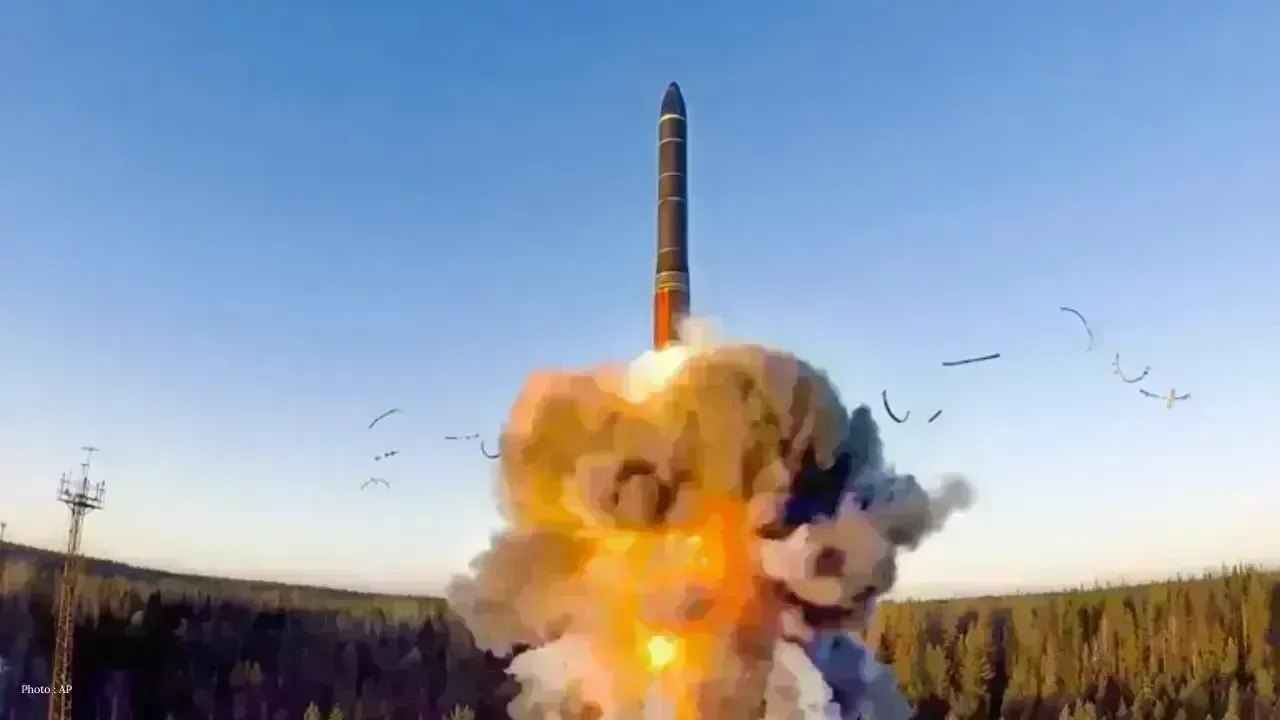
In 2025, global investment in nuclear weapons soared to an unprecedented $119 billion, driven by heightened expenditures among the nine nuclear-armed nations, as detailed in a recent report by the International Campaign to Abolish Nuclear Weapons (ICAN). This marks a $16.8 billion increase from the previous year, reflecting a renewed focus on modernizing and sustaining existing arsenals.
On Tuesday, the report revealed that these nuclear powers collectively spent about $471 billion over the past five years. ICAN expressed concerns that all nine countries are committed to maintaining their nuclear stockpiles for the foreseeable future, despite ongoing international disarmament efforts.
Leading the charge, the United States allocated approximately $69.2 billion for its nuclear capabilities in 2025, a significant rise of $12.6 billion from 2024, surpassing the combined expenditures of all other nuclear nations.
China trailed as the second-highest spender with an estimated $13.5 billion, while the United Kingdom and Russia followed with expenditures of $12.6 billion and $9.5 billion respectively. France was reported to have spent around $7.7 billion.
Further down the list, India’s spending was estimated at $2.8 billion, with Pakistan, Israel, and North Korea investing smaller sums. Remarkably, North Korea had the least expenditures among these nations, approximated at $656 million.
ICAN criticized this uptick in military investment in nuclear capabilities, suggesting that governments are prioritizing destructive technologies over vital global issues, including climate change and diplomatic initiatives.
The report underscored that this growing trend in nuclear spending indicates a preference for weapon development rather than enhancing global collaboration to tackle pressing challenges.
The findings coincided with a separate warning from the Stockholm International Peace Research Institute (SIPRI), which noted that nuclear-armed countries are shifting away from previous agreements to minimize stockpiles and are instead emphasizing upgrades and expansions of their arsenals.
Currently, these nine nuclear states are estimated to control over 12,000 nuclear warheads, the majority belonging to the U.S. and Russia. Even though the overall stock of warheads has seen a notable decline since the Cold War, experts raise alarms that modernization and escalating geopolitical strife may trigger a new arms race.
International endeavors towards nuclear disarmament persist through various treaties. Notably, in 2017, the United Nations ratified the Treaty on the Prohibition of Nuclear Weapons, establishing a legally binding agreement against nuclear arms development, testing, production, or acquisition.
So far, 99 nations have adopted or ratified this treaty, yet none of the countries with nuclear capabilities have engaged with the agreement.
Longstanding arms control treaties between the U.S. and Russia, designed to limit their nuclear arsenals, have diminished since the early 1990s. The last major agreement, the New START treaty, lapsed in February without a replacement.
Security analysts caution that the lack of new arms control measures, coupled with rising defense expenditures and intensifying geopolitical tensions, could hamper future nuclear limitation efforts.
As global investments in nuclear modernization continue, apprehensions about international security and the future of disarmament remain heightened. Experts emphasize that renewed diplomatic efforts and collaboration are crucial in averting a new phase of nuclear rivalry.
Stay tuned for major updates.










PM Modi Pays Tribute to Mahatma Gandhi, Urges People to Support Khadi
PM Modi pays tribute to Mahatma Gandhi on Gandhi Jayanti and urges citizens to support Khadi and the

Amazon Seeks to Offload $8 Billion in Nvidia Chips to Investors
Amazon plans to move $8 billion in Nvidia chips to investors, using a new financing model to strengt

Samsung Raises Galaxy S26 Prices as Memory Chip Costs Rise
Samsung raises Galaxy S26 prices in South Korea as rising memory chip costs put pressure on smartpho

Lewis Hamilton Calls Singapore Grand Prix One of F1's Toughest Races
Lewis Hamilton discusses the demanding Singapore Grand Prix and brings Plus44 and Almave to Singapor

Denmark's Pandora Opens World's Largest Jewellery Factory in Vietnam
Pandora opens its largest jewellery factory in Vietnam, expanding global production, strengthening s

Gautam Gambhir Questions Batting-Friendly Pitches After India's Record ODI Chase
Gautam Gambhir questions batting-friendly ODI pitches after India’s record chase, calling for a bett

