
You have not yet added any article to your bookmarks!
Join 10k+ people to get notified about new posts, news and tips.
Do not worry we don't spam!
Post by : Shakul
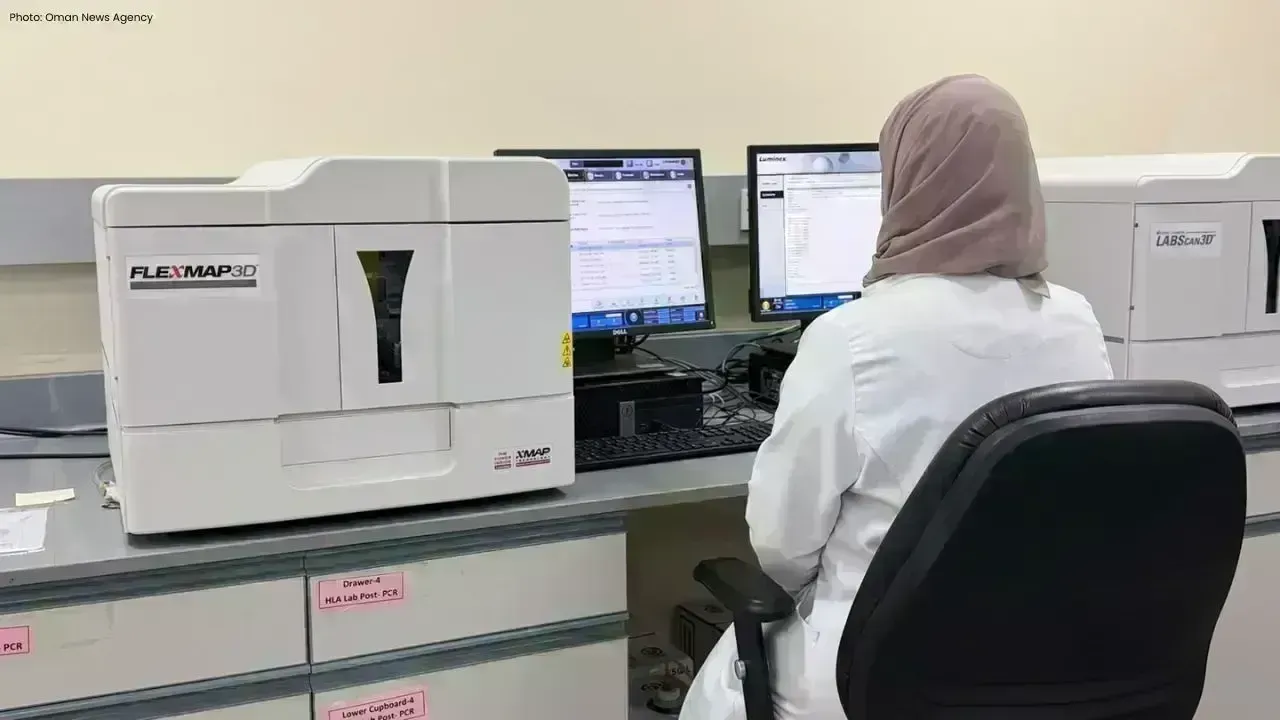
The Sultanate of Oman has marked a significant milestone in healthcare development with the inauguration of a new tissue compatibility laboratory at the National Center for Genetic Health within the Royal Hospital in Muscat. The facility is expected to enhance the country's medical capabilities and provide critical support for organ transplantation programs through advanced diagnostic services.
The newly launched laboratory introduces immunocompatibility testing using flow cytometry, one of the most advanced methods used worldwide to evaluate compatibility between organ donors and recipients. The test plays a crucial role in reducing the risk of organ rejection and improving the overall success rate of transplant procedures.
For many years, Oman has provided tissue compatibility testing through local healthcare facilities. However, flow cytometry-based compatibility assessments had to be conducted outside the country, requiring medical samples to be sent abroad. This process often resulted in longer waiting times and additional costs for healthcare providers and patients.
With the new laboratory now fully operational, all major tissue compatibility examinations, including advanced flow cytometry testing, can be performed locally for the first time. This development is expected to significantly speed up the evaluation process for organ transplant candidates and enable quicker medical decision-making.
Healthcare specialists believe the ability to conduct these tests within Oman will strengthen the efficiency of transplant programs by providing faster and more accurate results. Reduced turnaround times are particularly important in organ transplantation cases where timely intervention can directly influence patient outcomes.
The laboratory also represents a major step toward achieving greater self-sufficiency in specialized healthcare services. By reducing reliance on international laboratories, Oman aims to strengthen its national healthcare infrastructure while improving the quality and accessibility of advanced medical diagnostics.
Officials described the inauguration as a strategic achievement that aligns with the country's broader healthcare modernization efforts. The facility is expected to support national organ transplantation initiatives, enhance patient care, and increase the likelihood of successful transplant procedures, ultimately benefiting patients across the Sultanate for years to come.









APEC Members Emphasise Safe and Responsible Use of Artificial Intelligence
APEC members discuss responsible AI use, digital innovation and data governance as China and the US

Union of European Clubs Challenge UEFA and EFC Over EU Competition Rules
UEC files an EU competition complaint against UEFA and EFC, challenging club representation, governa

Mohammed Shami Retires From Test Cricket, Eyes White-Ball Career
Mohammed Shami retires from Test cricket after 13 years, with 229 wickets. He will continue playing

Singapore Warns Users About Privacy and Security Risks of AI Agents
Singapore warns users about AI agent security risks, data privacy, online scams and unauthorised acc

Chris Lynn Completes One-Month Ban After Positive Cocaine Test
Australian cricketer Chris Lynn completes a one-month ban after a positive cocaine test during the T

Djokovic Eyes Strong Season Finish as Health Improves Ahead of Paris Masters
Novak Djokovic reports improved health and performance as he targets a strong Paris Masters finish a