
You have not yet added any article to your bookmarks!
Join 10k+ people to get notified about new posts, news and tips.
Do not worry we don't spam!
Post by : Shakul
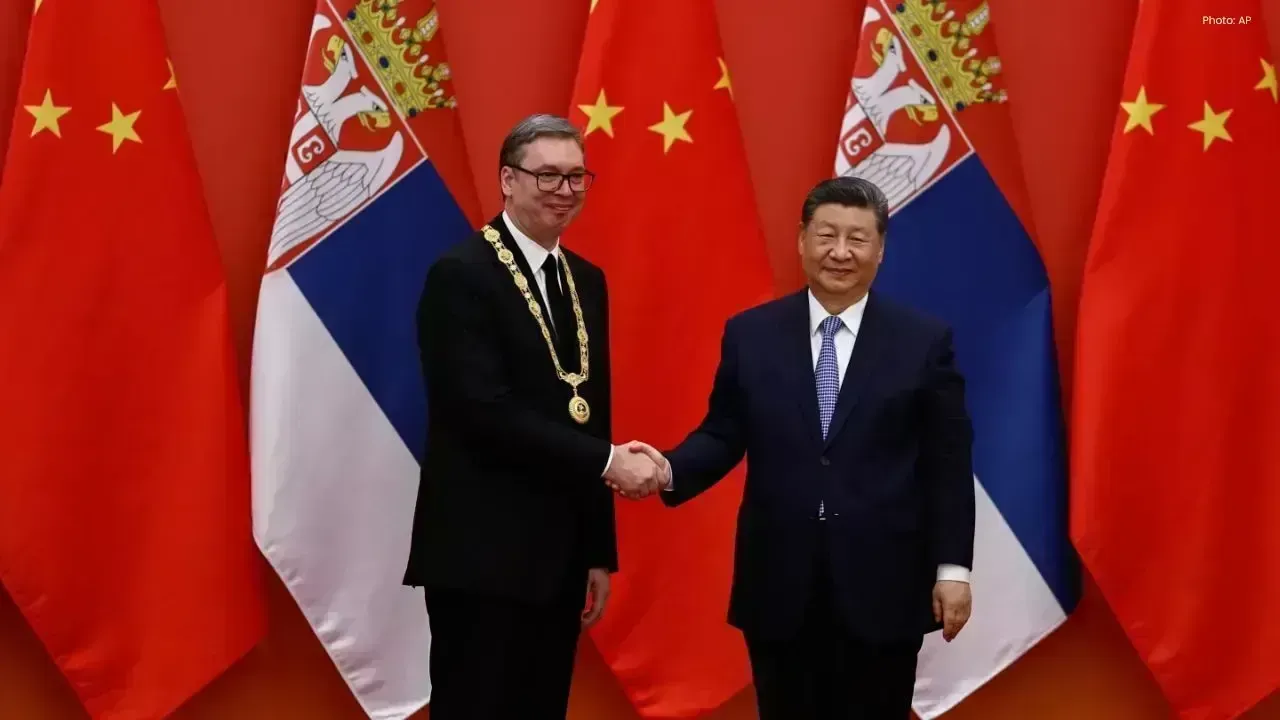
Aleksandar Vučić strengthened Serbia’s diplomatic and economic relationship with China during an official visit to Beijing while simultaneously facing mounting political pressure from large anti-government protests in Serbia. The visit highlighted Serbia’s increasingly strategic partnership with China at a time of growing domestic unrest and geopolitical balancing between East and West.
During talks in Beijing, Chinese President Xi Jinping and Aleksandar Vučić oversaw the signing of more than 20 cooperation agreements covering sectors such as trade, technology, education, politics, artificial intelligence, and green energy. Chinese state media described the agreements as part of efforts to elevate the comprehensive strategic partnership between the two countries.
Xi Jinping reportedly told the Serbian president that China supports Serbia’s independent development path and is willing to deepen exchanges in governance and economic cooperation. Both leaders emphasized the importance of multilateralism, sovereign equality, and stronger collaboration within international institutions while opposing the politicization of human rights issues.
The meeting also focused heavily on future economic cooperation, particularly in digital infrastructure, artificial intelligence, and renewable energy development. China has become one of Serbia’s most important economic partners in recent years, investing heavily in infrastructure, transport, and industrial projects across the Balkan nation.
While strengthening international ties abroad, Vučić continues to face growing political challenges at home. Massive anti-government protests recently erupted in the Serbian capital Belgrade, where tens of thousands of demonstrators gathered to demand accountability and political reforms. Clashes between protesters and riot police intensified tensions over the weekend and increased pressure on the Serbian government.
The protests originally began after the deadly collapse of a railway station structure in November 2024, an incident that triggered widespread criticism over corruption, transparency, and the rapid approval of large infrastructure projects involving foreign companies, many of them linked to Chinese investment initiatives.
Despite formally seeking membership in the European Union, Serbia has continued to maintain close political and economic ties with both China and Russia. Vučić has argued that Europe should cooperate with China through practical engagement rather than suspicion and strategic rivalry.
In an opinion article published during his visit, the Serbian president said discussions about China within Europe are often shaped by unnecessary fear and mistrust. He stressed that stronger cooperation with Beijing could provide economic opportunities and long-term development benefits for Serbia and the wider region.
Political analysts believe Vučić’s Beijing visit demonstrates Serbia’s ongoing attempt to balance its European ambitions with its expanding relationships in Asia and Eurasia. However, experts warn that growing domestic unrest and public dissatisfaction over governance issues could complicate Serbia’s political stability in the coming months.







PM Modi Pays Tribute to Mahatma Gandhi, Urges People to Support Khadi
PM Modi pays tribute to Mahatma Gandhi on Gandhi Jayanti and urges citizens to support Khadi and the

Amazon Seeks to Offload $8 Billion in Nvidia Chips to Investors
Amazon plans to move $8 billion in Nvidia chips to investors, using a new financing model to strengt

Samsung Raises Galaxy S26 Prices as Memory Chip Costs Rise
Samsung raises Galaxy S26 prices in South Korea as rising memory chip costs put pressure on smartpho

Lewis Hamilton Calls Singapore Grand Prix One of F1's Toughest Races
Lewis Hamilton discusses the demanding Singapore Grand Prix and brings Plus44 and Almave to Singapor

Denmark's Pandora Opens World's Largest Jewellery Factory in Vietnam
Pandora opens its largest jewellery factory in Vietnam, expanding global production, strengthening s

Gautam Gambhir Questions Batting-Friendly Pitches After India's Record ODI Chase
Gautam Gambhir questions batting-friendly ODI pitches after India’s record chase, calling for a bett

