
You have not yet added any article to your bookmarks!
Join 10k+ people to get notified about new posts, news and tips.
Do not worry we don't spam!
Post by : Saif Rahman
Amid ongoing discussions between the United States and Iran regarding a new potential peace deal, thousands of seafarers aboard cargo vessels and oil tankers in the Middle East find themselves in a precarious state. While there is some hope for reduced tensions, many sailors are left stranded at sea and unable to return home safely.
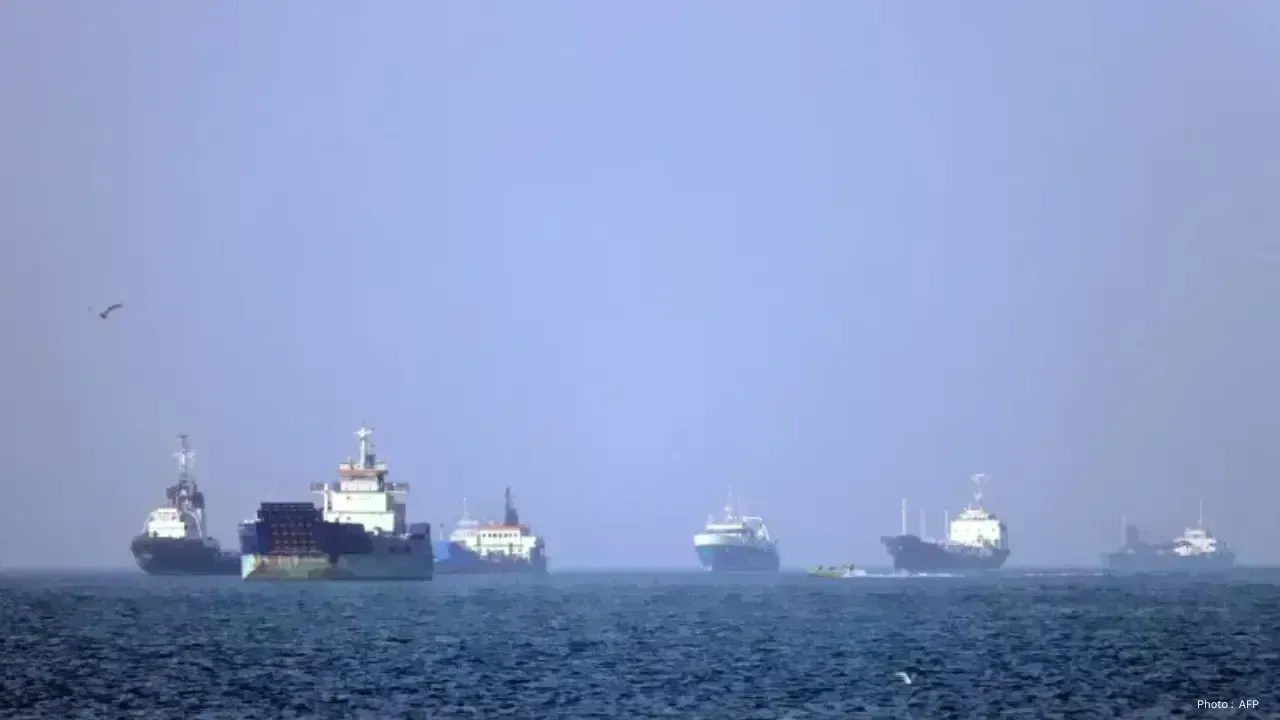
The protracted conflict and military strife related to Iran have disrupted international shipping lanes, particularly around the Strait of Hormuz, a critical artery for global oil transportation. This situation has led to significant global trade disruptions, hindered shipments, and posed serious challenges for maritime staff.
Numerous seafarers have endured months of operating under hazardous conditions, with some unable to dock due to heightened security concerns and others lingering for clearance to navigate through sensitive maritime regions.
This unfolding crisis illustrates one of the often-overlooked human costs of geopolitical strife. While diplomatic leaders focus on high-level discussions, the realities faced by ordinary maritime workers—such as sailors and cargo crews—can be catastrophic. Many remain far from their loved ones, grappling with uncertainty.
The significance of the Strait of Hormuz for the global economy cannot be overstated, with substantial amounts of the world's oil transit happening here daily. Consequently, any military tensions have a swift ripple effect on shipping operations, oil pricing, insurance premiums, and international trade.
With the heightening of US-Iran tensions earlier this year, multiple shipping companies have opted to alter routes or delay departures to mitigate potential risks. Various vessels have encountered electronic disruptions, security threats, and delays attributable to military activity within the Gulf.
For those at sea, these alterations have resulted in arduous working conditions, characterized by long hours, psychological strain, delayed payments, and ongoing uncertainties about safe passage. Maritime organizations and labor groups have advocated for enhanced protections and support for those laboring in conflict-affected areas.
Nevertheless, the animated diplomatic negotiations between the US and Iran have instilled a sense of cautious hope. Preliminary reports indicate that both factions may be contemplating strategies to lower military tensions and bolster regional stability. Yet, many analysts caution that the situation remains tenuous and volatile.
As these developments unfold, the global shipping industry is attentively observing, as peace in the region could stabilize oil markets and lessen risks for commercial fleets. An easing of tensions may also result in improved circumstances for the seafarers who find themselves ensnared in precarious scenarios.
This ongoing crisis underscores the intricate interconnections of today’s global economy, where conflict in one locale can have immediate repercussions on fuel prices, food supply chains, transportation costs, and broader international trade.
Seafarers play an indispensable role in the global economy, delivering oil, food, medical supplies, technology, and other essential goods worldwide. Yet, their struggles are often overlooked unless significant crises arise.
With increasing momentum, human rights organizations and maritime unions are calling on governments and international entities to prioritize the safety and welfare of seafarers facing regional conflicts. Experts emphasize the necessity for stronger protections for maritime laborers operating within hazardous environments.
As the United States and Iran weigh the possibility of a peace accord, thousands of stranded seafarers continue to await essential clarity and a pathway back to safety and home. Their plight serves as a poignant reminder of the real human impact behind geopolitical tensions.
#Middle East #Middle East Crisis #Middle East Conflict #Middle East Economy










PM Modi Pays Tribute to Mahatma Gandhi, Urges People to Support Khadi
PM Modi pays tribute to Mahatma Gandhi on Gandhi Jayanti and urges citizens to support Khadi and the

Amazon Seeks to Offload $8 Billion in Nvidia Chips to Investors
Amazon plans to move $8 billion in Nvidia chips to investors, using a new financing model to strengt

Samsung Raises Galaxy S26 Prices as Memory Chip Costs Rise
Samsung raises Galaxy S26 prices in South Korea as rising memory chip costs put pressure on smartpho

Lewis Hamilton Calls Singapore Grand Prix One of F1's Toughest Races
Lewis Hamilton discusses the demanding Singapore Grand Prix and brings Plus44 and Almave to Singapor

Denmark's Pandora Opens World's Largest Jewellery Factory in Vietnam
Pandora opens its largest jewellery factory in Vietnam, expanding global production, strengthening s

Gautam Gambhir Questions Batting-Friendly Pitches After India's Record ODI Chase
Gautam Gambhir questions batting-friendly ODI pitches after India’s record chase, calling for a bett

