
You have not yet added any article to your bookmarks!
Join 10k+ people to get notified about new posts, news and tips.
Do not worry we don't spam!
Post by : Badri Ariffin
Recent missile exchanges between Israel and Iran have escalated tensions in the Middle East, igniting fears of a larger conflict. This latest surge in violence comes just weeks after both nations last engaged in direct attacks.
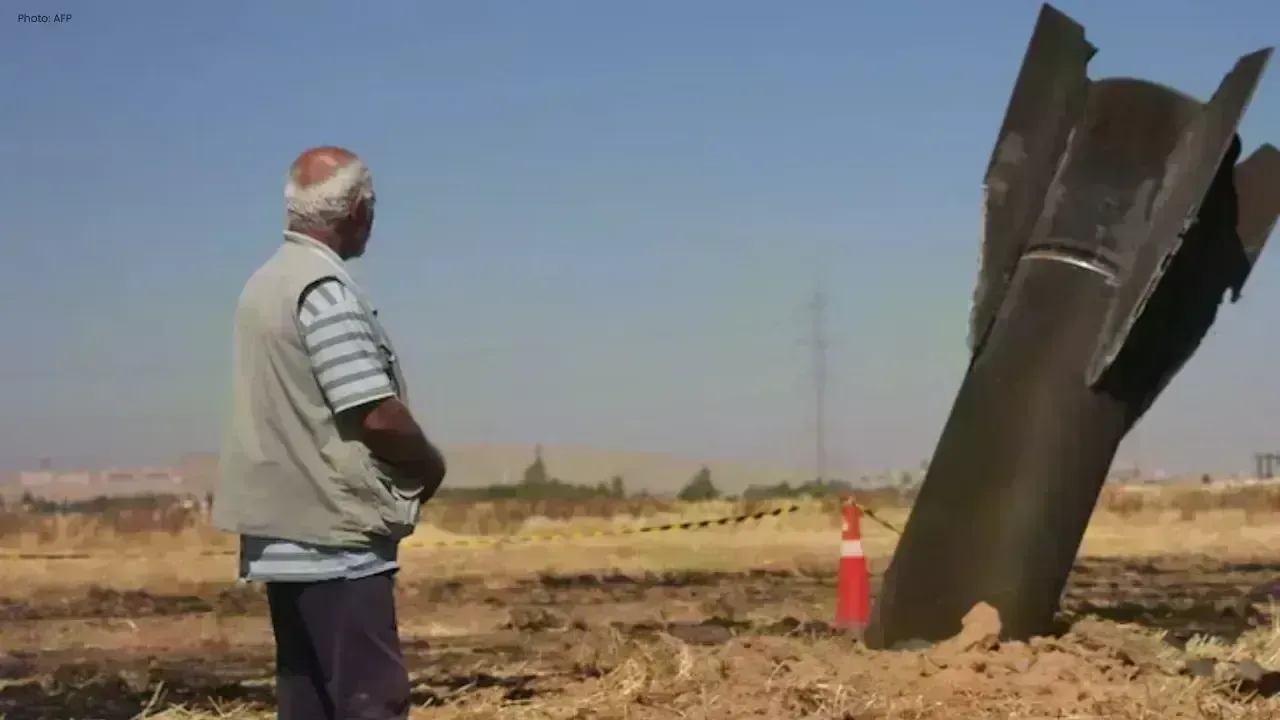
The repercussions of this conflict extend beyond the borders of Israel and Iran. In Syria, an agricultural worker named Mahmoud Ataya found a missile fragment embedded in his field near Damascus after battling flames caused by falling debris during the aerial exchanges. Reports emerged of explosions in the skies above Damascus as projectiles traversed Syrian airspace.
The latest hostilities were sparked by Israeli airstrikes targeting places in Beirut's southern suburbs. This action occurred despite U.S. President Donald Trump's calls for restraint from Israel.
In retaliation, Iran reportedly launched approximately 30 missiles at Israel during the night, asserting that this attack was a direct response to the Israeli strikes in Beirut.
Following this, Israel targeted military locations and defensive structures within Iran, resulting in injuries to at least 15 individuals according to Iranian reports, though no fatalities were confirmed immediately.
Simultaneously, violence intensified in Gaza, where Israeli airstrikes on Monday claimed five lives, including that of a child, with several others suffering injuries.
The renewed conflict rapidly impacted the wider area, prompting Iraq to close its airspace for 72 hours after the attacks. Yemen's Houthi rebels also retaliated by launching missiles toward Israel and threatened further actions against maritime routes in the vital Red Sea corridor.
In the midst of these rising tensions, President Trump urged both nations to cease hostilities. On Truth Social, he advocated for an immediate halt to military actions and noted that peace negotiations were still ongoing, asserting that both countries were pursuing a ceasefire.
This surge in conflict occurs as relations between Trump and Israeli Prime Minister Benjamin Netanyahu become increasingly strained, with Trump asserting his control over U.S. policies rather than following Netanyahu's directives.
On Monday, Iranian military leadership announced a temporary halt to offensive operations, yet warned about strong retaliations should Israel or its allies act again, particularly in southern Lebanon.
Residents in Iran are experiencing heightened anxiety and fear as the conflict reaches its 100th day, with many mentioning they hear constant explosions and worry about impending attacks.
This latest round of strikes raises alarms about the fragile state of security in the Gulf, suggesting that months of relative peace might be coming to an end. While diplomatic efforts are still in motion, the situation underscores the precariousness of regional peace and the potential for wider conflict.










PM Modi Pays Tribute to Mahatma Gandhi, Urges People to Support Khadi
PM Modi pays tribute to Mahatma Gandhi on Gandhi Jayanti and urges citizens to support Khadi and the

Amazon Seeks to Offload $8 Billion in Nvidia Chips to Investors
Amazon plans to move $8 billion in Nvidia chips to investors, using a new financing model to strengt

Samsung Raises Galaxy S26 Prices as Memory Chip Costs Rise
Samsung raises Galaxy S26 prices in South Korea as rising memory chip costs put pressure on smartpho

Lewis Hamilton Calls Singapore Grand Prix One of F1's Toughest Races
Lewis Hamilton discusses the demanding Singapore Grand Prix and brings Plus44 and Almave to Singapor

Denmark's Pandora Opens World's Largest Jewellery Factory in Vietnam
Pandora opens its largest jewellery factory in Vietnam, expanding global production, strengthening s

Gautam Gambhir Questions Batting-Friendly Pitches After India's Record ODI Chase
Gautam Gambhir questions batting-friendly ODI pitches after India’s record chase, calling for a bett

