
You have not yet added any article to your bookmarks!
Join 10k+ people to get notified about new posts, news and tips.
Do not worry we don't spam!
Post by : Maya Rahman
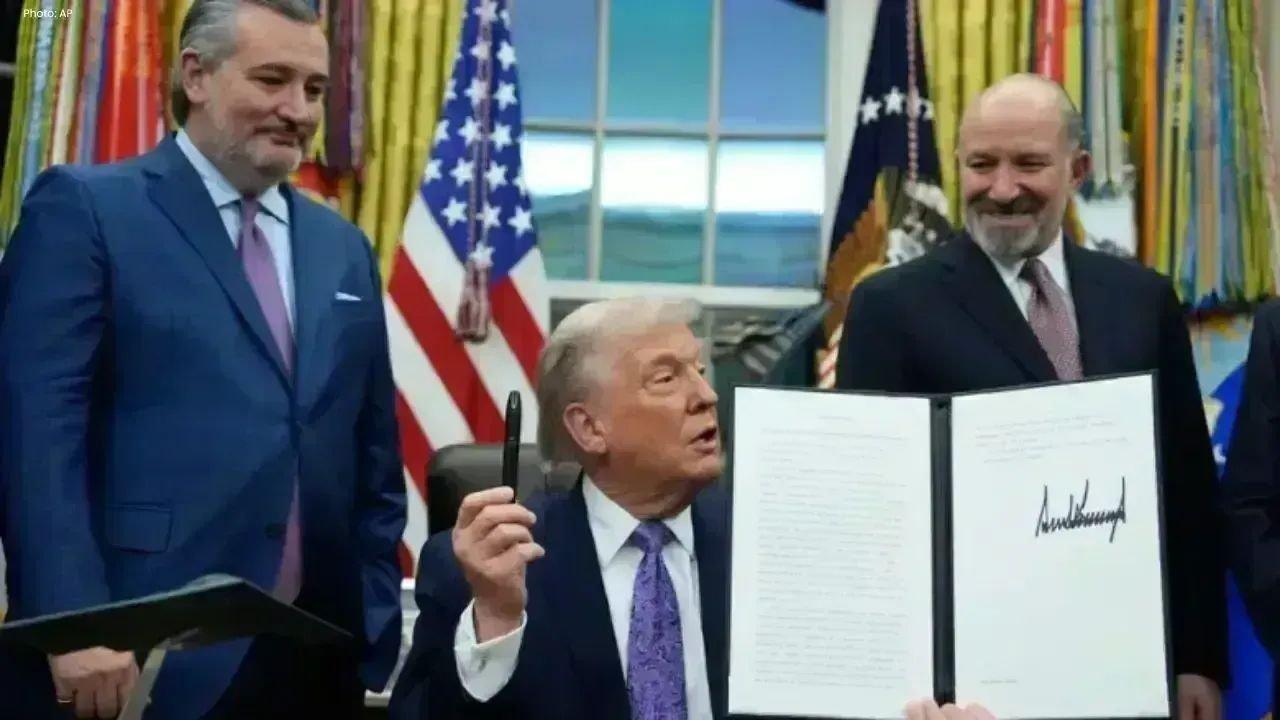
On Thursday, Donald Trump issued a new executive order designed to prevent individual states from establishing their own regulations regarding artificial intelligence. This directive not only creates a federal task force tasked with countering any state laws that seek to restrict or manage AI, but also aims to reassure major AI firms contemplating investments in the U.S. Trump emphasized that disparate rules across states could hinder technological advancement, contending that navigating regulations from all 50 states might deter innovation.
Earlier this year, a Republican plan aimed at restricting state-level AI regulations was dismissed due to bipartisan concerns. Trump’s current order revives this initiative, albeit as an executive measure that lacks the full enforcement power of a federal statute. This move has been celebrated as a significant triumph for tech giants advocating against stringent AI oversight.
Dubbed Ensuring a National Policy Framework for Artificial Intelligence, the order contains several provisions aimed at combating regulatory limitations on AI. It mandates the establishment of an "AI Litigation Task Force" within the Department of Justice, which will challenge state statutes that could adversely affect AI operations. States such as California and Colorado may become focal points; California mandates that companies disclose safety testing results while Colorado enforces checks on algorithmic discrimination in hiring practices. These regulations are designed to ensure technology safety and assess algorithmic risks among others.
The order has sparked robust backlash from local authorities and civil rights advocates. Opponents assert that it disproportionately empowers tech companies while increasing risks for susceptible groups, including children, through issues like surveillance and misinformation. Critics argue that the order favors corporate interests over community safety, blocking states from addressing significant local concerns.
Proponents of more rigorous regulations view Trump’s action as another attempt to stifle states from enacting reasonable AI guidelines. They contend that without comprehensive protections, the tech landscape will grow unchecked. Conversely, Trump maintains that limiting state regulations is crucial for sustaining AI advancement in the U.S. and for safeguarding against what he terms "woke" influences on technology. He has warned that allowing each state to implement its own regulations could jeopardize America’s competitive edge in the global AI arena, particularly against China.
The Trump administration continues to spotlight AI as a vital national concern, prioritizing growth and innovation over the safety apprehensions raised by specialists. The White House has largely overlooked alarm bells regarding potential environmental repercussions of AI training, the looming risk of an economic bubble, and the negative implications of AI on mental health and misinformation. The new directive also enhances the position of David Sacks, an influential tech investor serving as a special advisor on AI and crypto. Critics interpret this as a sign that the administration is prioritizing big tech interests over public welfare, potentially widening the gap between government officials and citizens advocating for strengthened AI protections.










PM Modi Pays Tribute to Mahatma Gandhi, Urges People to Support Khadi
PM Modi pays tribute to Mahatma Gandhi on Gandhi Jayanti and urges citizens to support Khadi and the

Amazon Seeks to Offload $8 Billion in Nvidia Chips to Investors
Amazon plans to move $8 billion in Nvidia chips to investors, using a new financing model to strengt

Samsung Raises Galaxy S26 Prices as Memory Chip Costs Rise
Samsung raises Galaxy S26 prices in South Korea as rising memory chip costs put pressure on smartpho

Lewis Hamilton Calls Singapore Grand Prix One of F1's Toughest Races
Lewis Hamilton discusses the demanding Singapore Grand Prix and brings Plus44 and Almave to Singapor

Denmark's Pandora Opens World's Largest Jewellery Factory in Vietnam
Pandora opens its largest jewellery factory in Vietnam, expanding global production, strengthening s

Gautam Gambhir Questions Batting-Friendly Pitches After India's Record ODI Chase
Gautam Gambhir questions batting-friendly ODI pitches after India’s record chase, calling for a bett

