
You have not yet added any article to your bookmarks!
Join 10k+ people to get notified about new posts, news and tips.
Do not worry we don't spam!
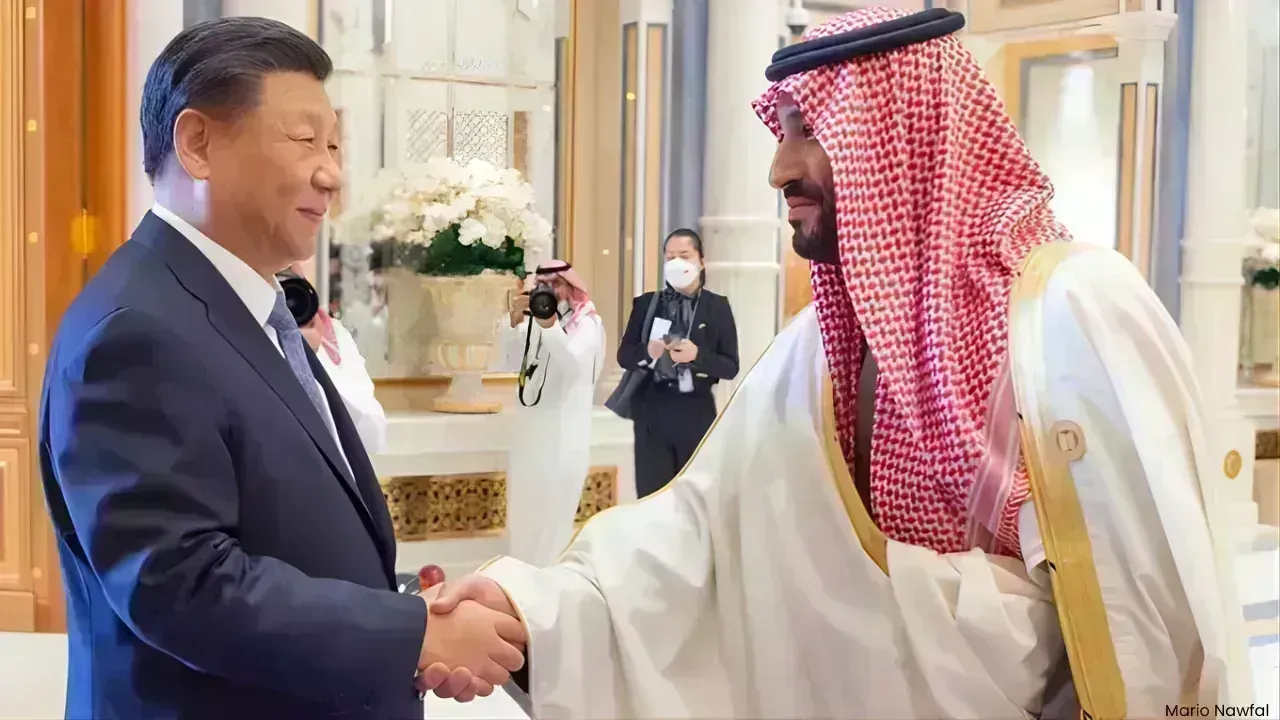
Post by : Abhinav Rana
Photo : X / Mario Nawfal
In a significant step towards economic synergism, the United Arab Emirates and China have finalized 24 substantial agreements aimed at enhancing trade, investment, and collaboration across multiple sectors. This strategic alliance marks a critical juncture in the evolution of international trade, with bilateral non-oil trade exceeding $100 billion—a clear sign of a transformative shift in global economic partnerships. These developments indicate a forward-thinking vision as two of the world's most vibrant economies position themselves to lead in global supply chains and infrastructure networks.
The UAE-China economic bond has surged to unprecedented heights, with non-oil trade projected to surpass $111.5 billion by 2025—a remarkable increase of over 24%. China has maintained its status as the UAE’s largest trading partner, while the UAE acts as China's principal entry point to the Middle East and Africa. This achievement symbolizes a realignment of global trade corridors, where the UAE's strategic location melds with China's manufacturing prowess to forge a formidable economic highway connecting Asia, the Middle East, and beyond.
The 24 agreements established during the UAE-China Business Promotion Conference encompass diverse sectors, such as logistics, energy, and technology, signaling a holistic approach to economic collaboration. These initiatives aim to transcend traditional trade frames, focusing instead on long-term value generation, innovation, and sustainable progress. The mantra of "From Vision to Value" illustrates a commitment to transforming partnerships into concrete projects, investments, and infrastructural advancements, thereby unlocking new business prospects and bolstering industrial ecosystems.
Transportation and logistics lie at the heart of these agreements, crucial for effective international trade. As the UAE cements its status as a global logistics center, enhanced cooperation with China is anticipated to optimize supply chain operations, elevate port connectivity, and enrich multimodal transport systems. The integration of trade flows between Asia and the Middle East promises to spur investments in ports and smart logistics infrastructures, thereby reinforcing the UAE’s pivotal role as a conduit for global trade.
The UAE’s strategic position as a gateway economy enhances this partnership by facilitating China’s access to regional marketplaces. This dynamic not only allows businesses to explore new opportunities but also leverages China’s industrial capacity to foster large-scale projects, from manufacturing to digital frameworks. Such collaboration is reshaping global trade dynamics while aligning with overarching economic priorities like diversification, innovation, and sustainable development.
In today’s geopolitical landscape, characterized by uncertainty, the UAE-China partnership underscores the significance of economic diplomacy. Both nations are establishing a strong foundation for shared prosperity through enhanced trade and collaboration. This approach mirrors a global inclination towards fostering economic alliances that influence not just markets, but also international relations, highlighting the necessity for strategic partnerships in navigating complex global challenges.
As these two countries fortify their economic relationship, the consequences of these agreements are expected to reverberate far beyond mere trade metrics. The bolstered alliance will likely redefine global supply chains, ignite innovation, and establish new standards for international collaboration, particularly in transportation and logistics—marking an era where infrastructure and technology come together to create more efficient global networks.
#trade #Global Trade #UAE China #Logistics #Supply Chain #Economic Partnership #Partnership










PM Modi Pays Tribute to Mahatma Gandhi, Urges People to Support Khadi
PM Modi pays tribute to Mahatma Gandhi on Gandhi Jayanti and urges citizens to support Khadi and the

Amazon Seeks to Offload $8 Billion in Nvidia Chips to Investors
Amazon plans to move $8 billion in Nvidia chips to investors, using a new financing model to strengt

Samsung Raises Galaxy S26 Prices as Memory Chip Costs Rise
Samsung raises Galaxy S26 prices in South Korea as rising memory chip costs put pressure on smartpho

Lewis Hamilton Calls Singapore Grand Prix One of F1's Toughest Races
Lewis Hamilton discusses the demanding Singapore Grand Prix and brings Plus44 and Almave to Singapor

Denmark's Pandora Opens World's Largest Jewellery Factory in Vietnam
Pandora opens its largest jewellery factory in Vietnam, expanding global production, strengthening s

Gautam Gambhir Questions Batting-Friendly Pitches After India's Record ODI Chase
Gautam Gambhir questions batting-friendly ODI pitches after India’s record chase, calling for a bett

